
Blackbook Reserve Wines
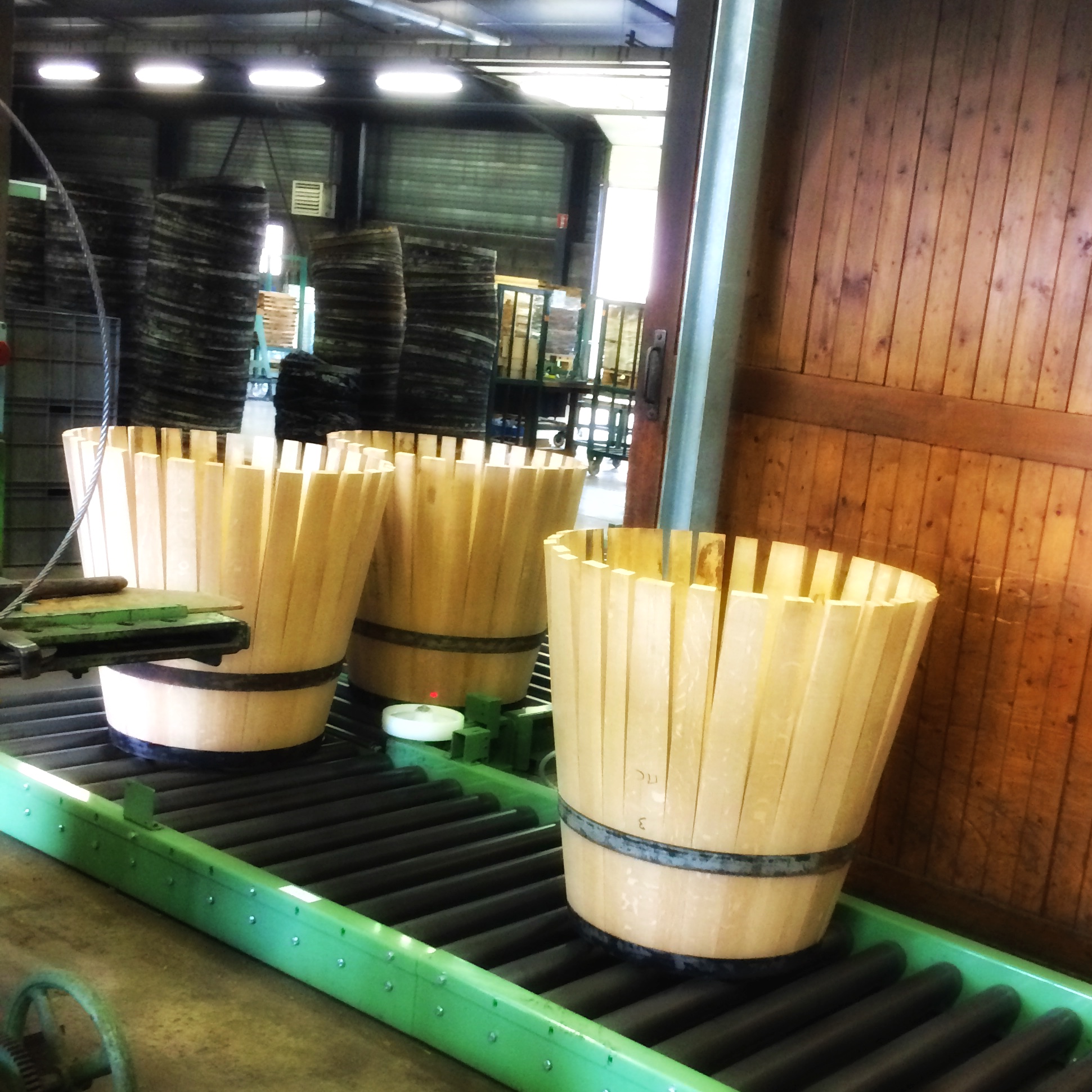
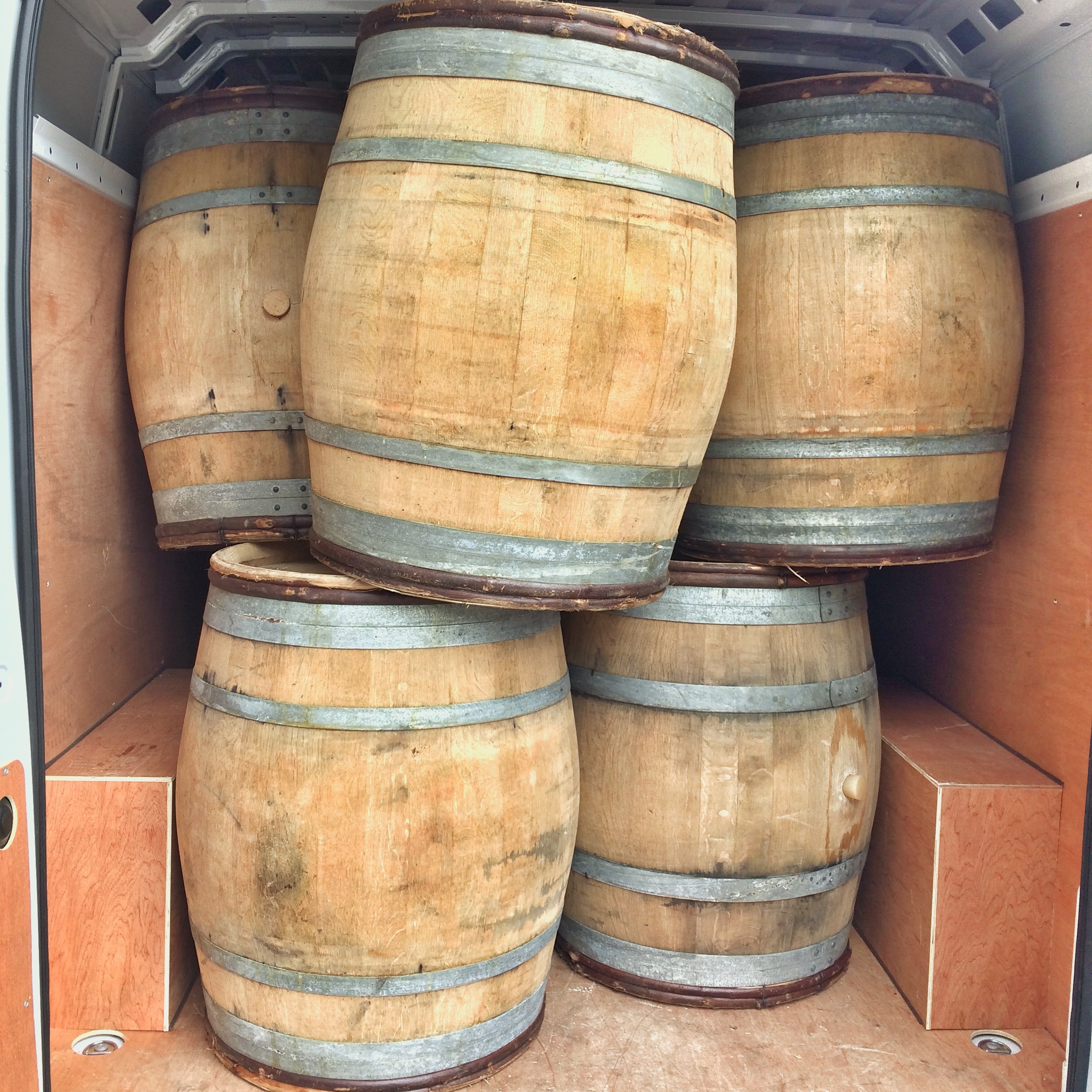
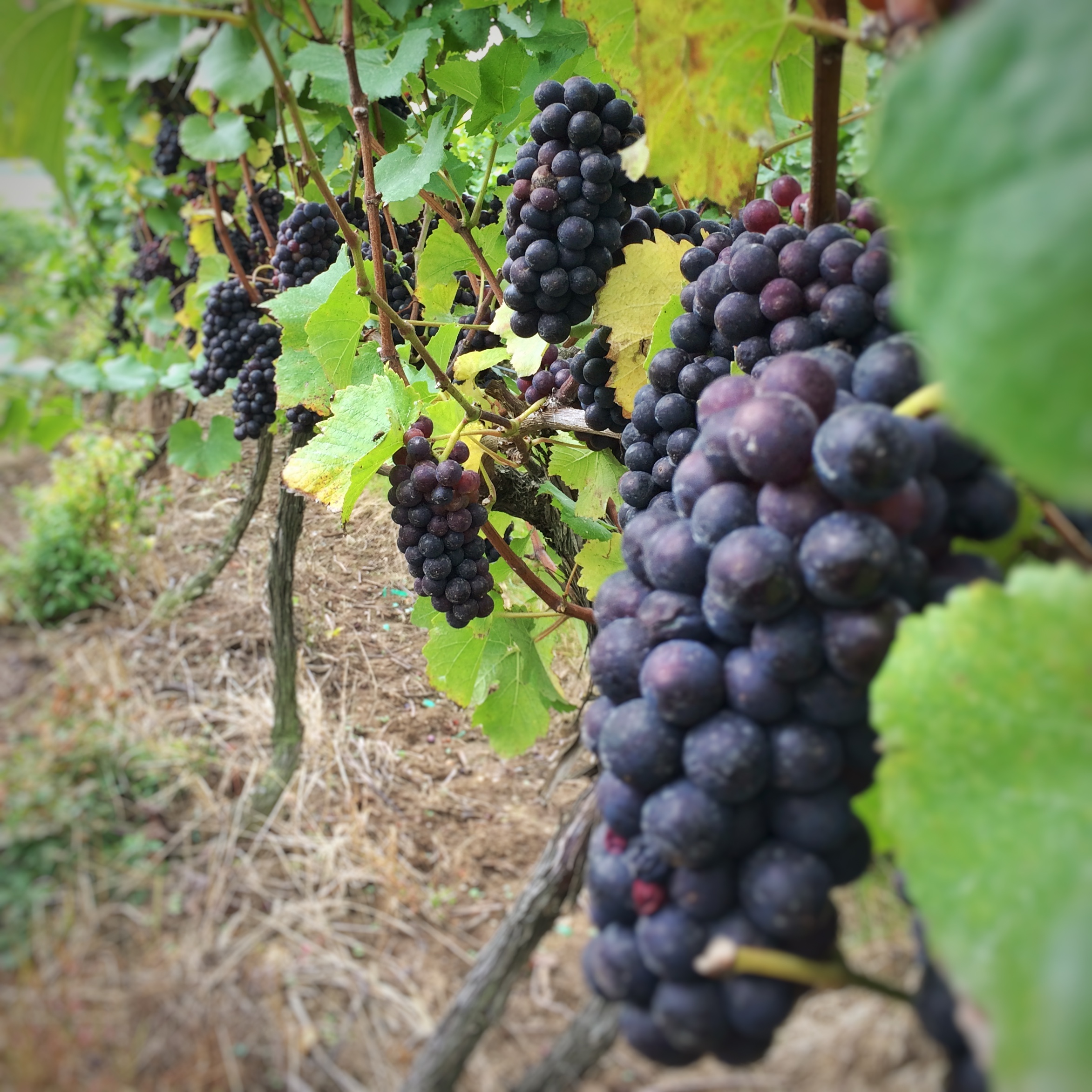
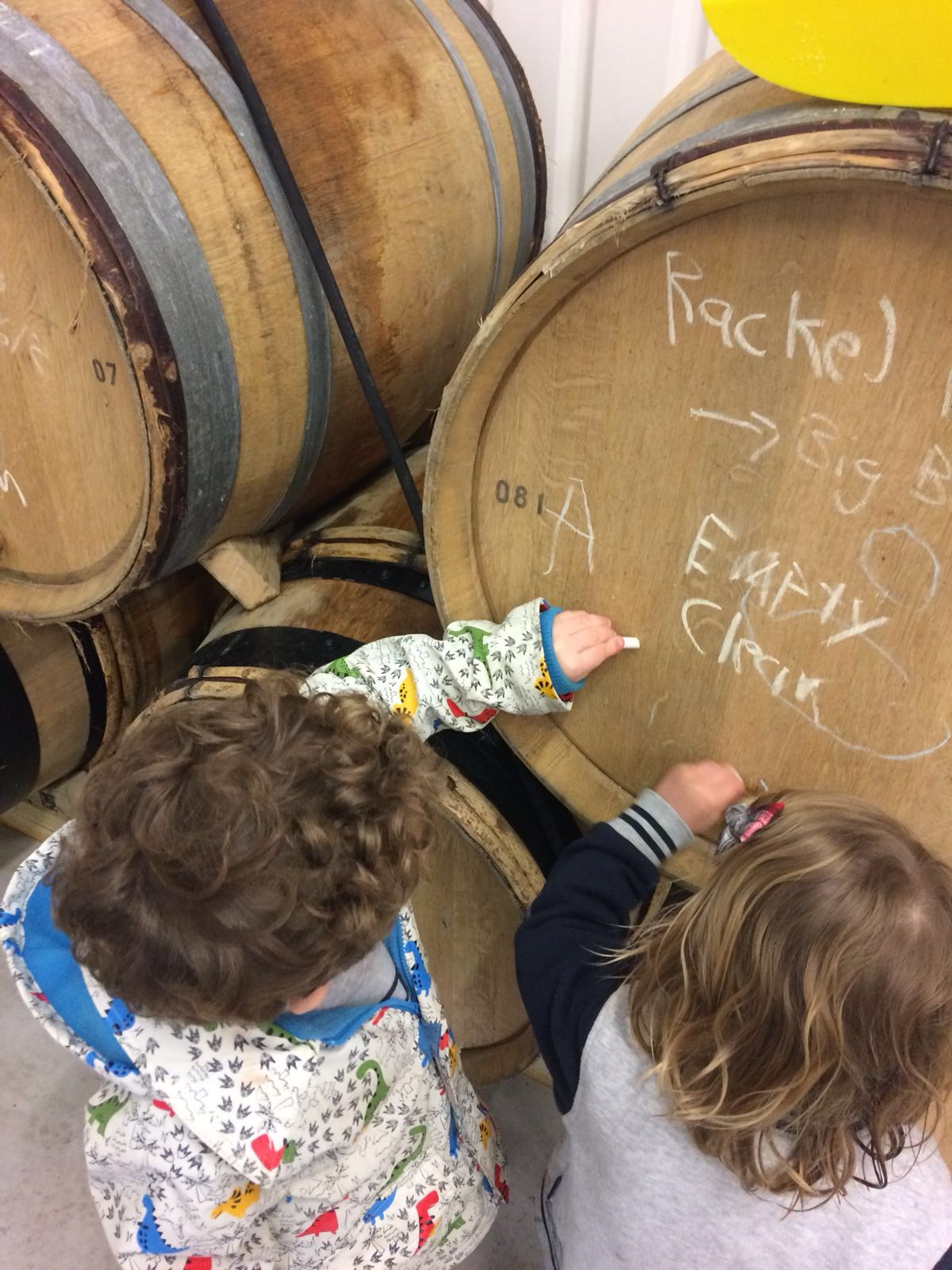
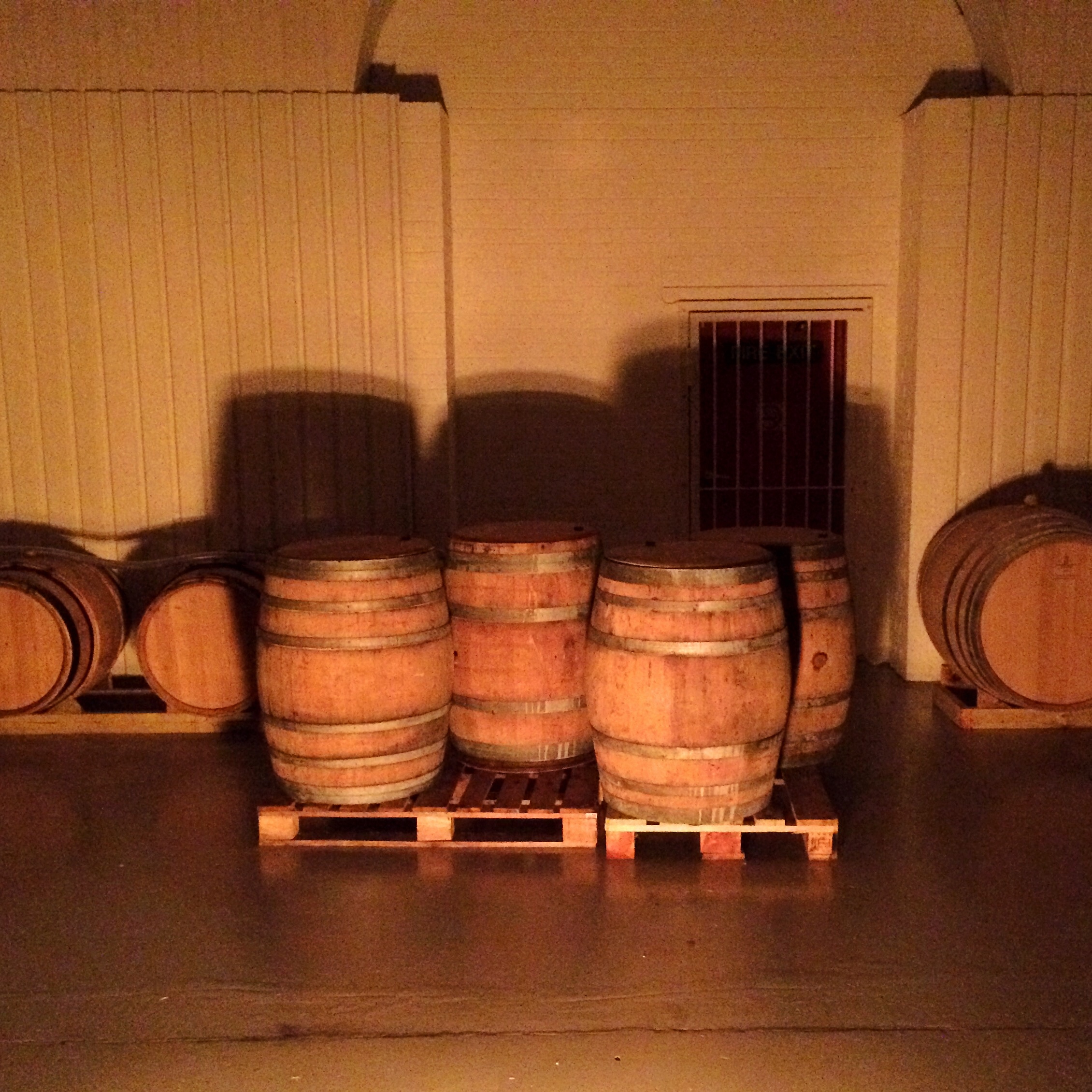
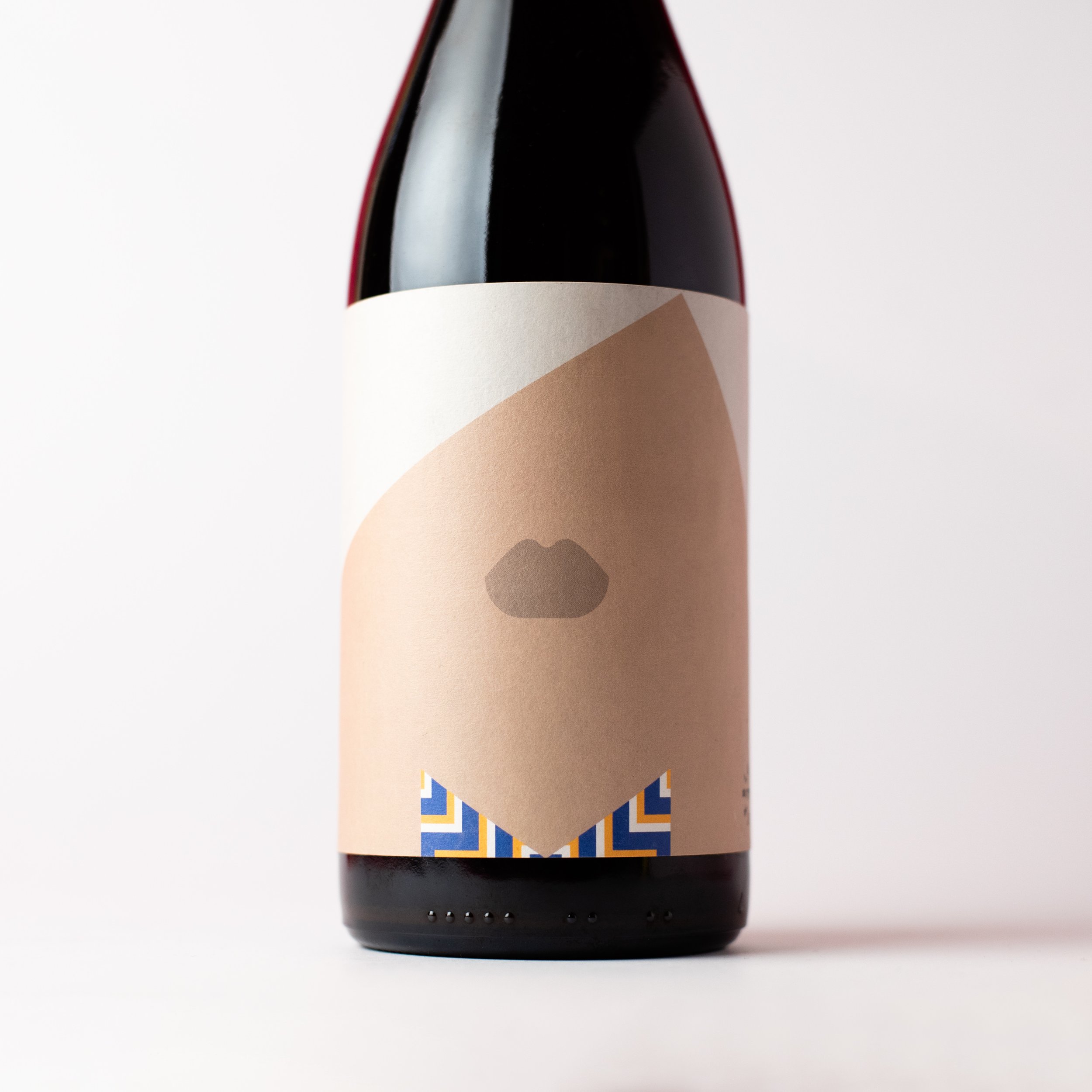
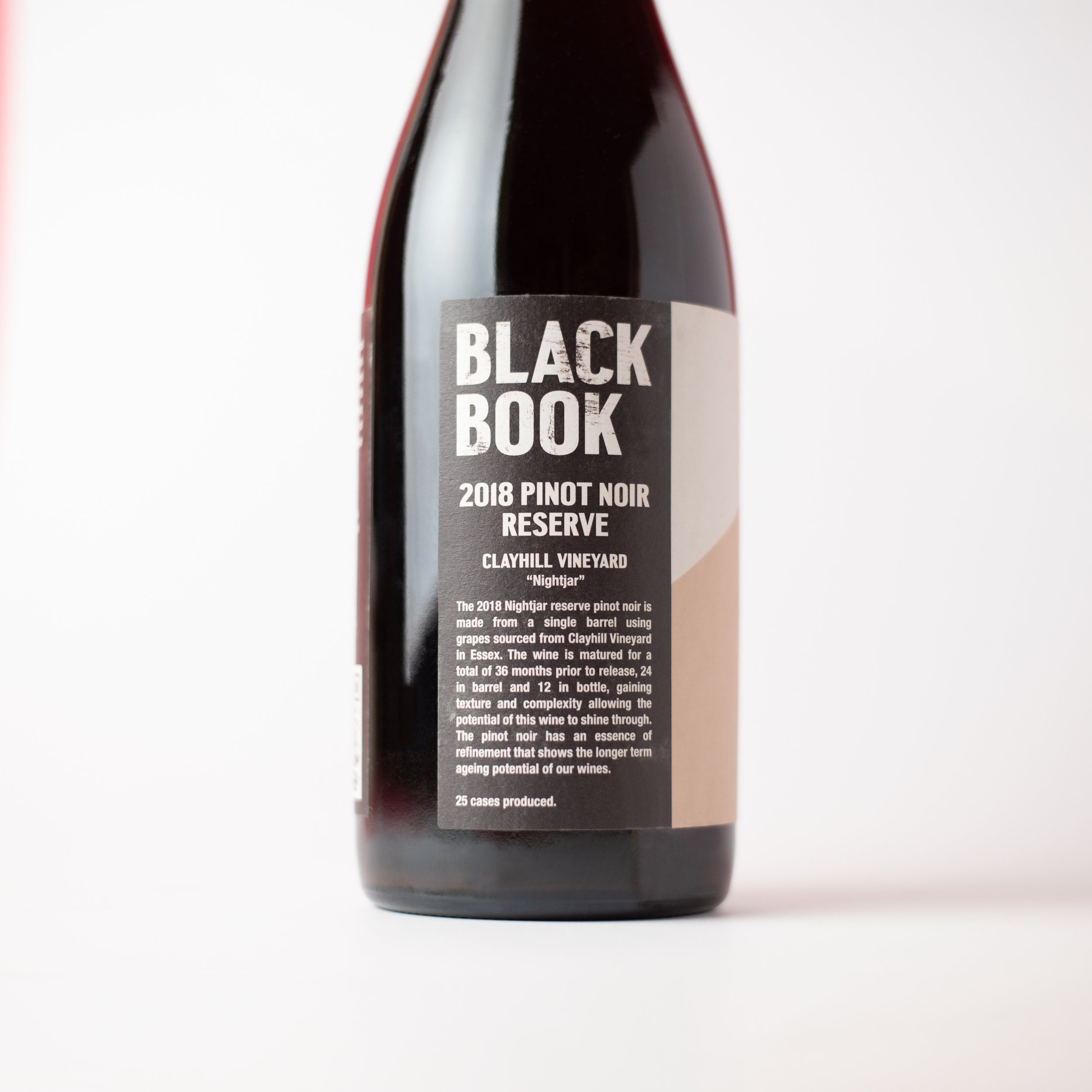
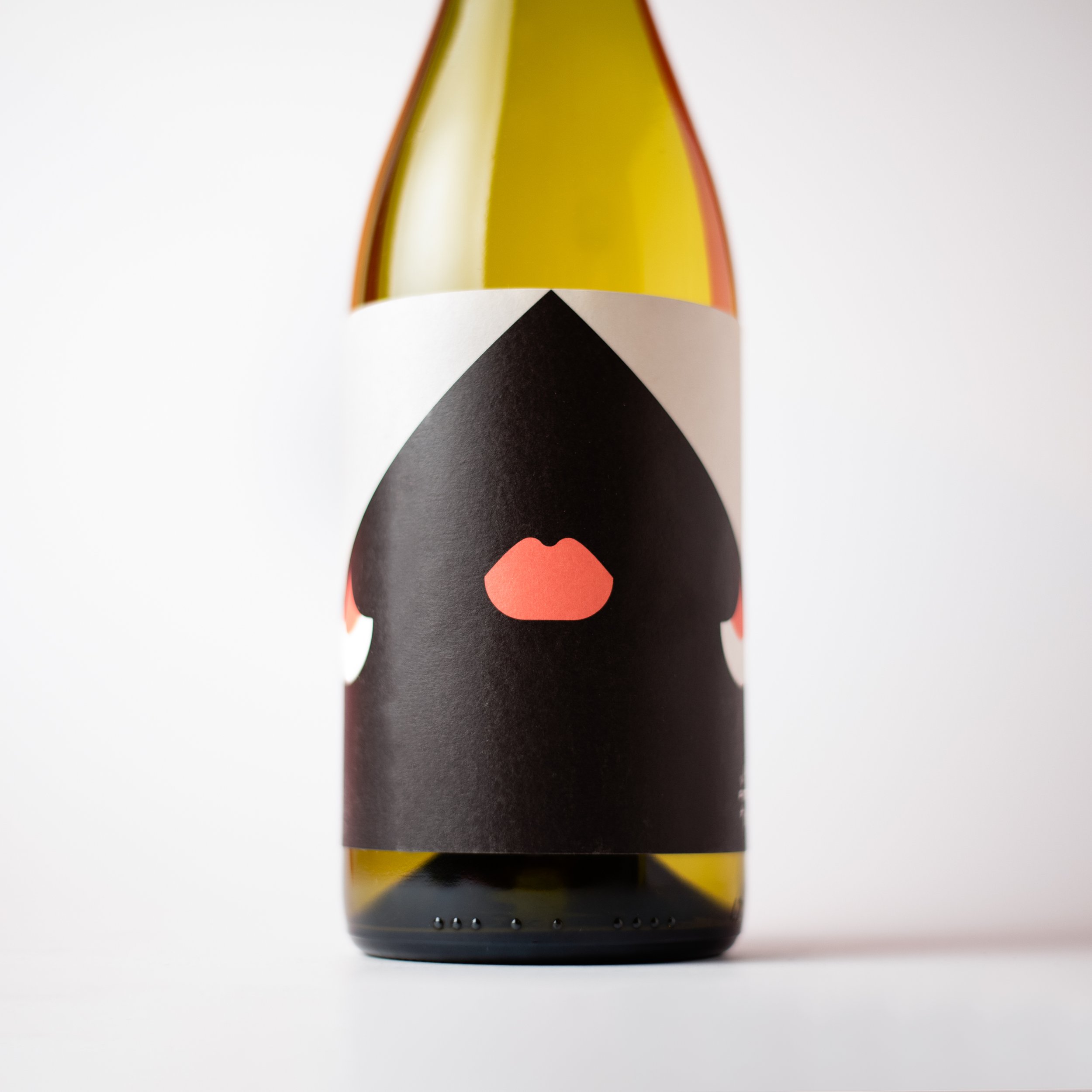
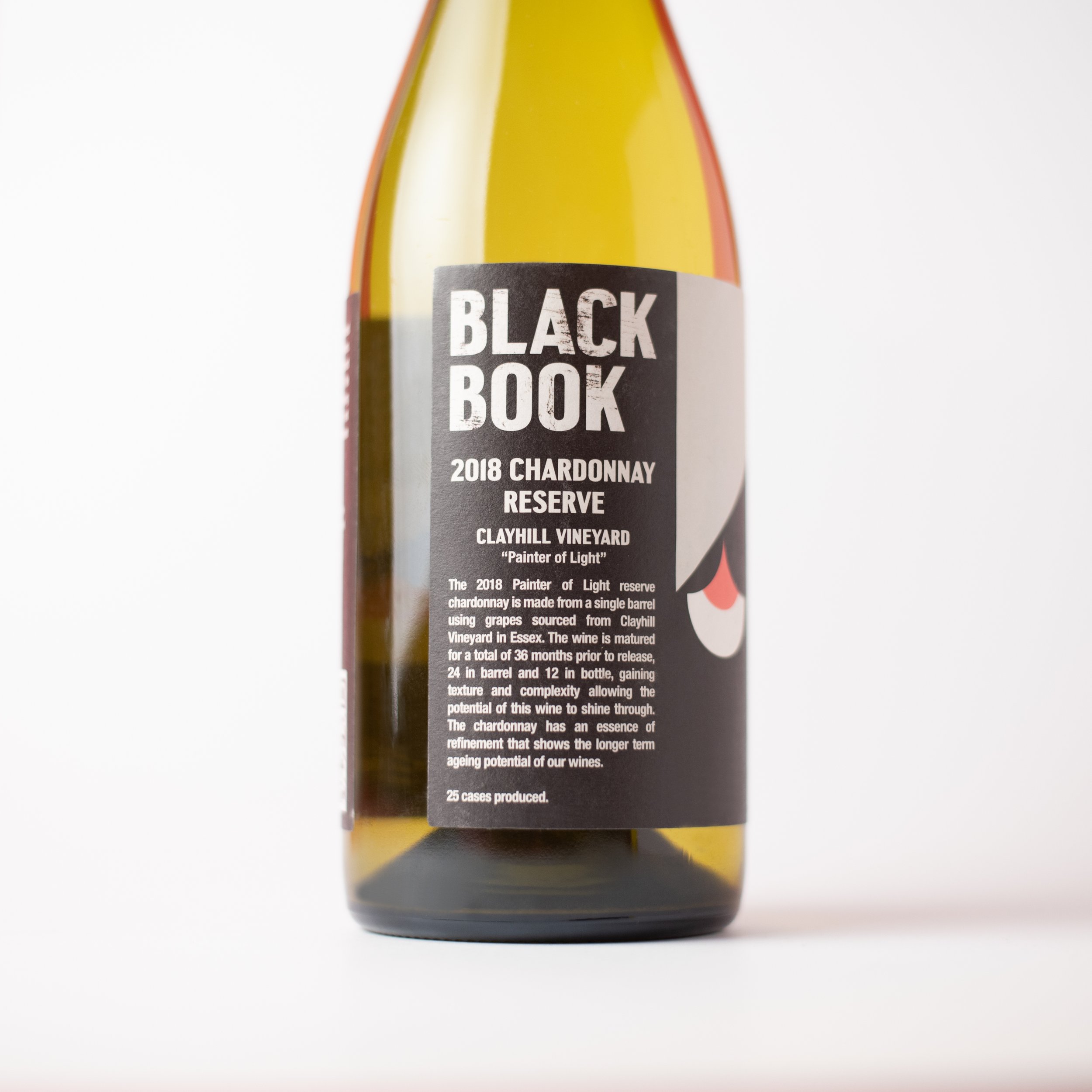
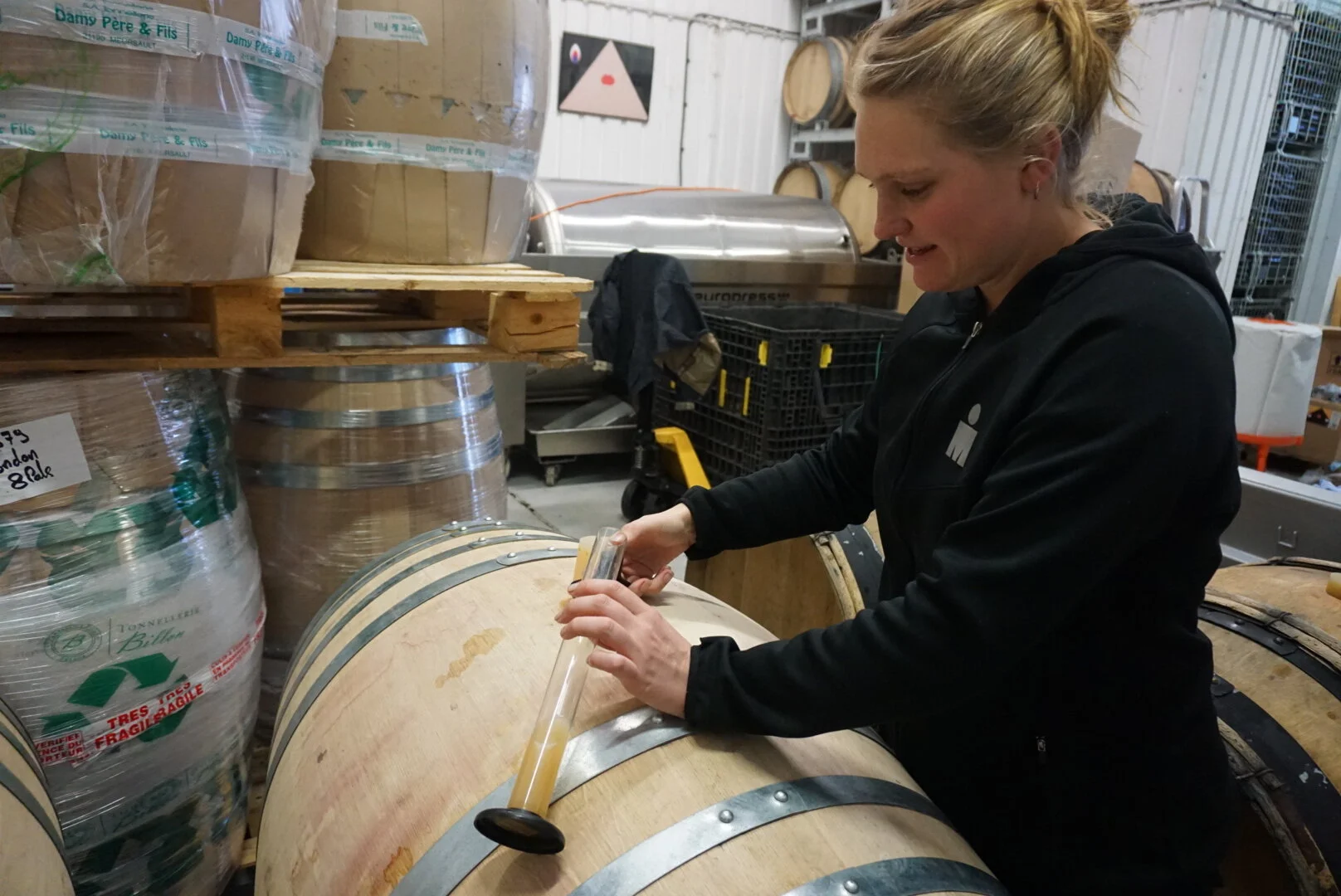
Our goal from the beginning of the journey at Blackbook, was to show that you can make stellar pinot noir and chardonnay in England, and this week marks another milestone in that journey as we release the first of our reserve wines. We’ve been working with the Symons Family at Clayhill Vineyard since our first release in 2017. Dale has a stunning site in the Crouch Valley and he shares our determination to make high quality still pinot noir and chardonnay in England, and we use his burgundian grape clones to make our flaghship Painter of Light chardonnay and Nightjar pinot noir. After a great reception to our 2017 release, we decided to take a leap and save a barrel of each wine for extra ageing in order to create a ‘reserve’ version of our core cuvees. In 2018 it was England’s ‘big’ harvest, and this was when we started to hold back wine. We have had a barrel of the 2018 Painter of Light and 2018 Nightjar in the winery for 2 full years, then another year aged in bottle. These wines have had 3 years of ageing, compared to our normal 1, and that extra time demonstrates the great potential for making world class still wine in England. We have less than 300 bottles of each of these wines. The labels are once again designed by our talented friends, the Yarza Twins, who have created the grown up version of their core wine counterparts.
The 2018 Painter of Light chardonnay reserve and 2018 Nightjar pinot noir reserve are online now.
Harvest Report 2020
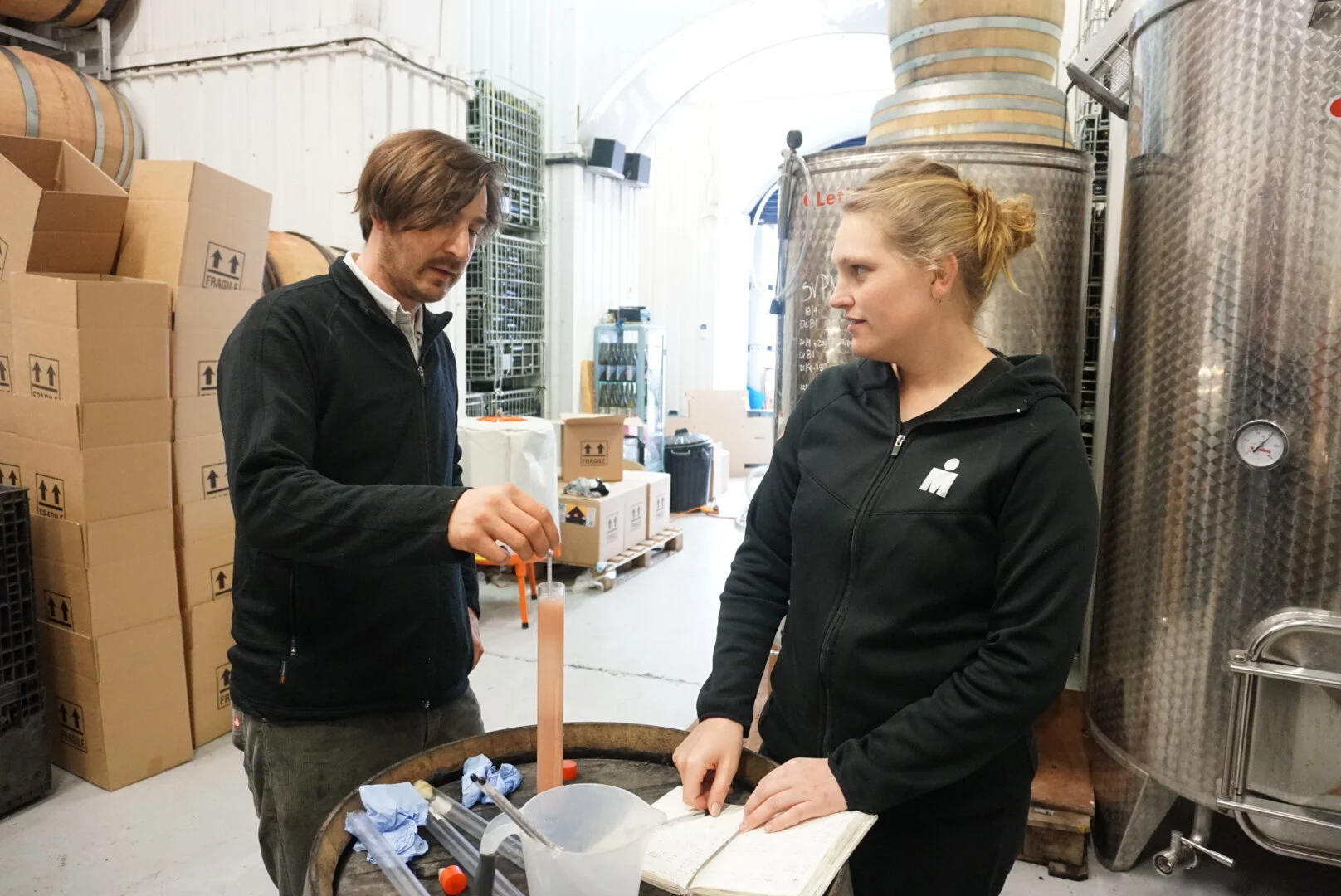
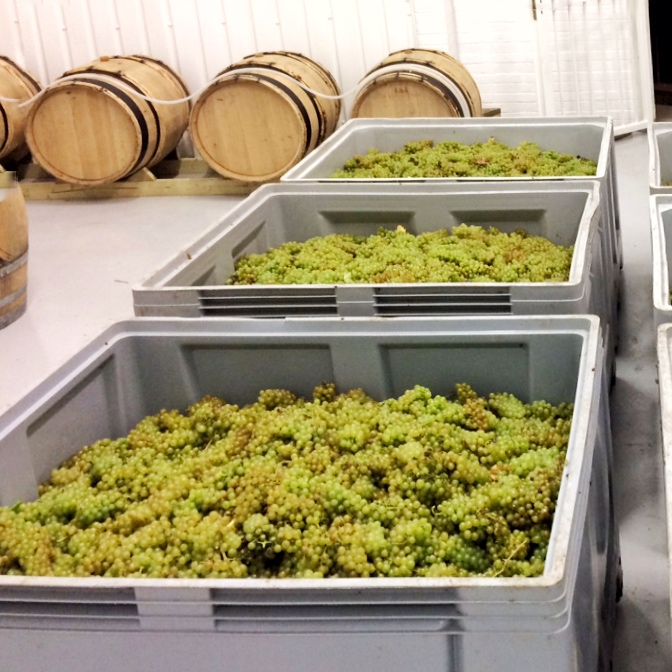
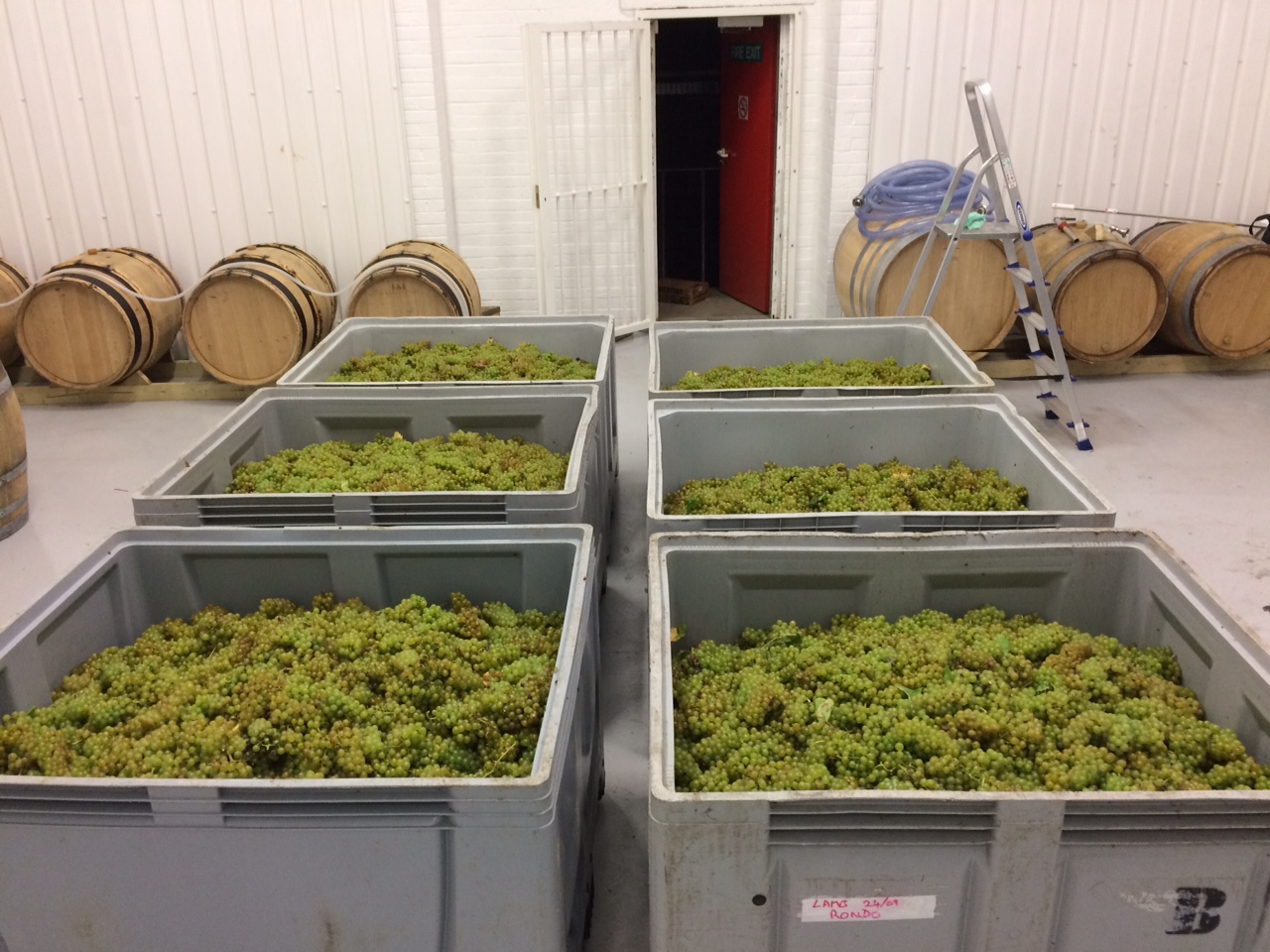
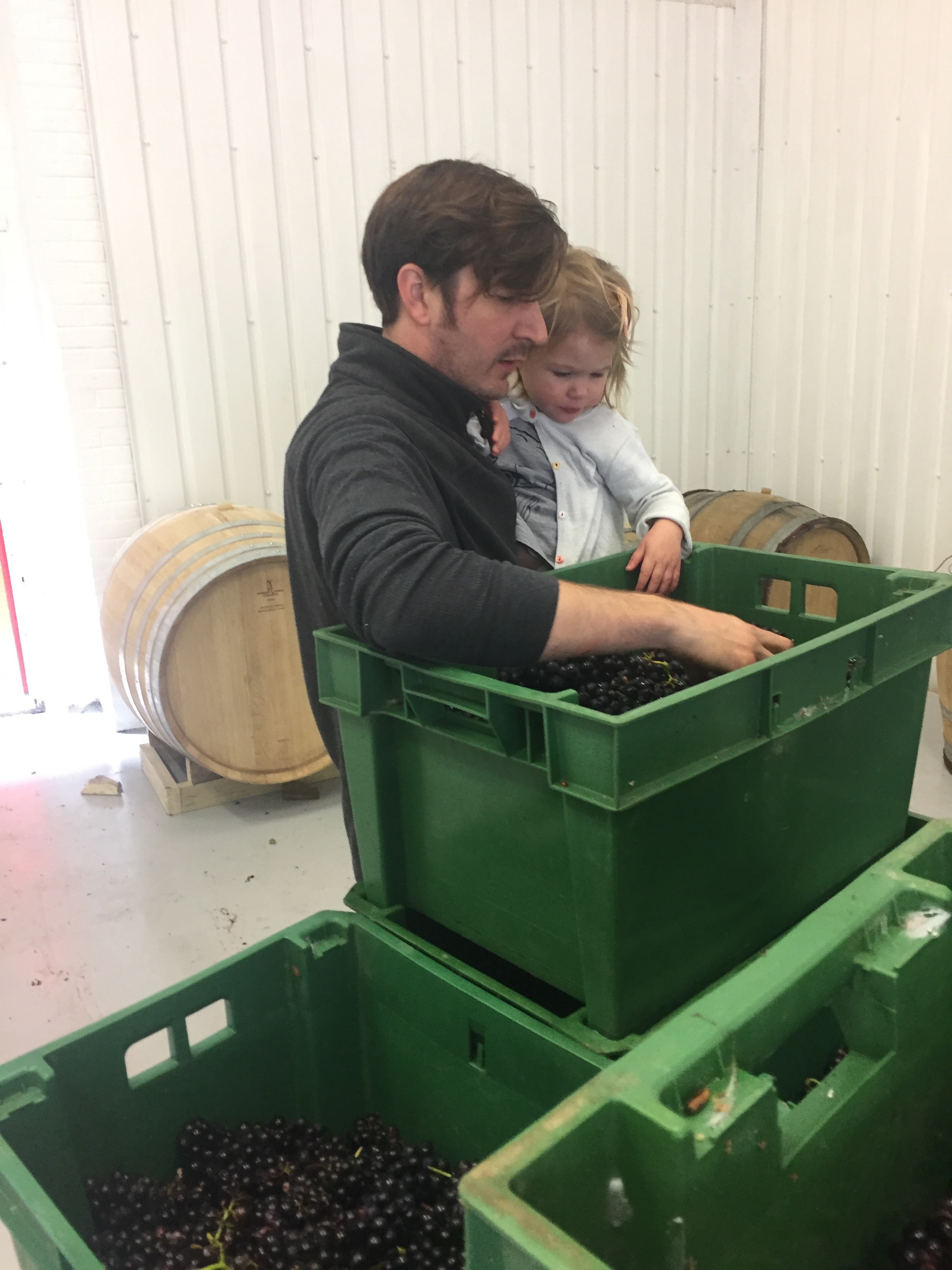
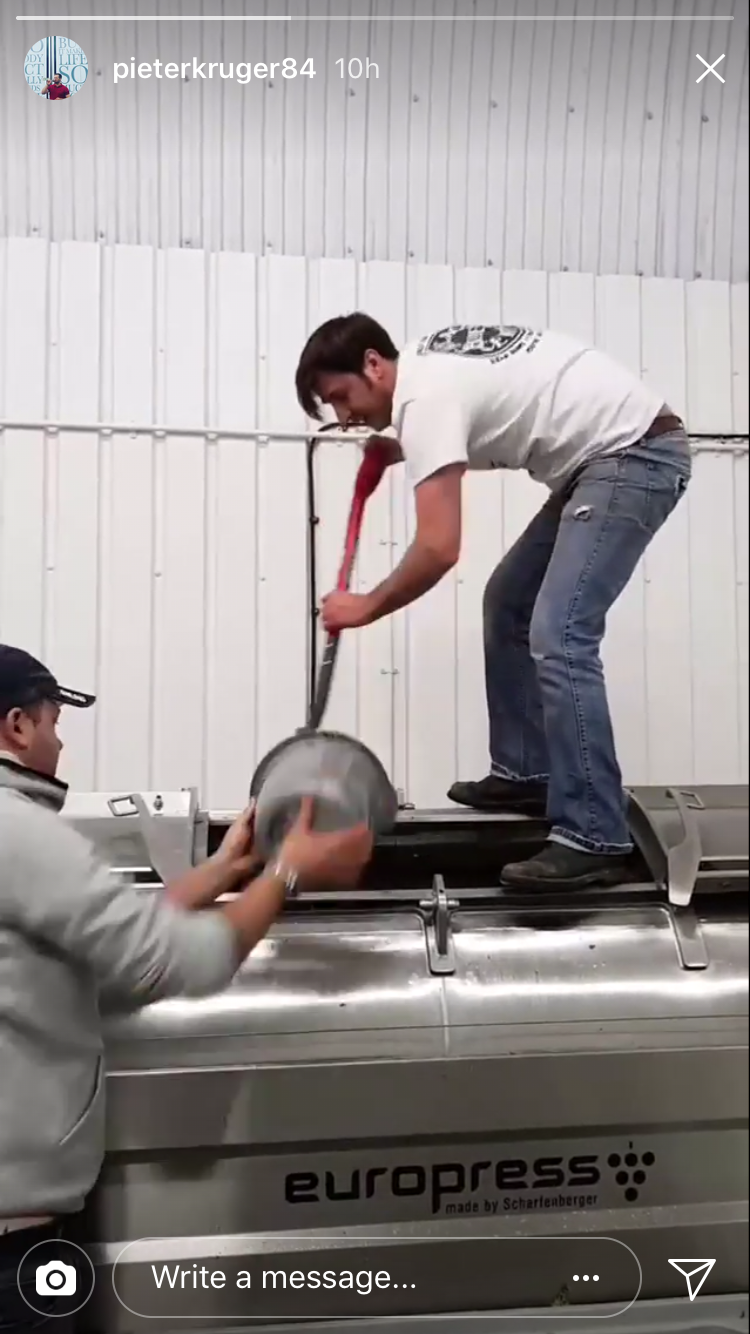
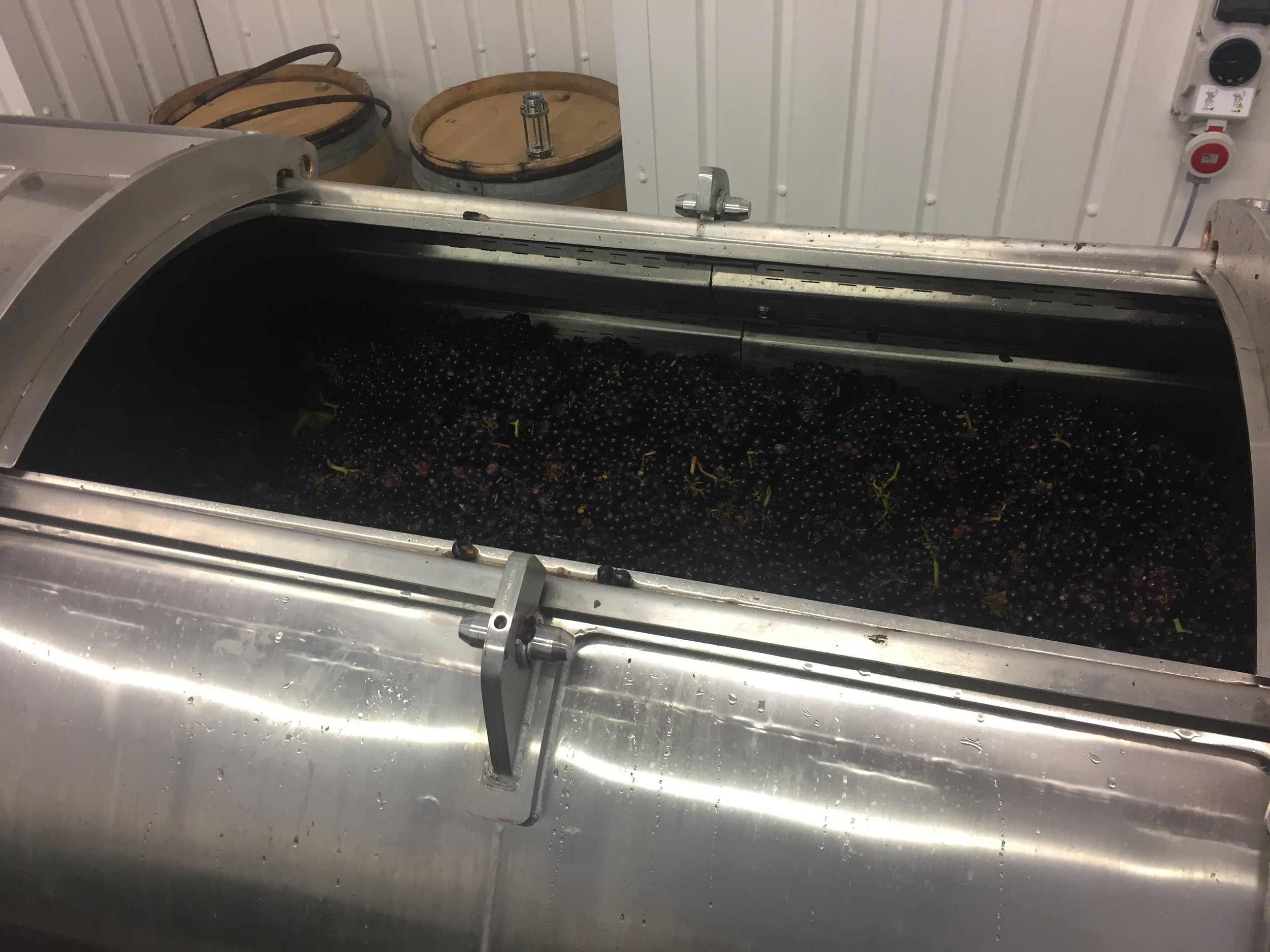
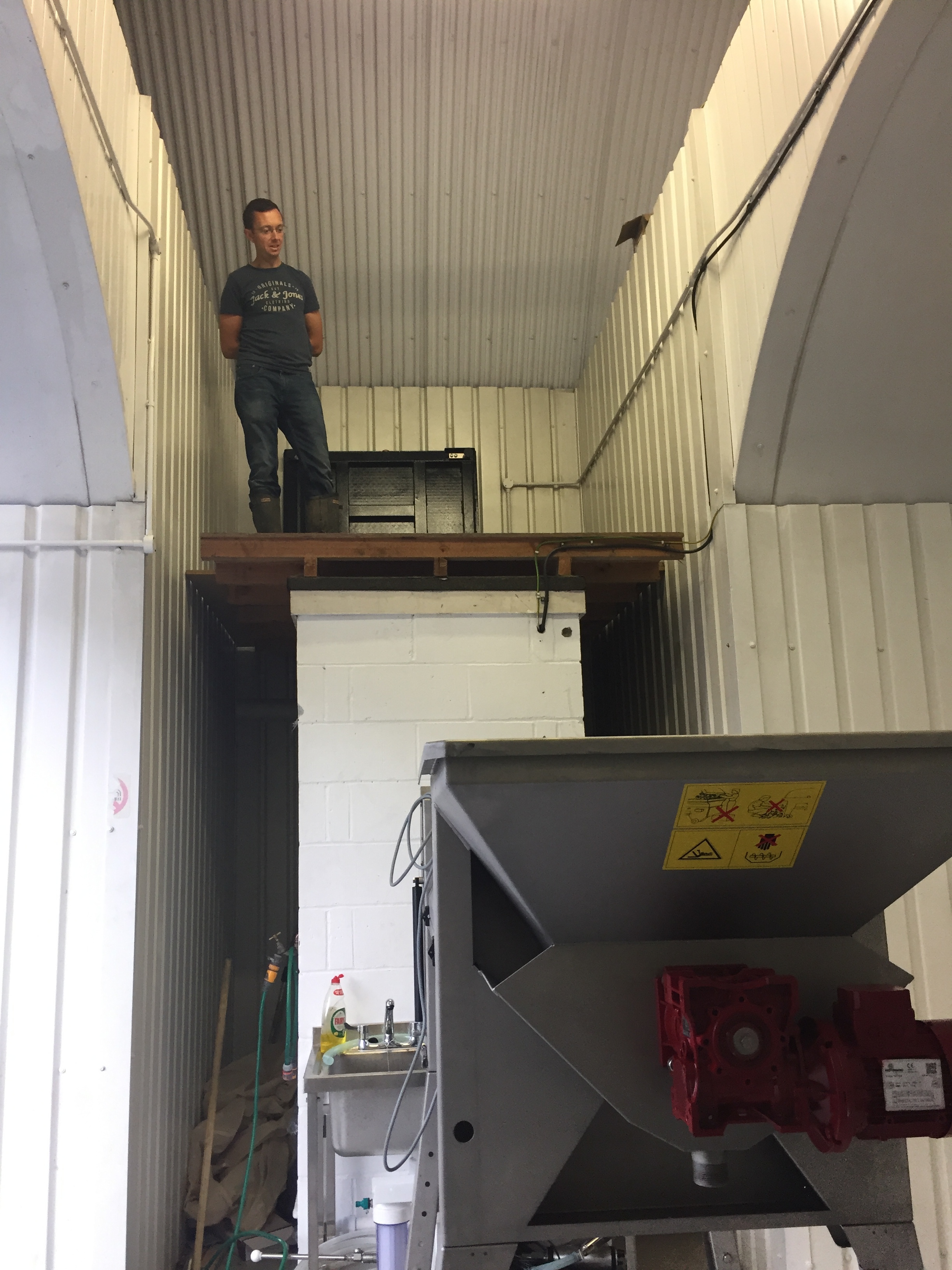
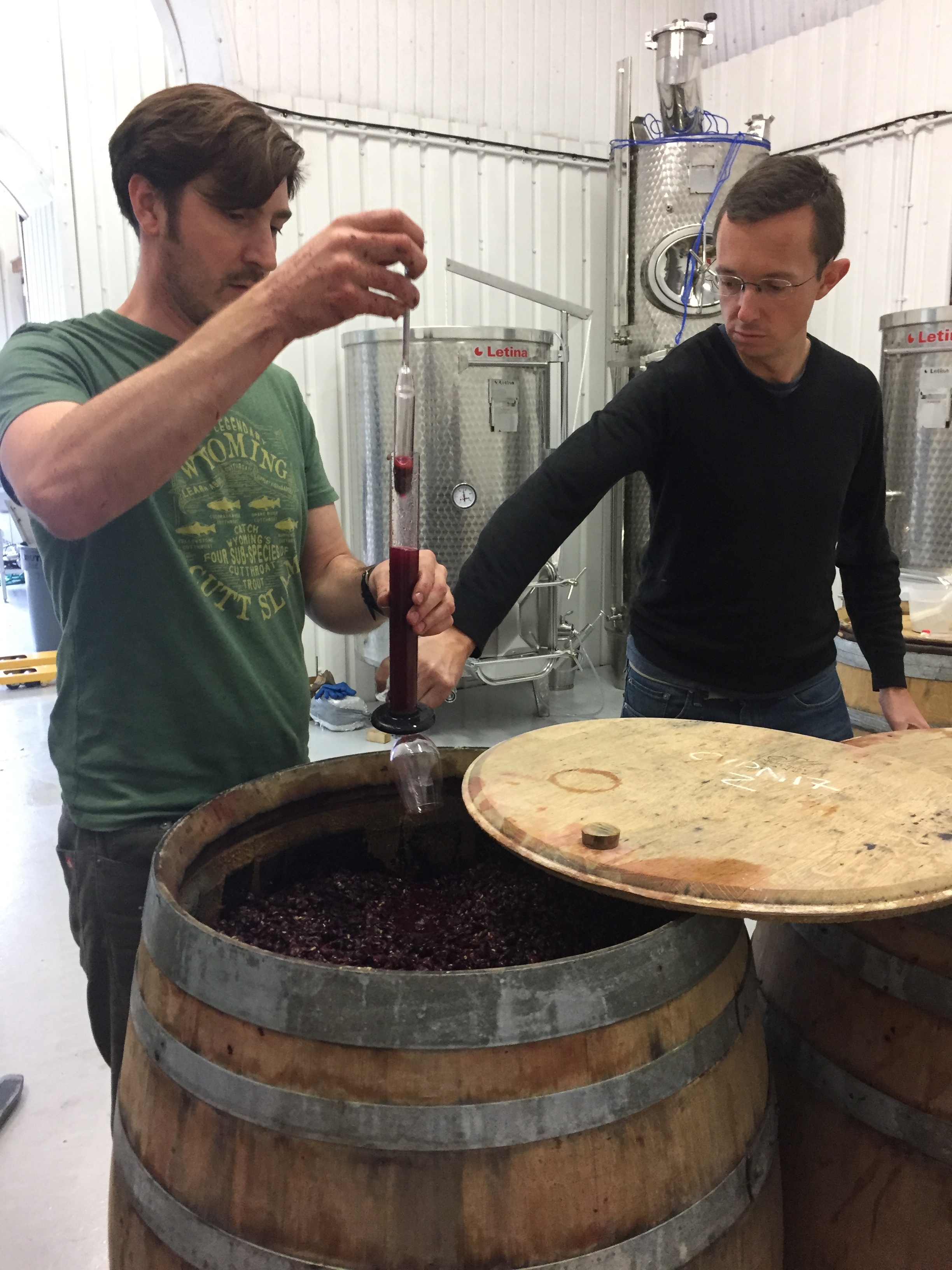
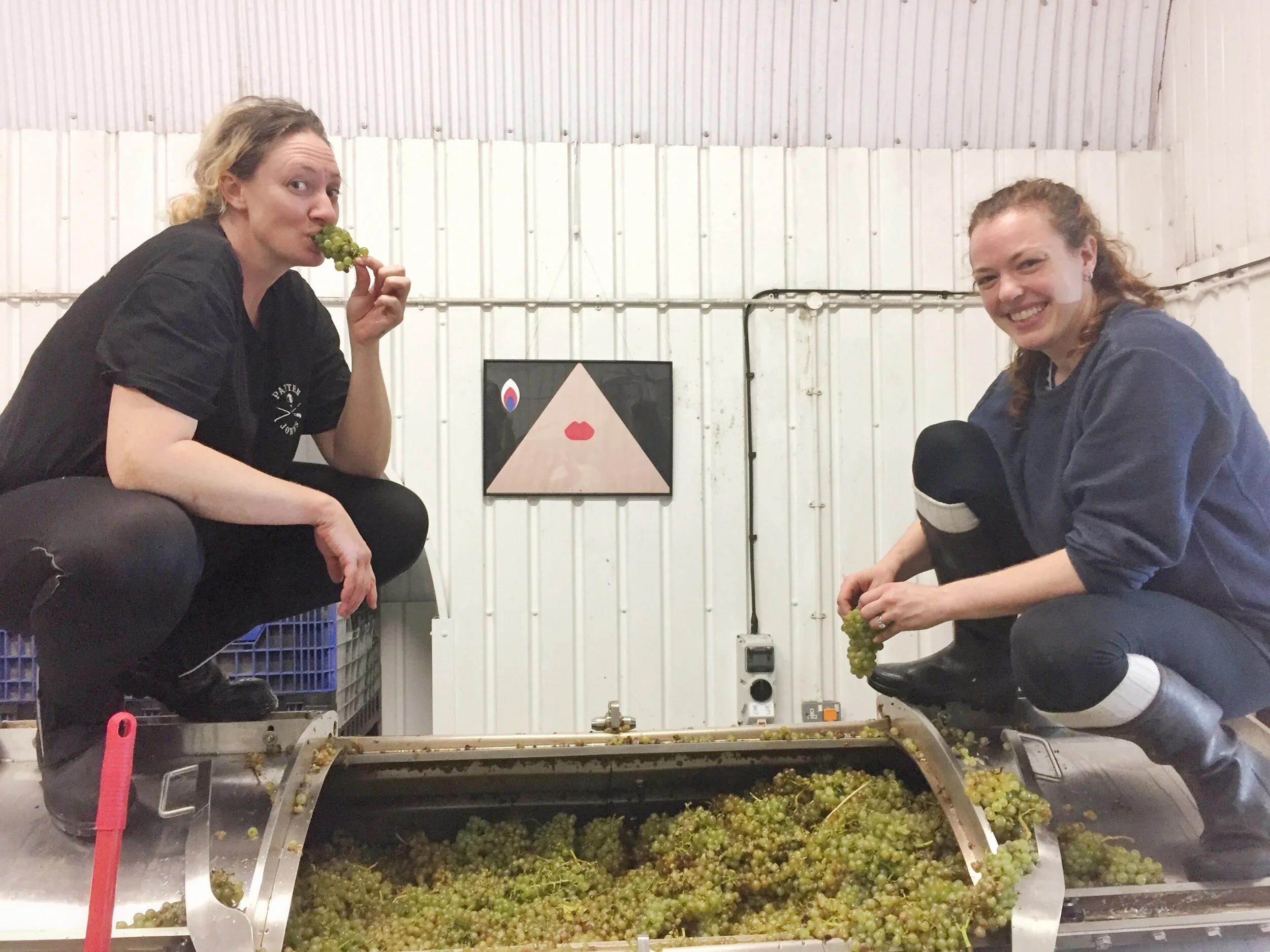
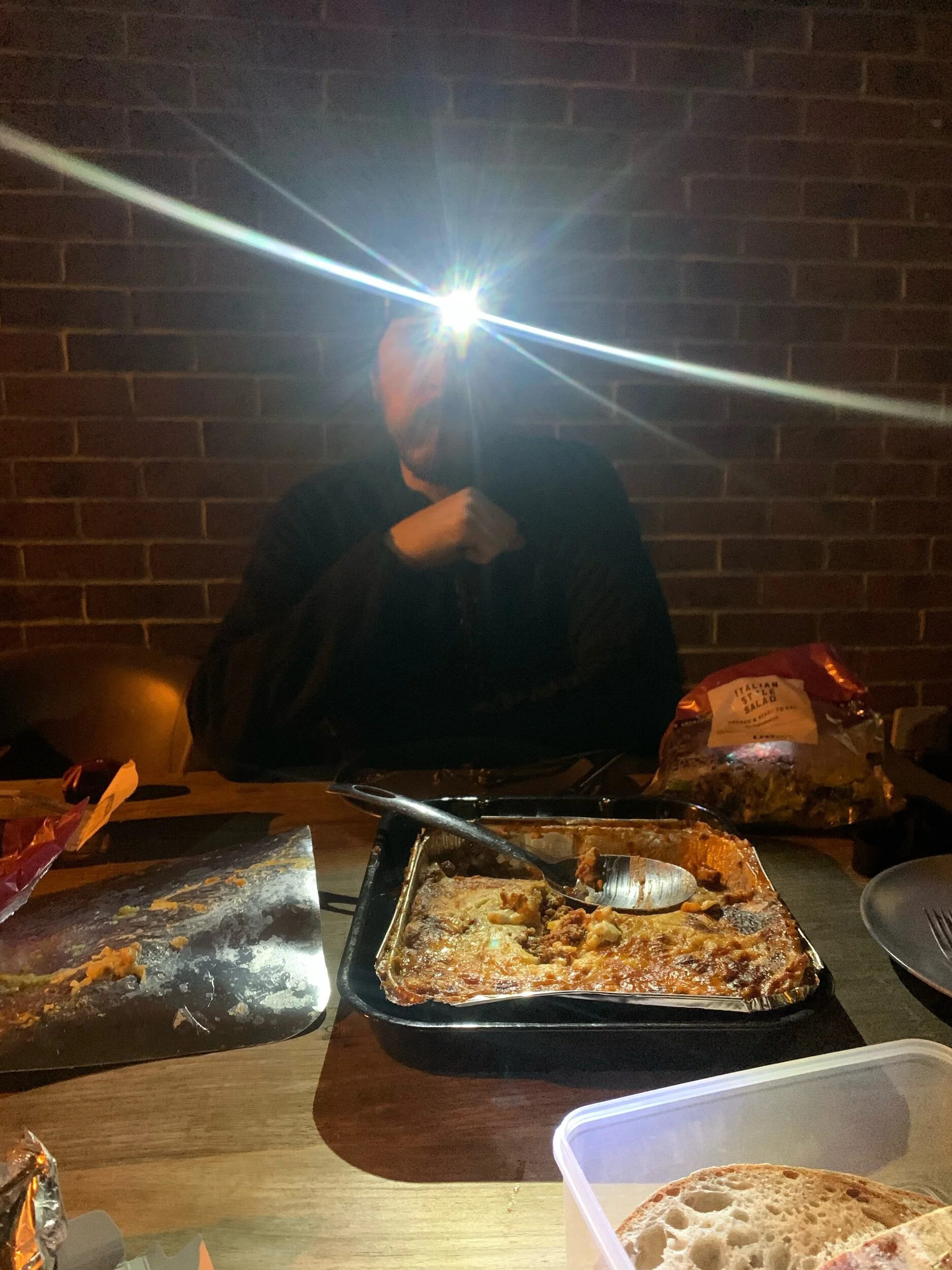
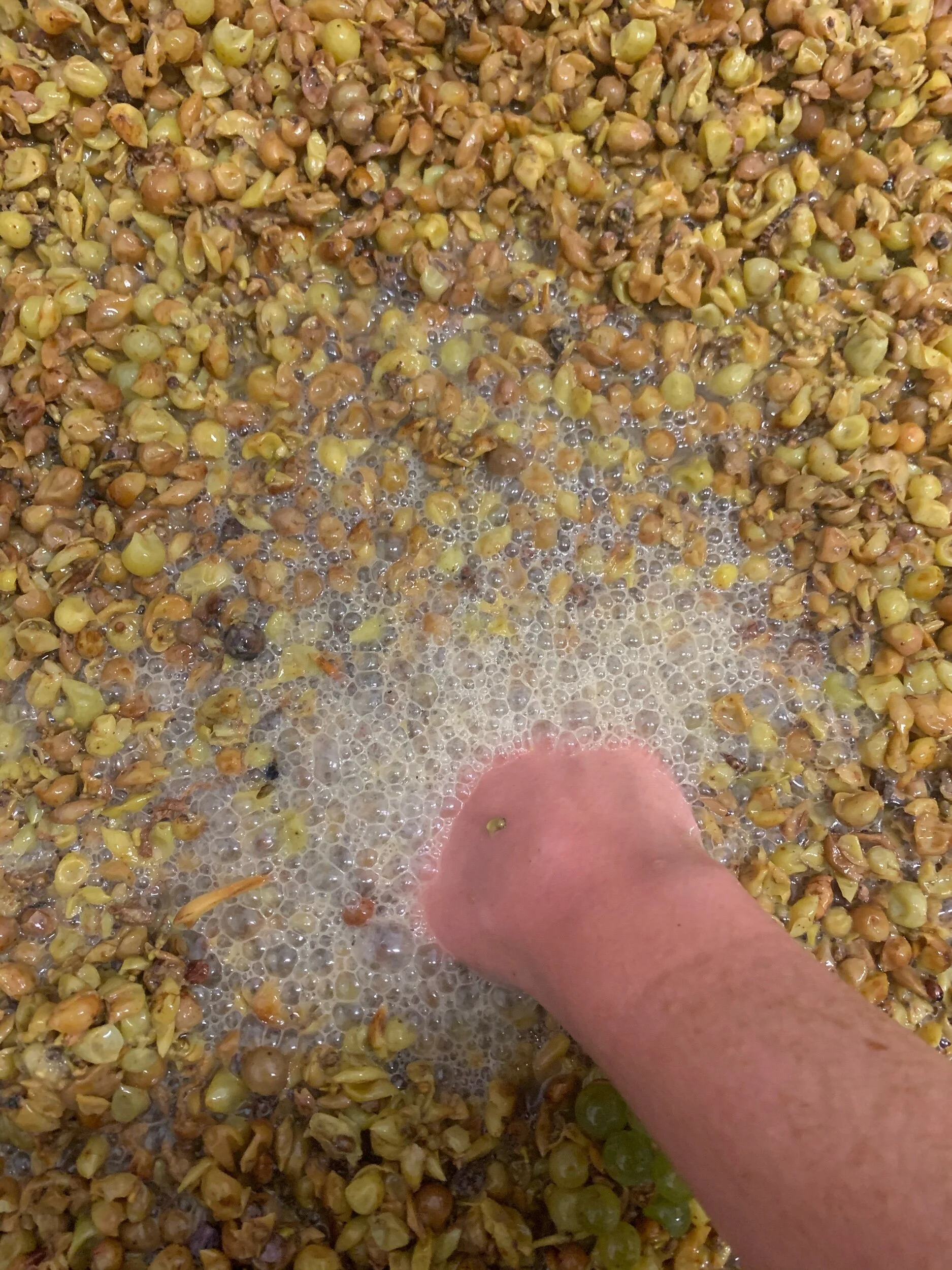
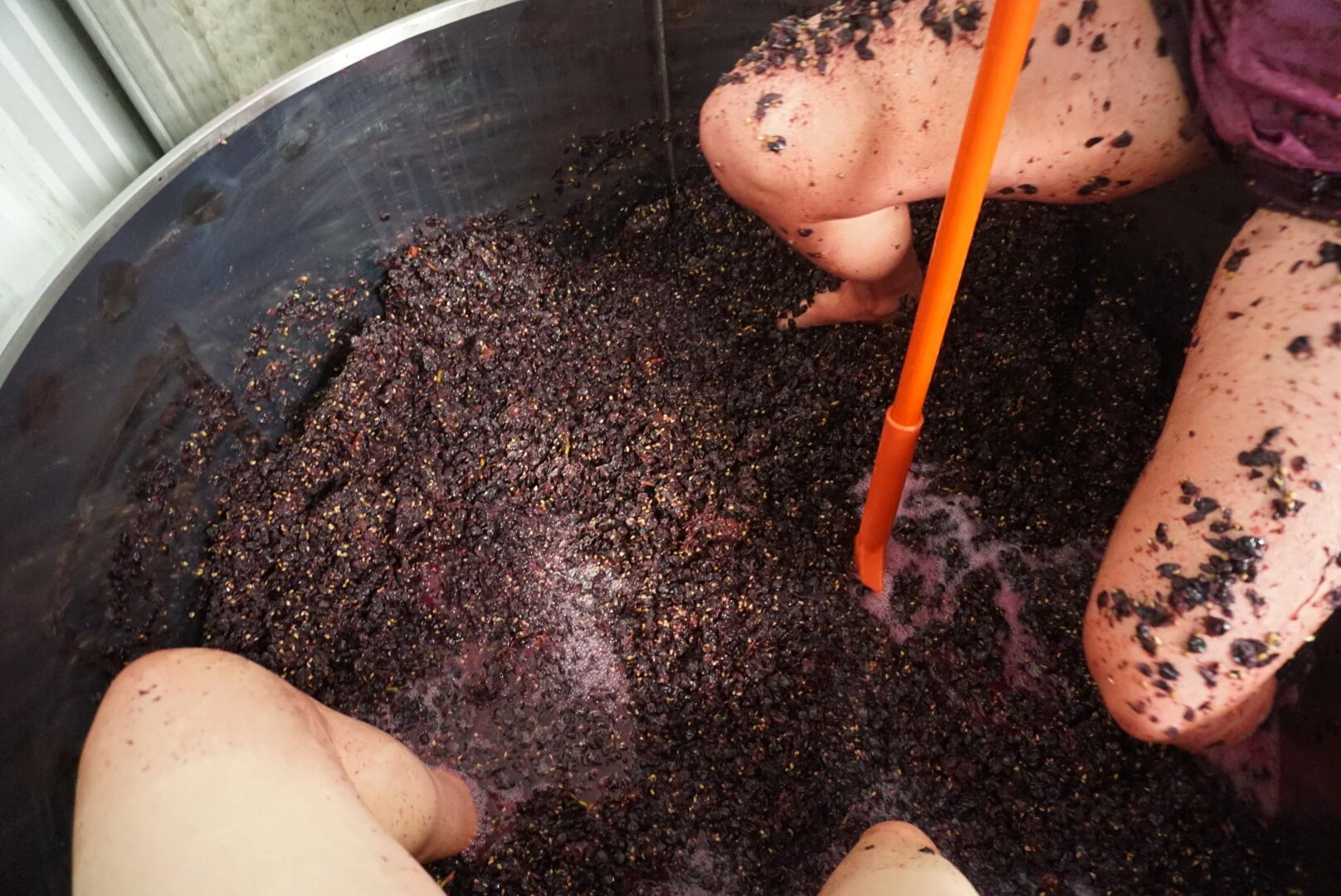
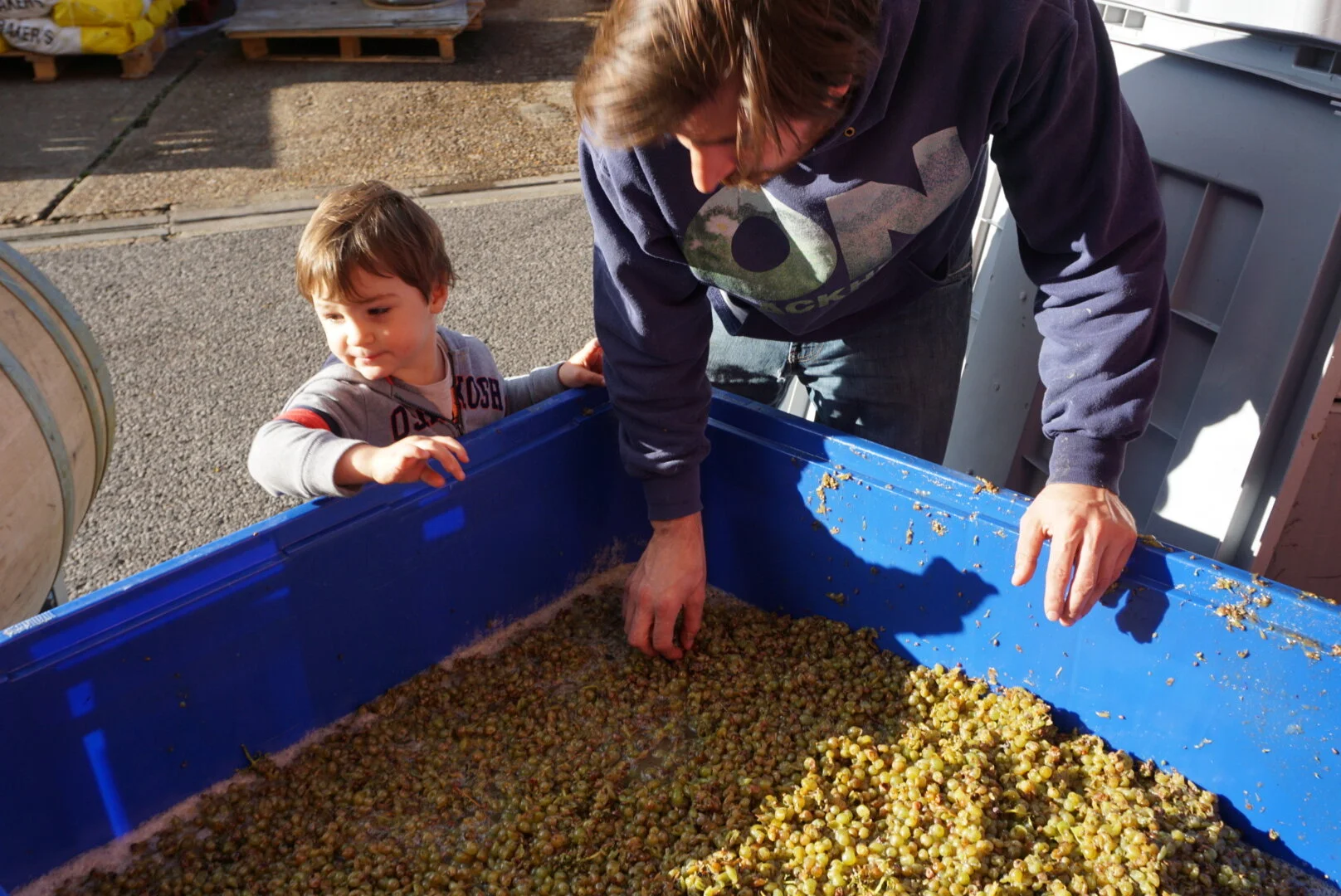
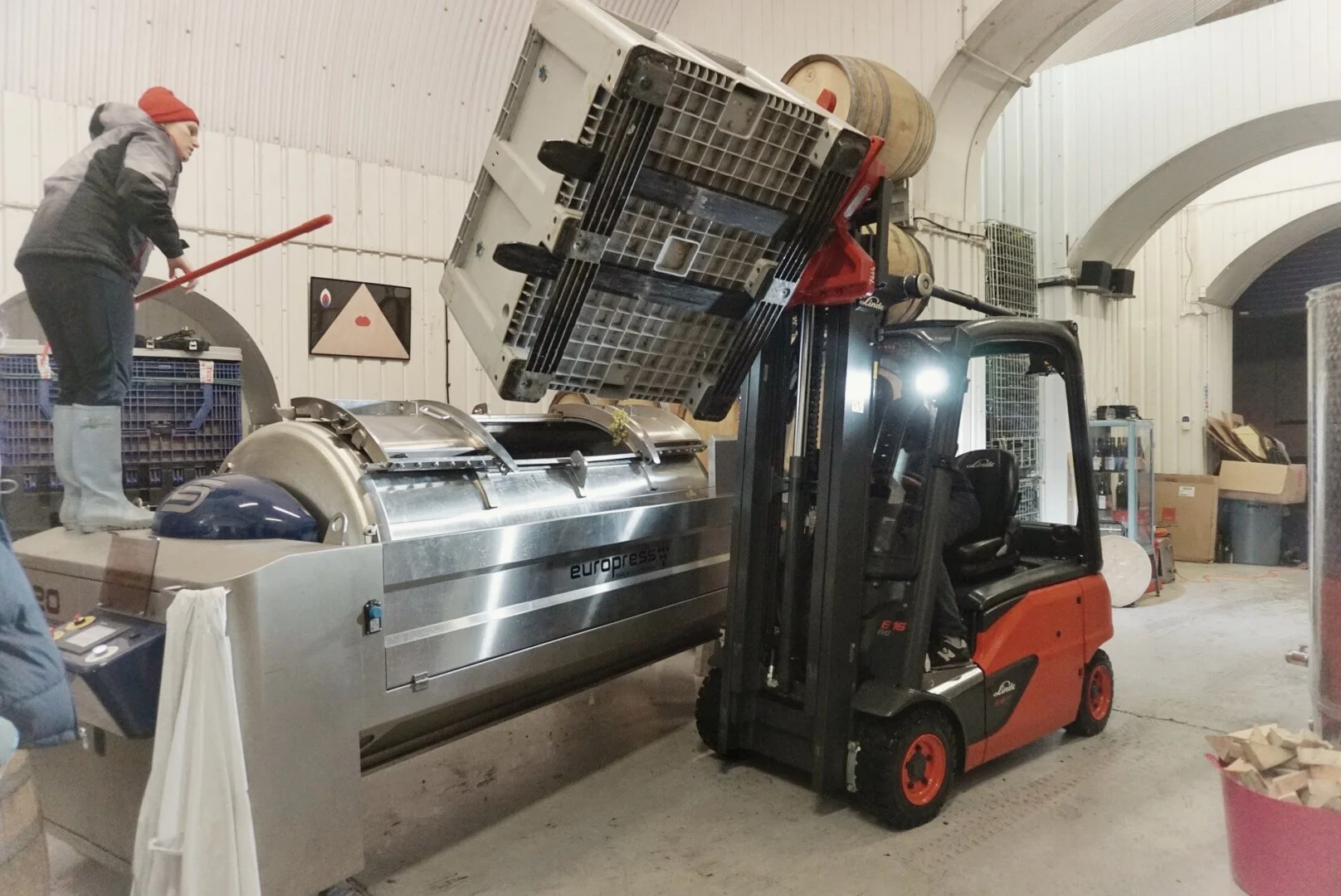
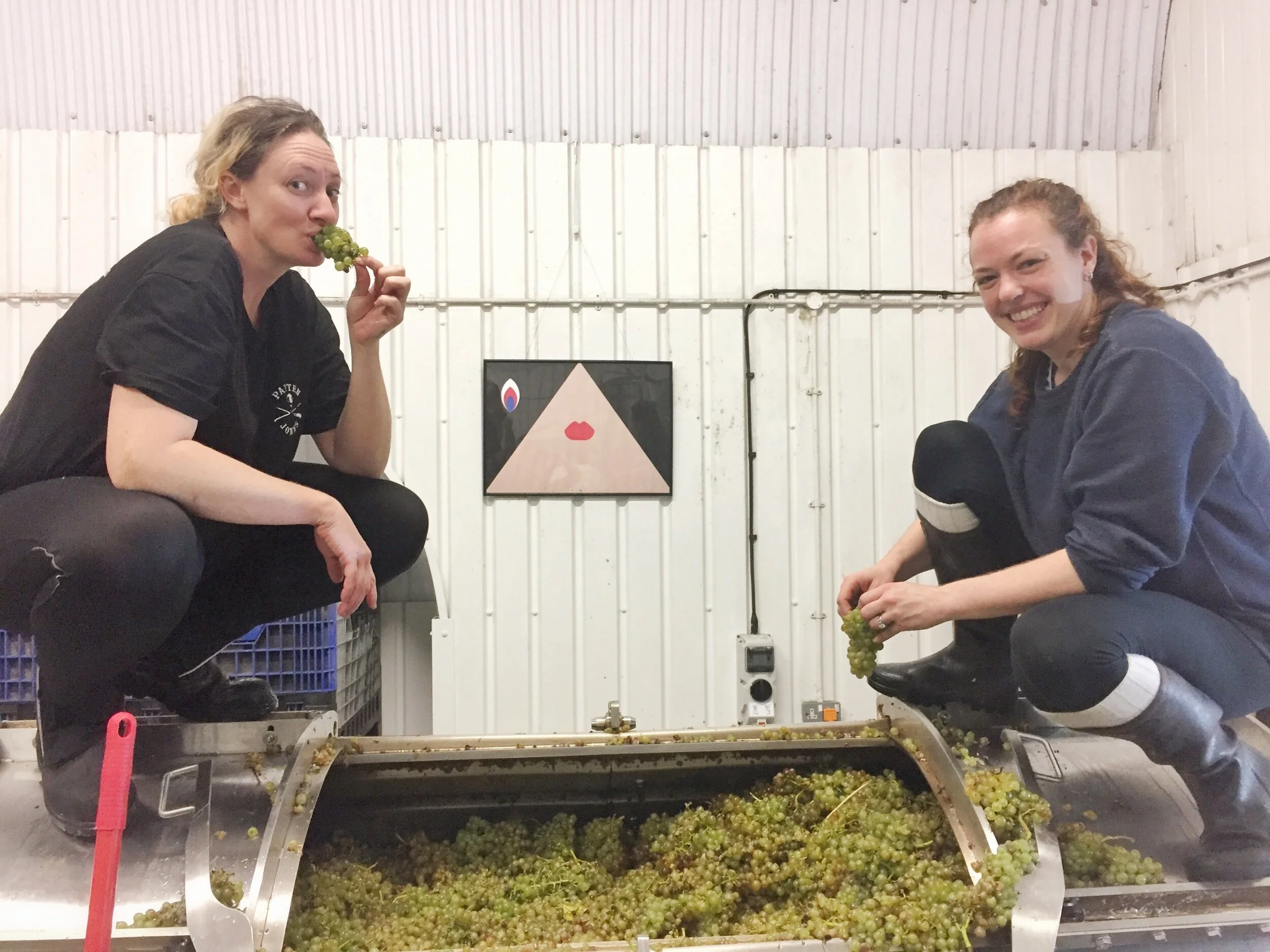
As we prepare for our new releases, we have shared some thoughts and memories from the 2020 “COVID” harvest. What a year, what a memory, it was a race to get wine in bottle before the numbers skyrocketed to the level that the whole country shut down. Hopefully we never have to do harvest under these conditions again - due to the rising positive case numbers in London in October, we approached harvest with caution, sad to lose the normal contingent of volunteers who come from all over to get their hands dirty and stuck into grape shovelling and squishing. Thankfully we did have a superb core team in the winery, in 2020 we had our first non-Verrillo full-time harvest team member, the lovely Alice Verburg who left her family vineyard, Luddite Wines in South Africa to be with us through the Blackbook harvest. Special mention also to Jac Smith and Sara Wright who became the extended part of our core team and joined Sergio and Alice for many late nights in the winery.
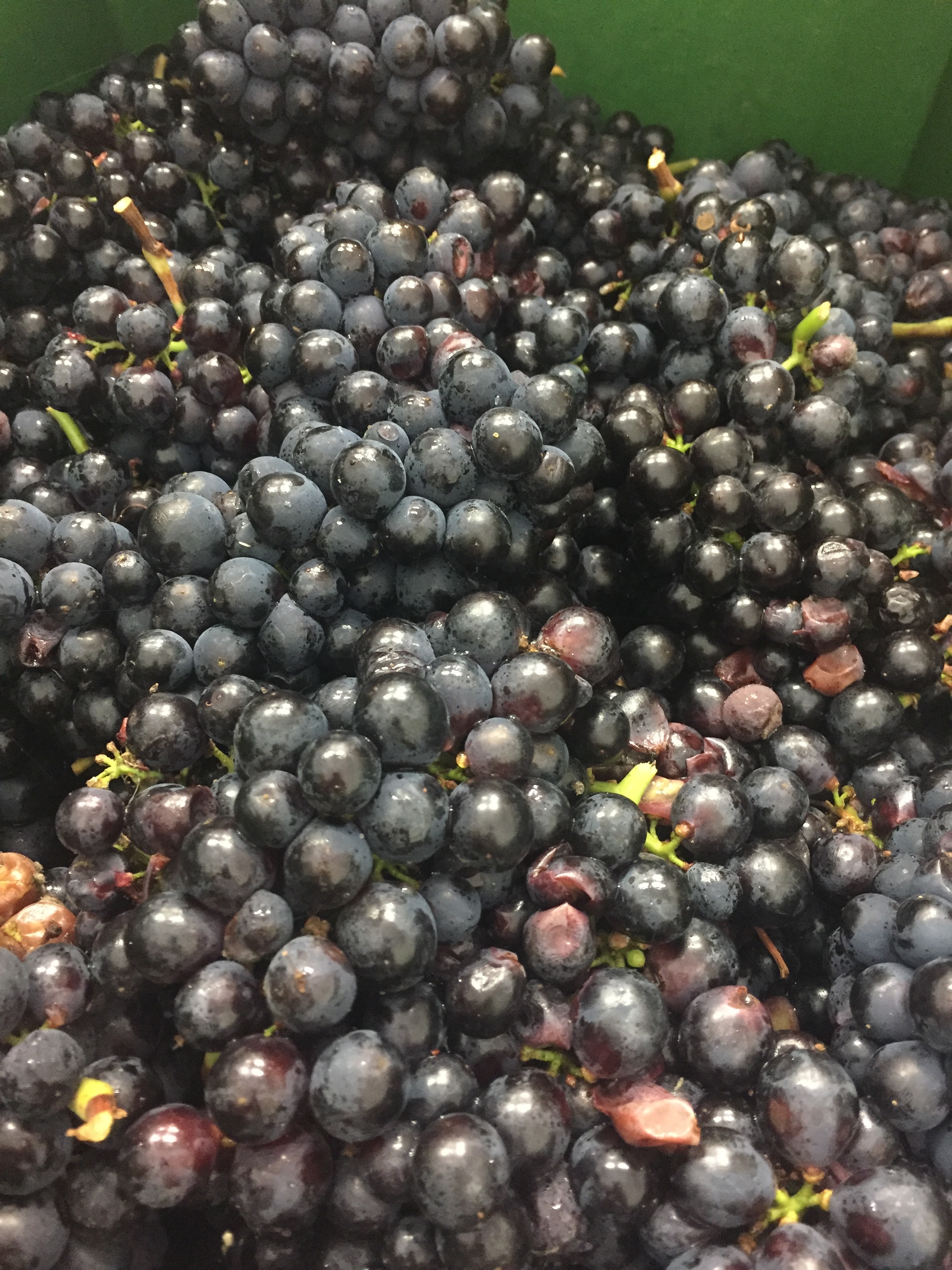
As far as the vintage is concerned, 2020 kicked off with a bang! We welcomed a new and exciting Essex grower to our repertoire, who provided us with some of the best pinot noir seen all harvest. That mainly went into our 2020 “I’d rather be a rebel” rose, however, there was a single pinot noir clone that tasted incredibly good that it was syphoned off into a new limited edition red wine, “Trouble Every Day”. This set the tone for the rest of the harvest. Working with some of our existing growers, we have worked with two new grape varieties for Blackbook - sauvignon blanc which we fermented on skins and are releasing as “Slow Disco”, and pinot blanc which is “Sea of Love”.
The season started with an earlier than normal bud burst in the spring but was met with the mid-May frost that the UK is often plagued with. Fortunately enough, all of our growers were spared giving way to flowering and fruit set which took place in good conditions and a warmer than average August bringing on ripening on quickly, setting the scene for a great harvest.
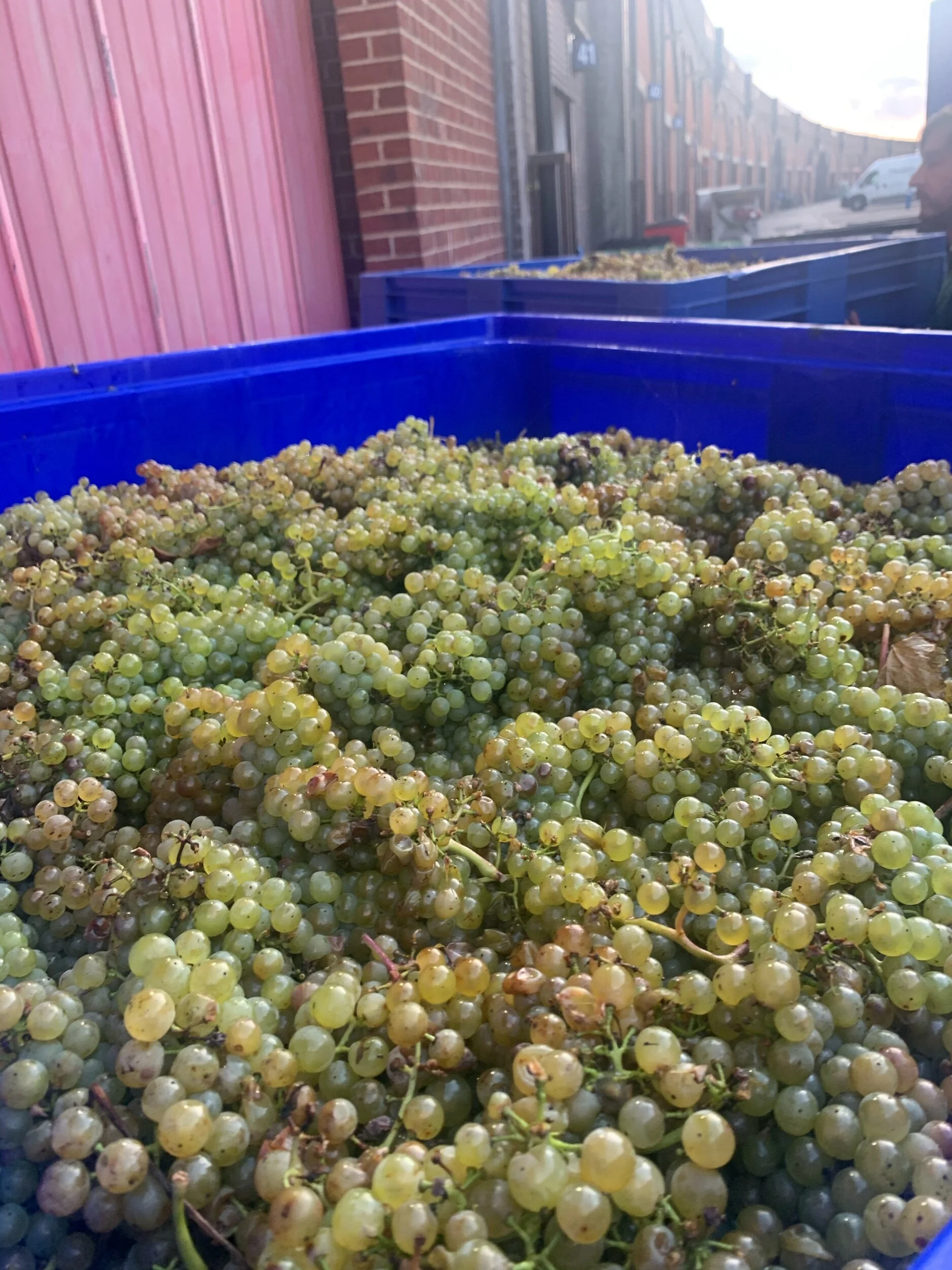
The harvest was one of the earliest of modern times with reduced yields, but exceptionally high natural sugar levels, and flavour development. As a still wine producer, we are always one of the last to pick with our harvest starting the second week of October running for 3 weeks. It was met with sporadic rain and sunshine, a very different environment to 2019 and the wines reflect this. In summary, 2020 has produced some great wines but not many of them.
The English micro-negoc project
In our beloved wine country, the old and new alike venture in search of the perfect vineyard across the Southern line. However as suitable land is becoming scarcer and land prices continue to climb, is planting the future for the UK wine industry? Well, perhaps not.
Sergio’s article below recently published in Vineyard Magazine, June 2019 edition https://www.vineyardmagazine.co.uk/onlineissue/
Buying in grapes means not being tied down to a specific site.
In our beloved wine country, the old and new alike venture in search of the perfect vineyard across the Southern line. However as suitable land is becoming scarcer and land prices continue to climb, is planting the future for the UK wine industry? Well, perhaps not. Wines of Great Britain reports in 2019 a 24% increase in the overall land now under vine, with an estimated 3 million vines going in the ground this year alone. This brings the total hectarage up from 2,888 to just over 3,500 hectares. In 2018’s bumper harvest, capacity issues were seen where there was no remaining tank space for vintage demands. While this anomaly maybe due to the perfect storm of 2018, it could become more of a common occurrence in future years, due to climate change and more established vineyards coming online. As the market for grapes continues to mature, and grow, it is logical that more producers may opt, as we have at Blackbook, to bypass the decision to plant and instead focus on developing relationships with trusted growers to source our fruit. For decades, even centuries, wineries around the world have adapted to changing conditions through the ability to purchase fruit from different sites, some locally and others further afi eld to make their wine. Those whose production is from 100% purchased fruit can be described as a négociant – a winery who buys grapes, or grape juice, from others and sells the wine under their own name. In recent years many have preferred to use this model; often the younger generations marked as New Wavers. No better example can be seen than in South Africa, where a group of likeminded individuals are seeking forgotten vineyards and varieties lost in the fog of Chenin blanc, Pinotage and Chardonnay. Take for example, Blankbottle, Craven Wines and Savage Wines. Beyond the romance of the New Wavers, a good example is Burgundy as an epi-centre for micro-negoc due to the prohibitive cost of land - vineyards can cost upwards of millions for a sliver of a 1er cru or Grand Cru plot; Le Grappin is a key example known well to the UK market. While both arable land and established vineyards in the UK are nowhere near the infl ated prices of Burgundy and its neighbours, a commercial planting could set you back between £15-25K per acre for land and planting. But it is not just the establishment. There is the yearly running cost of anywhere between £5-10K per acre, plus the 3-4 year waiting time. The initial outlay and waiting, ultimately ends up with at least a 10-year timeline to see any return. Dreams of transplanting the south of France to the sunny hills of the English countryside could end in tears. For us, grape purchasing may be the answer. As well as offering a more accessible route to starting a label, grape purchasing enables the producer to source a diverse selection of varieties, adjust the mix over time according to desire and demand, and shift the production size up and down. As a producer, grape-buying means not being tied down to a specifi c site. I am able to source fruit from Sussex, Kent, Essex and beyond, highlighting the immensely diverse micro climates within each of those sites. In some cases, fi nding lost plots and working to revitalise them. As a micro-negoc, there is no need to wait four years (for still wine, sparkling is an eternity of a wait!) before seeing a return on one’s investment. Conceptually, wine is being sold earlier therefore income is received earlier. The earlier returns lead to a reduced time towards profi tability making the whole project more viable for a start-up. There is a third scenario here. The option to lease vineyards. I believe this could be a good alternative for the control freaks out there (I include myself in this grouping). The capital outlay is much lower than planting, but the direction of the vineyard is under direction by Leasee who rents the site, as is the cost of maintaining the site. This is a good alternative, but I feel the same can be achieved with the right grower relationship. As the UK rises through the ranks of growth, would more businesses want to be a négociant? At the moment, in the current state of affairs, I would say yes. As years continue, vines are coming of age, more fruit is hitting the open market and by extension more wine. My question is where will it all go?

Ready to launch
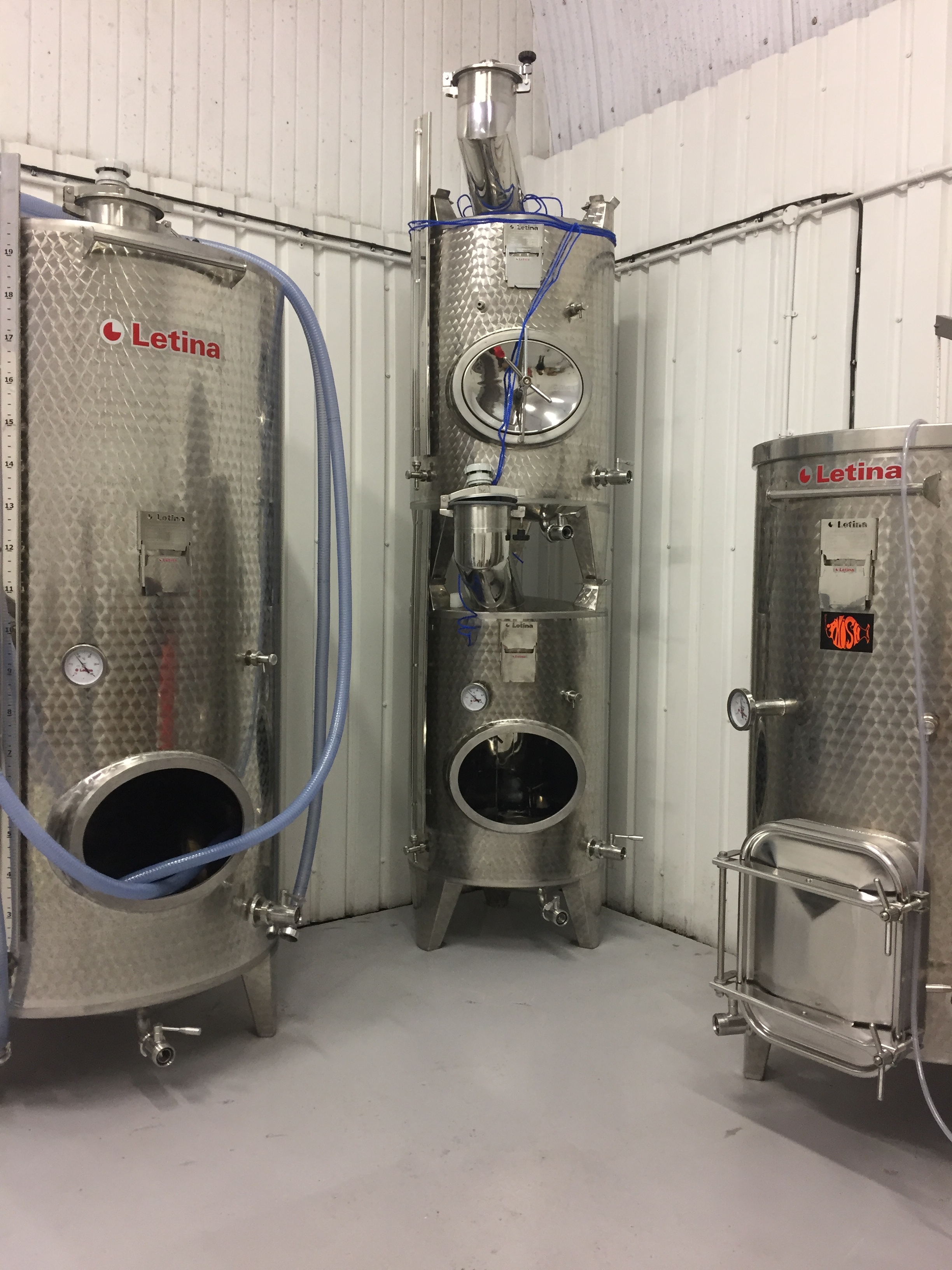
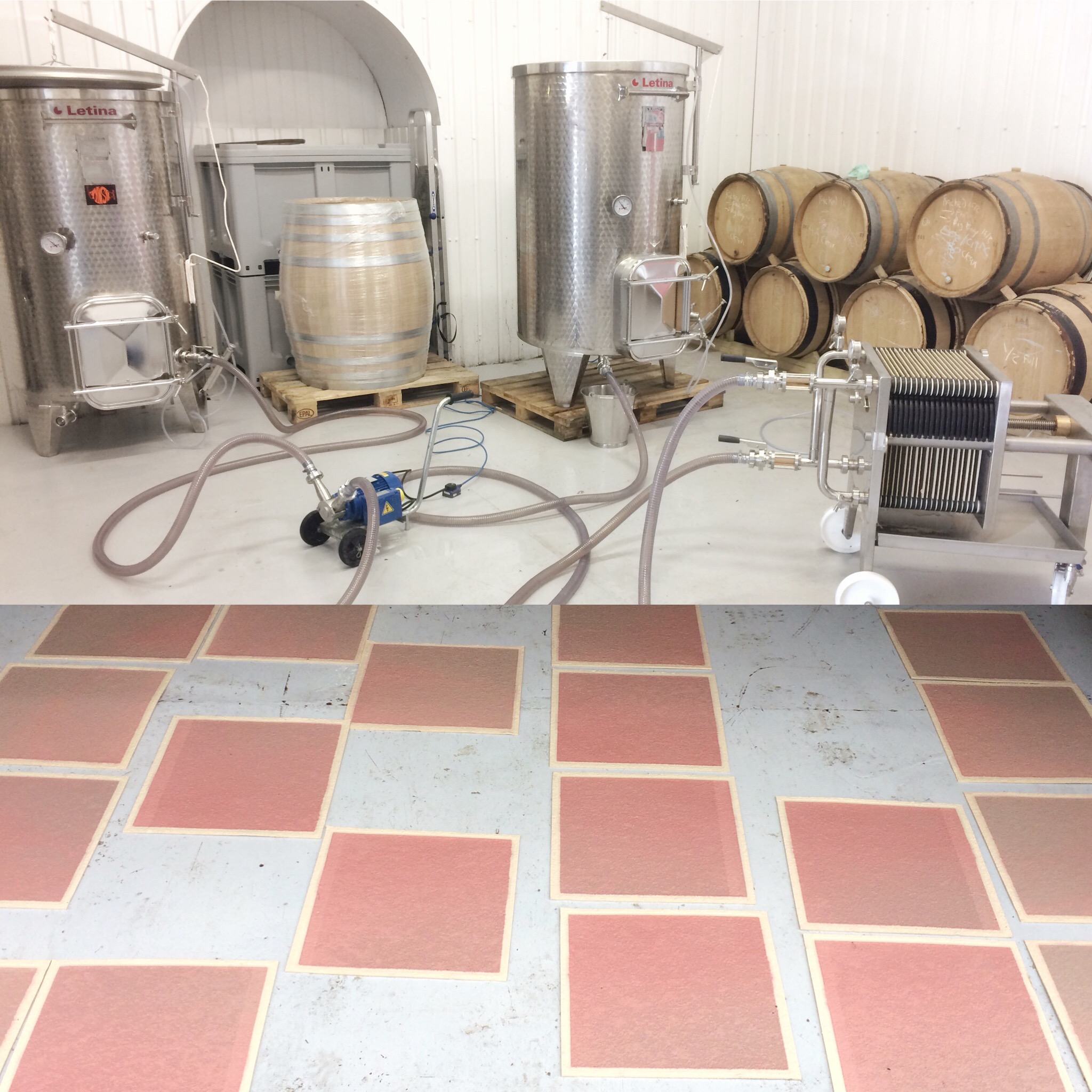
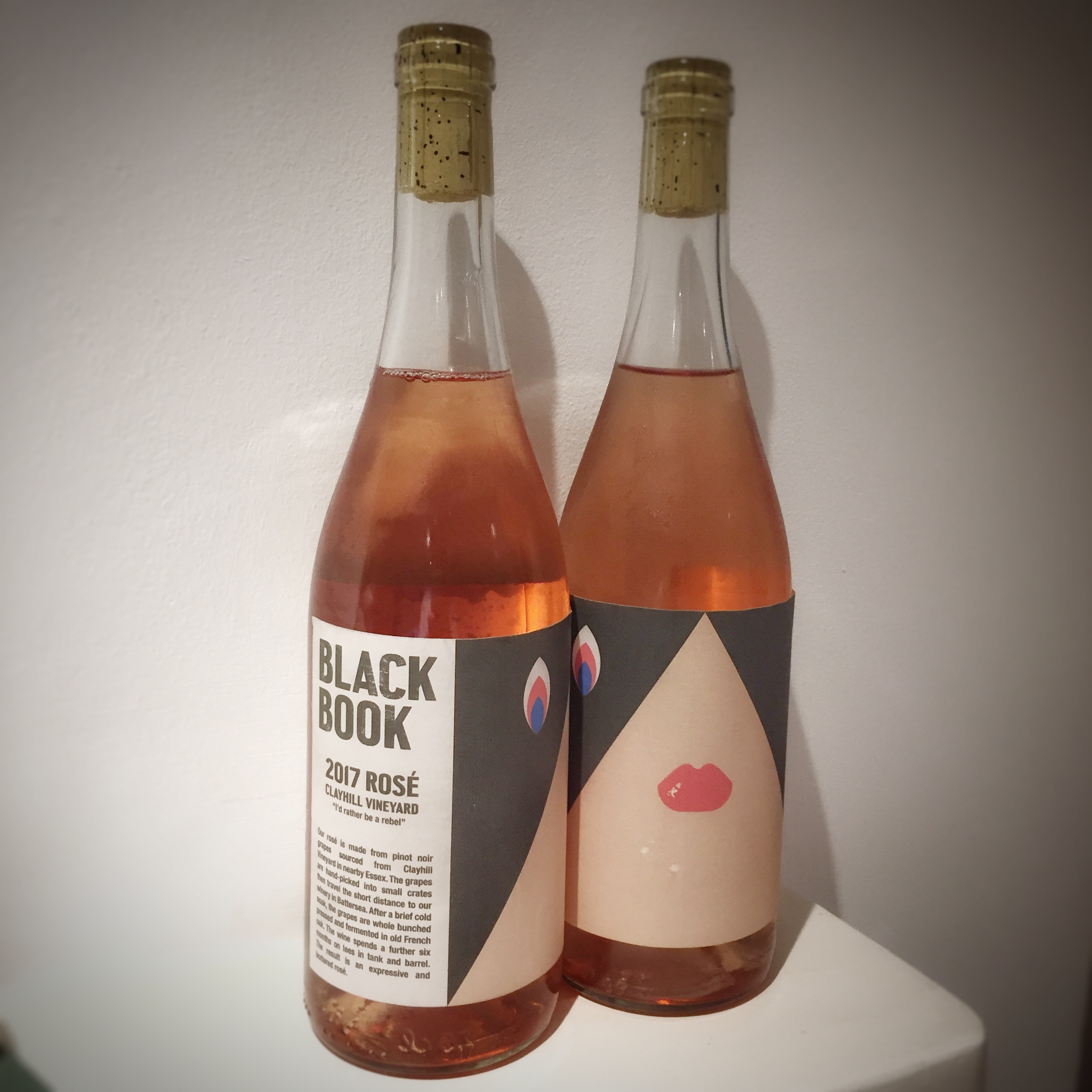
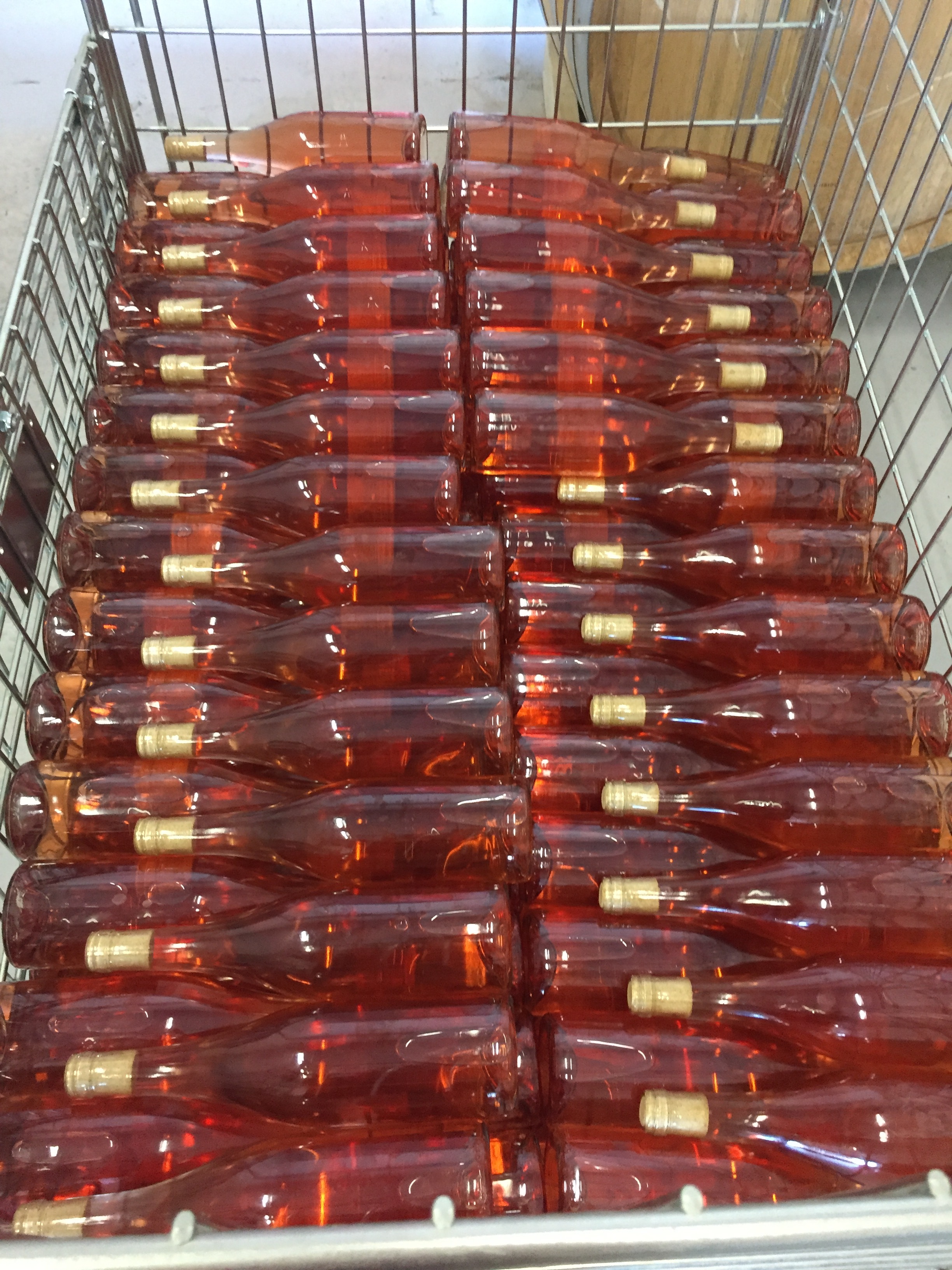
It's been a busy 12 months for Blackbook as we've set up our Battersea premises, sourced our first English grapes, completed a hectic harvest and now bottled and labelled our first release. We're ready to launch to the market, starting with our Essex-grown, London vinified pinot noir rosé. There are 3 more wines maturing away down in Battersea, a still chardonnay, still pinot noir and a sparkling seyval blanc, our “GMF”. All three will be released later this year.
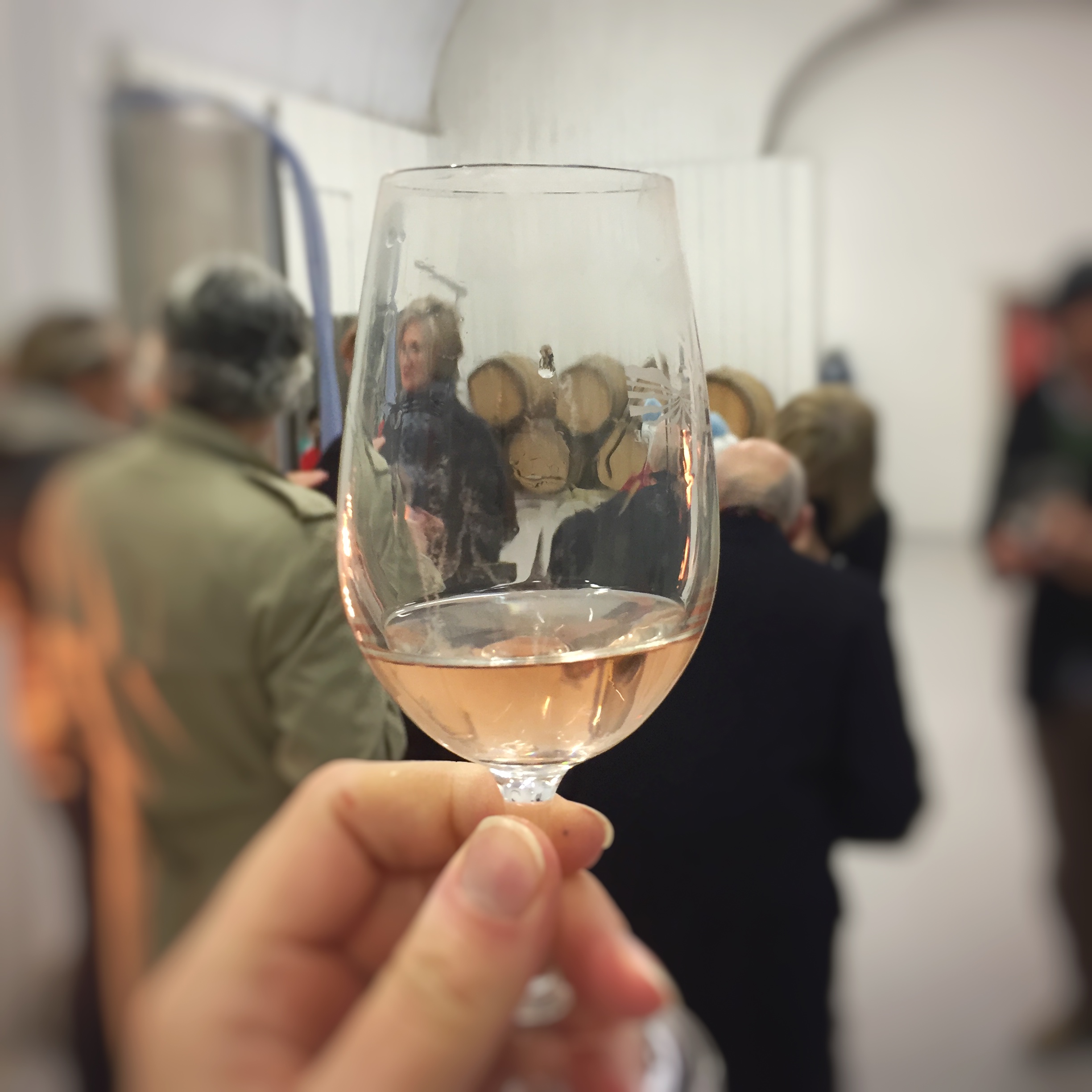
We only have 1,000 bottles of the rosé, which has been awarded a Silver medal by Drinks Business Global Rosé Masters 2018. It will soon be on the wine list at Michelin-starred Chez Bruce and we also have advance orders from local merchants, Dvine and Cellar SW4.
Come and join us at CellarSW4 in Clapham on the 30th May as we takeover the bar for a “Blackbook Hijack” and we’ll be pouring our rosé alongside 2 other wines that Sergio, our winemaker, helped to make during his previous vintages at Ata Rangi in New Zealand and Mulderbosch in South Africa.
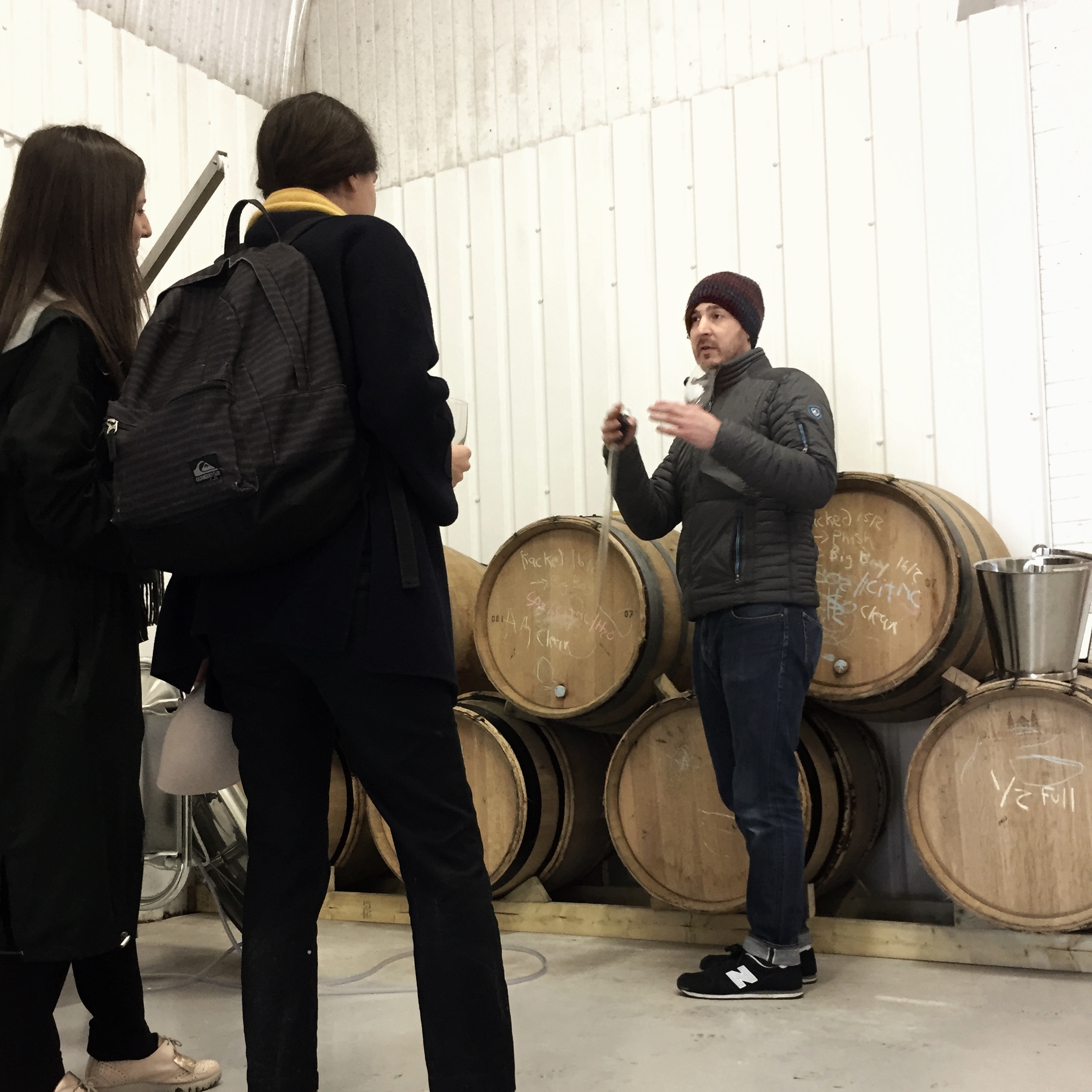
We’ll be beginning winery tours in July, booking details will soon be available in our shop.
Our online shop is now live and offers a quick route to order our rosé and have it delivered to your door. We are offering a special release discount for our mailing list customers so sign up now to receive details.
We’d love to hear from you so please get in touch and tell us what you think of the wine and website.
Our journey from choosing the site through to bottling our first wine...