

Blackbook Reserve Wines
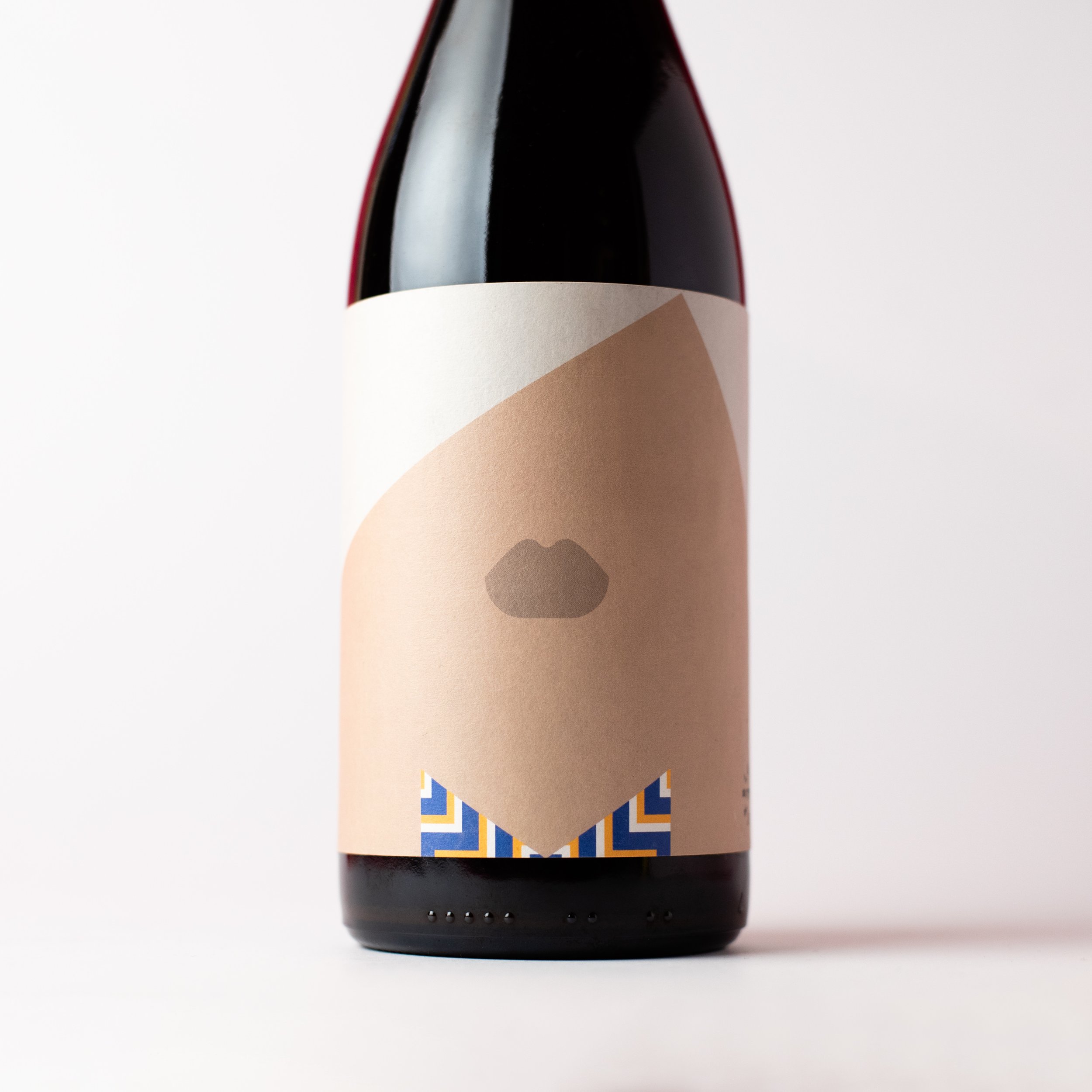
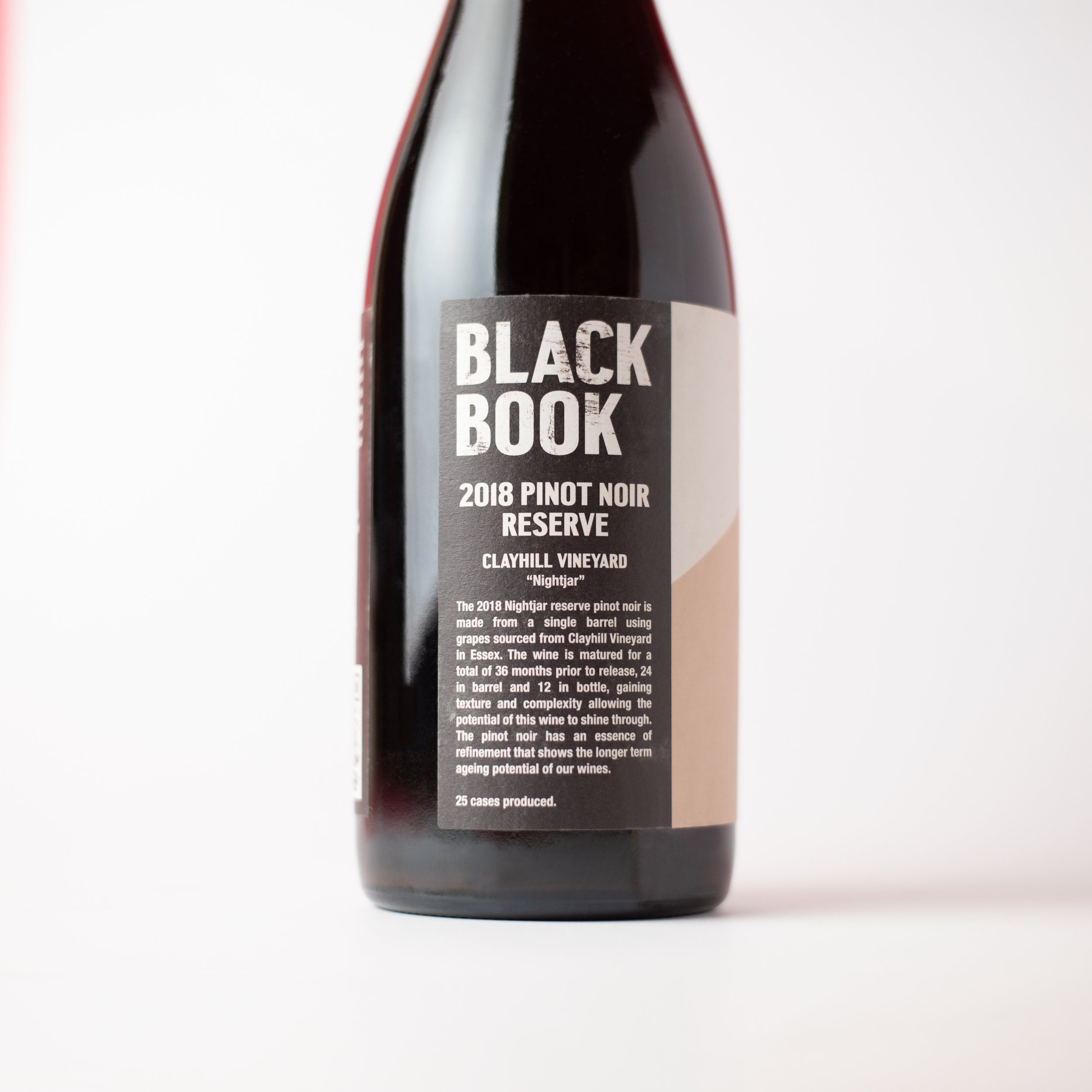
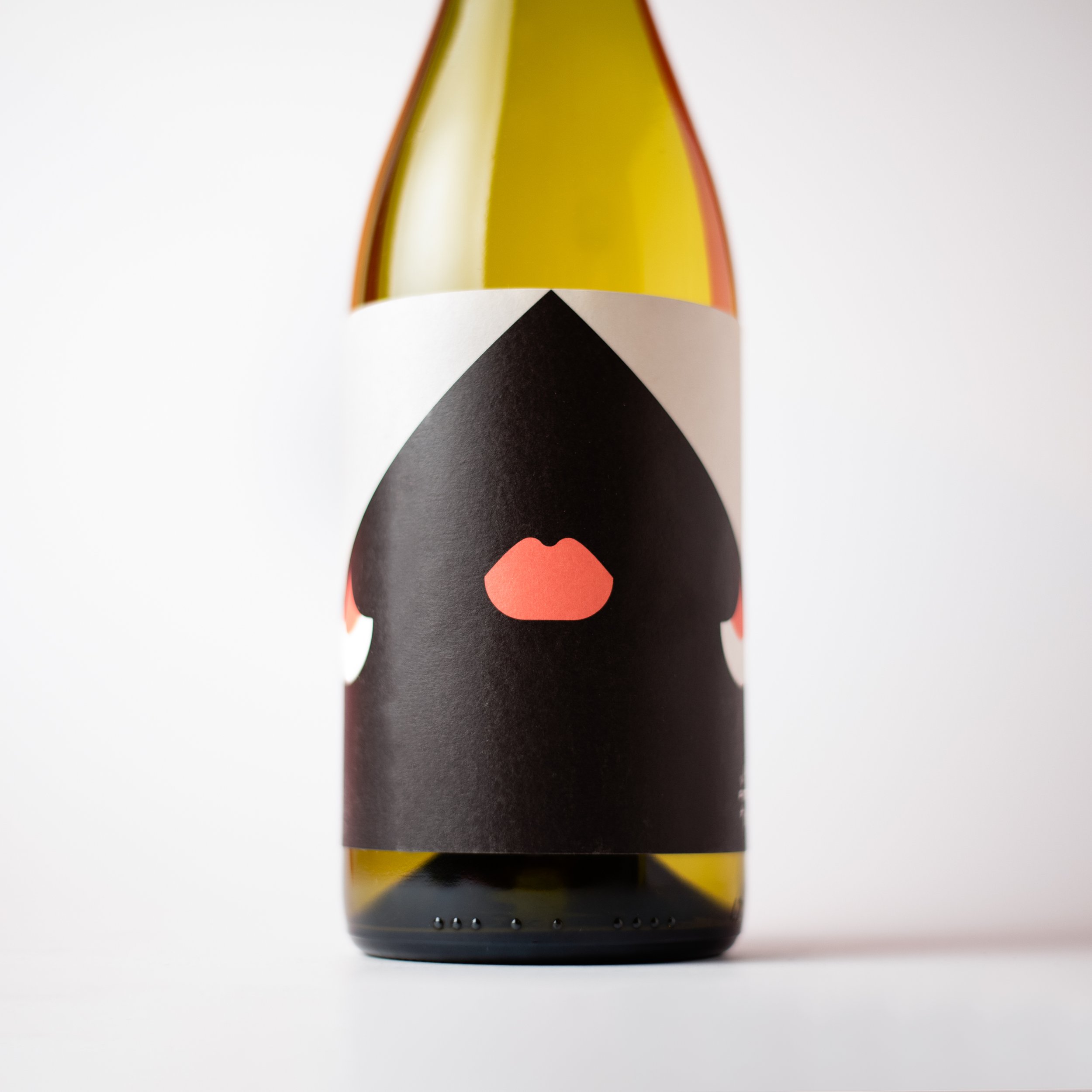
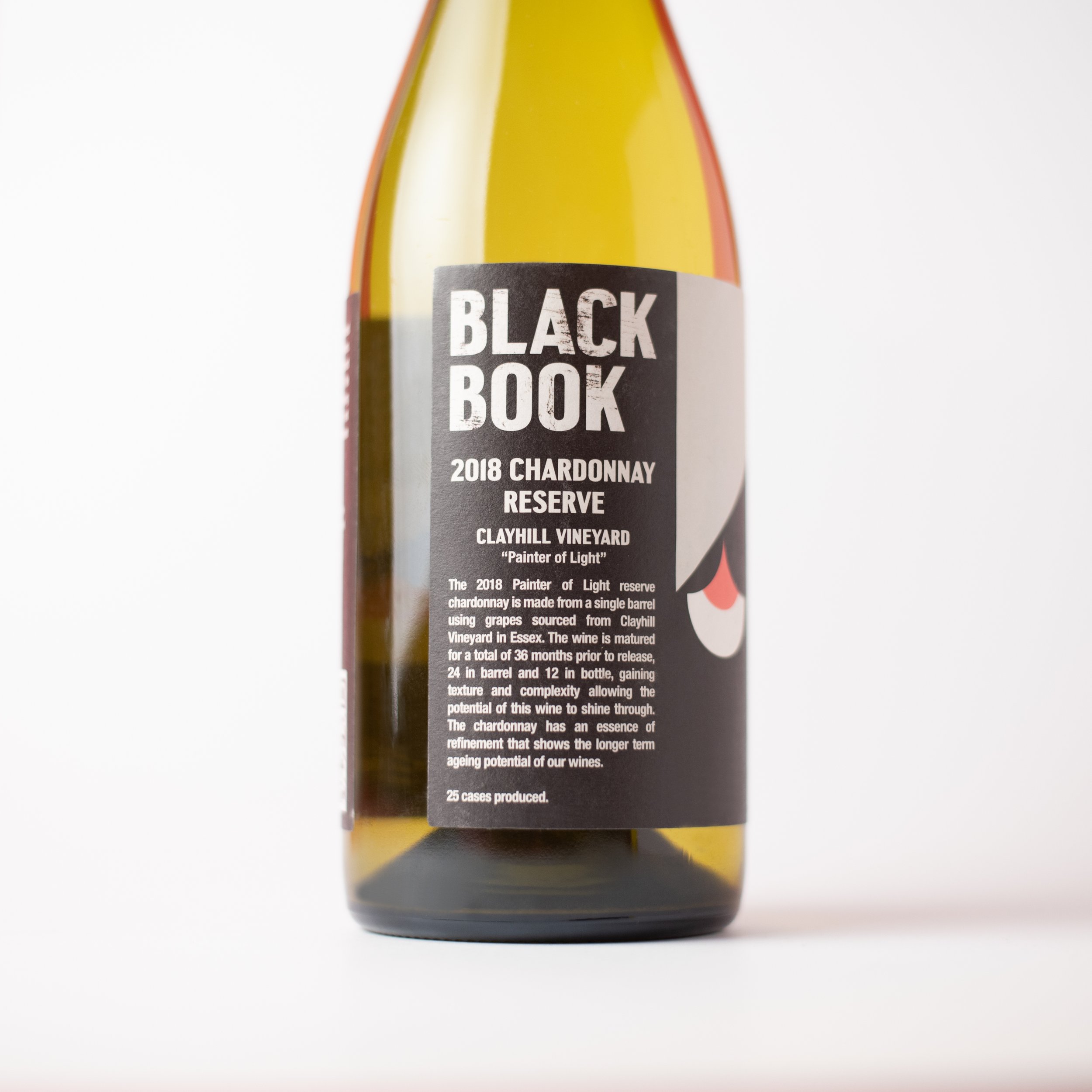
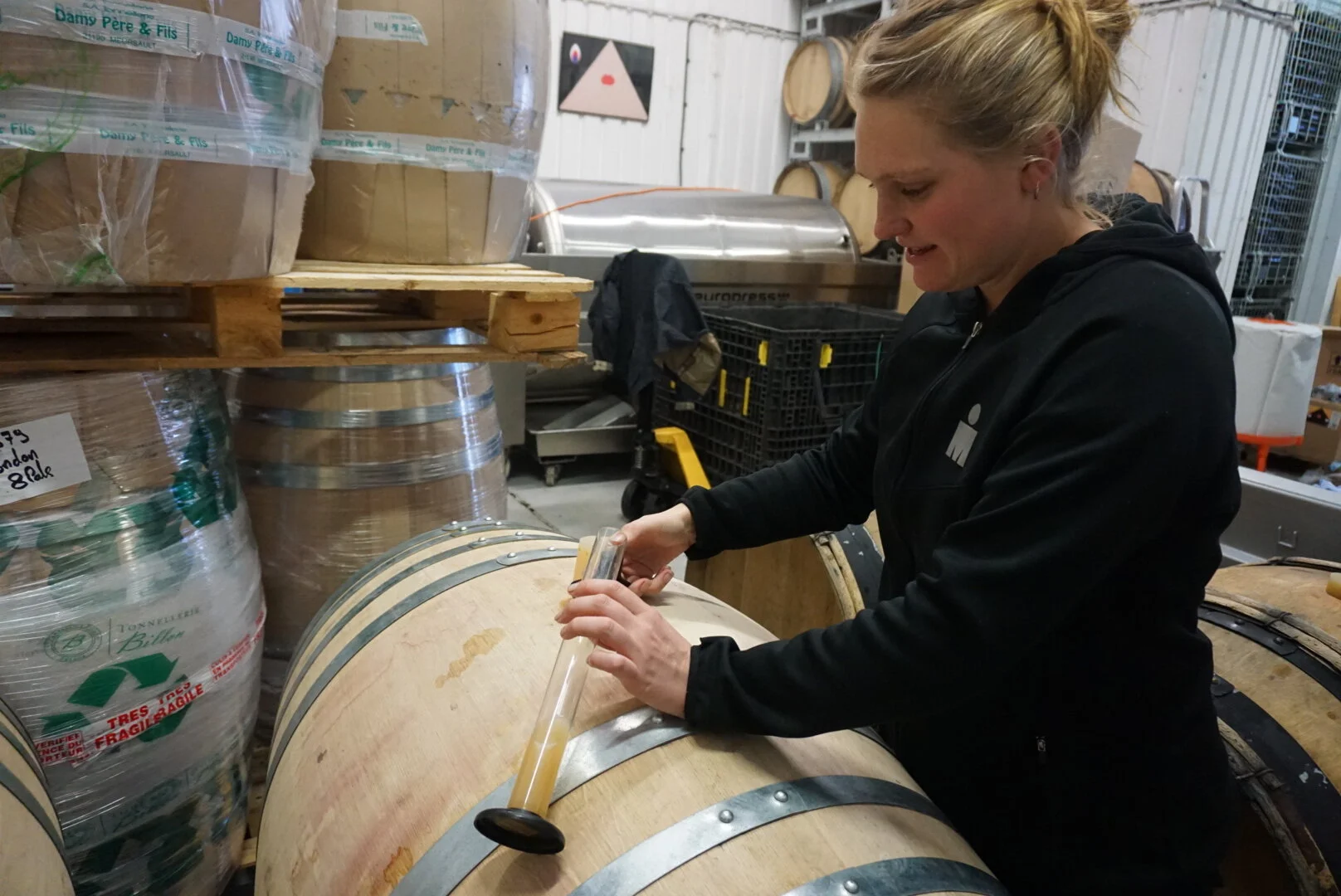
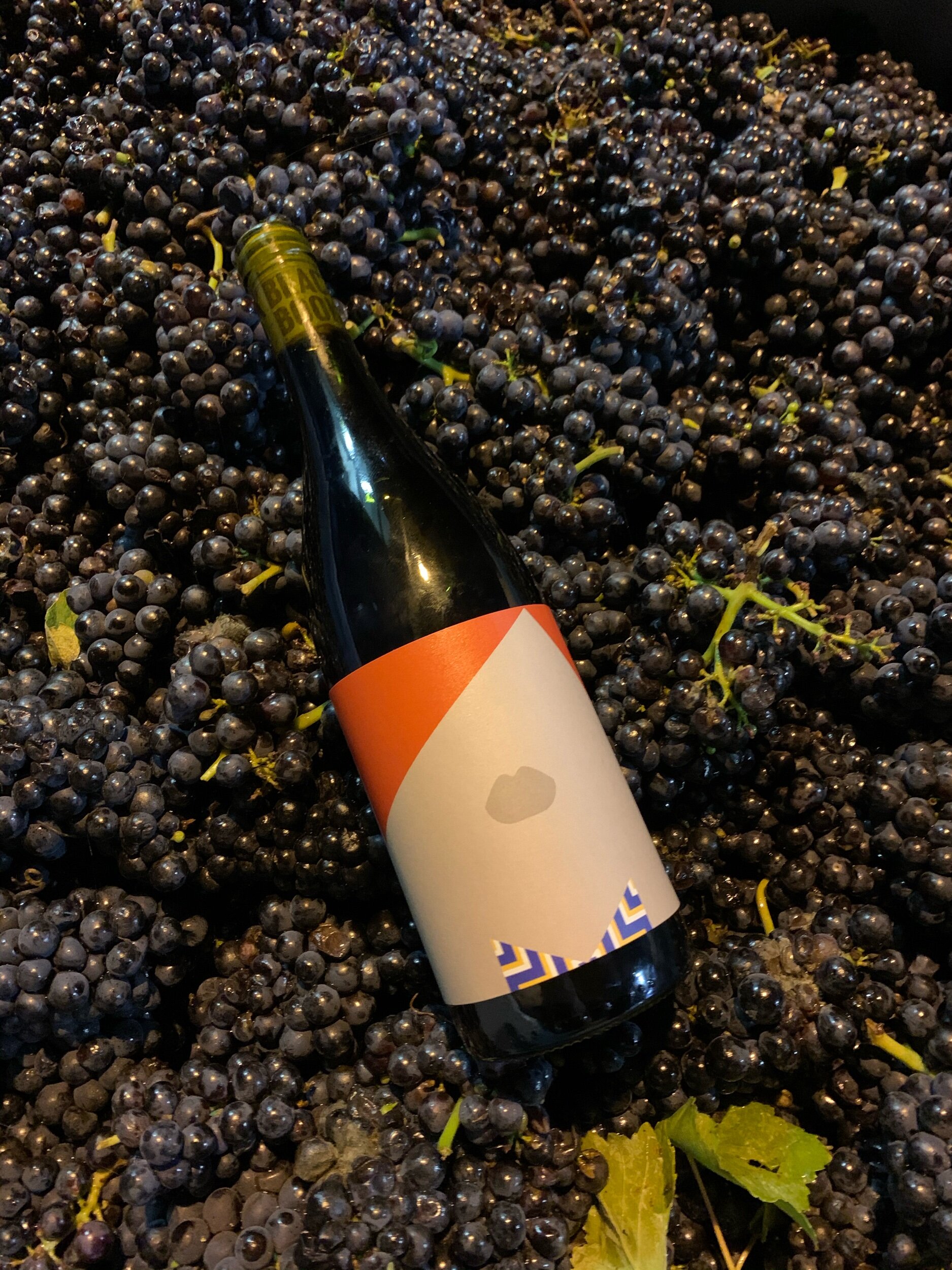
Our goal from the beginning of the journey at Blackbook, was to show that you can make stellar pinot noir and chardonnay in England, and this week marks another milestone in that journey as we release the first of our reserve wines. We’ve been working with the Symons Family at Clayhill Vineyard since our first release in 2017. Dale has a stunning site in the Crouch Valley and he shares our determination to make high quality still pinot noir and chardonnay in England, and we use his burgundian grape clones to make our flaghship Painter of Light chardonnay and Nightjar pinot noir. After a great reception to our 2017 release, we decided to take a leap and save a barrel of each wine for extra ageing in order to create a ‘reserve’ version of our core cuvees. In 2018 it was England’s ‘big’ harvest, and this was when we started to hold back wine. We have had a barrel of the 2018 Painter of Light and 2018 Nightjar in the winery for 2 full years, then another year aged in bottle. These wines have had 3 years of ageing, compared to our normal 1, and that extra time demonstrates the great potential for making world class still wine in England. We have less than 300 bottles of each of these wines. The labels are once again designed by our talented friends, the Yarza Twins, who have created the grown up version of their core wine counterparts.
The 2018 Painter of Light chardonnay reserve and 2018 Nightjar pinot noir reserve are online now.
Harvest Report 2020
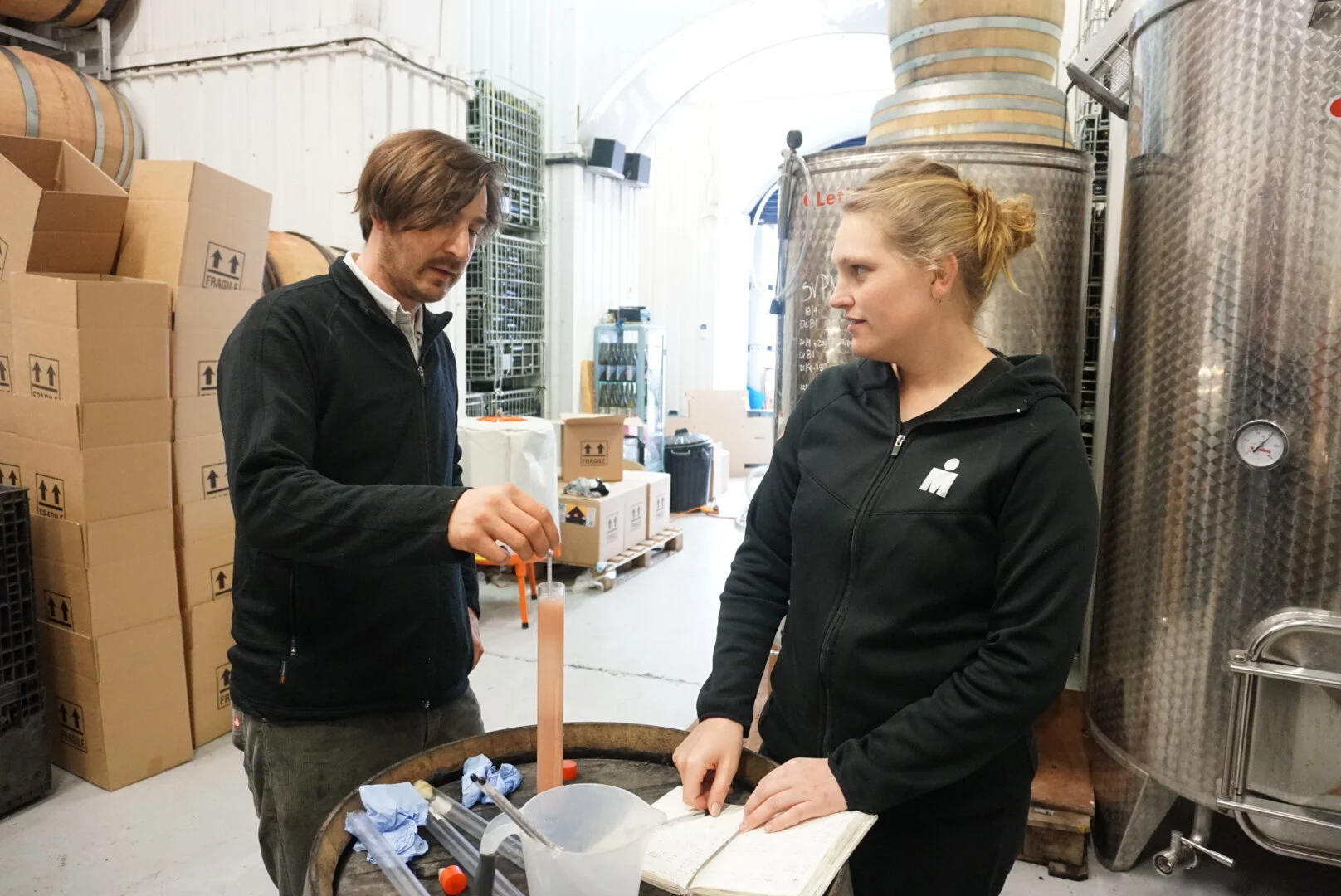
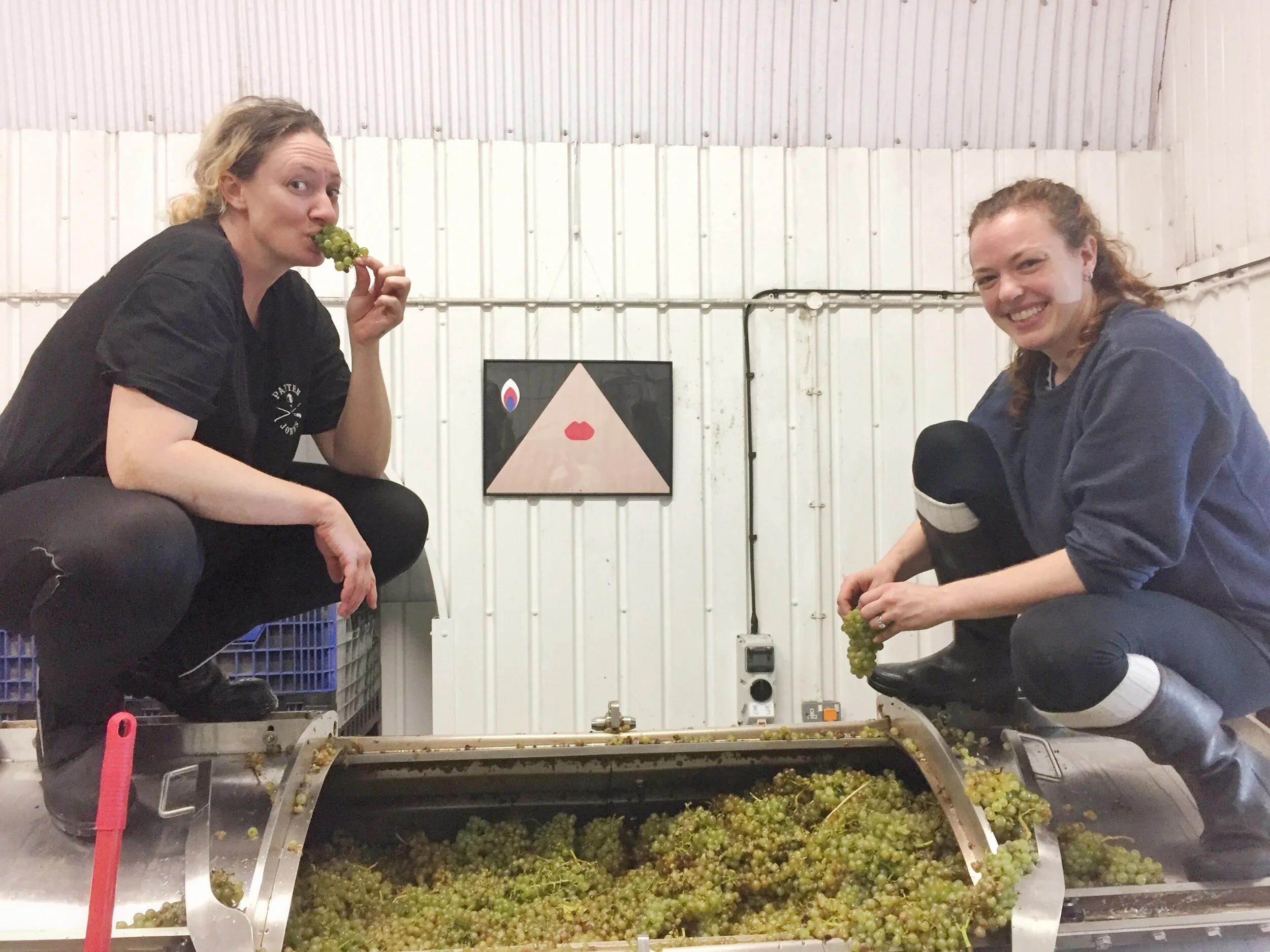
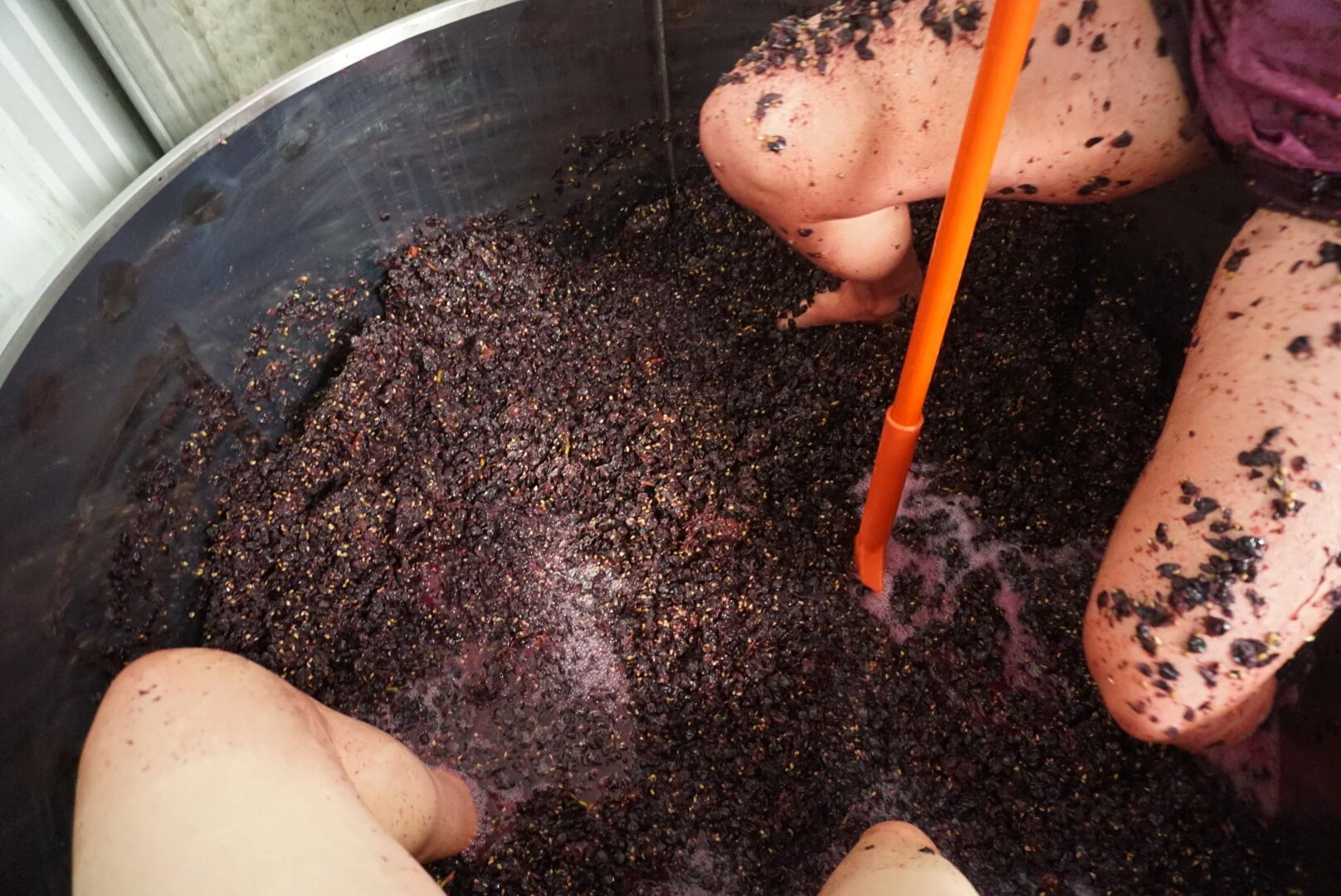
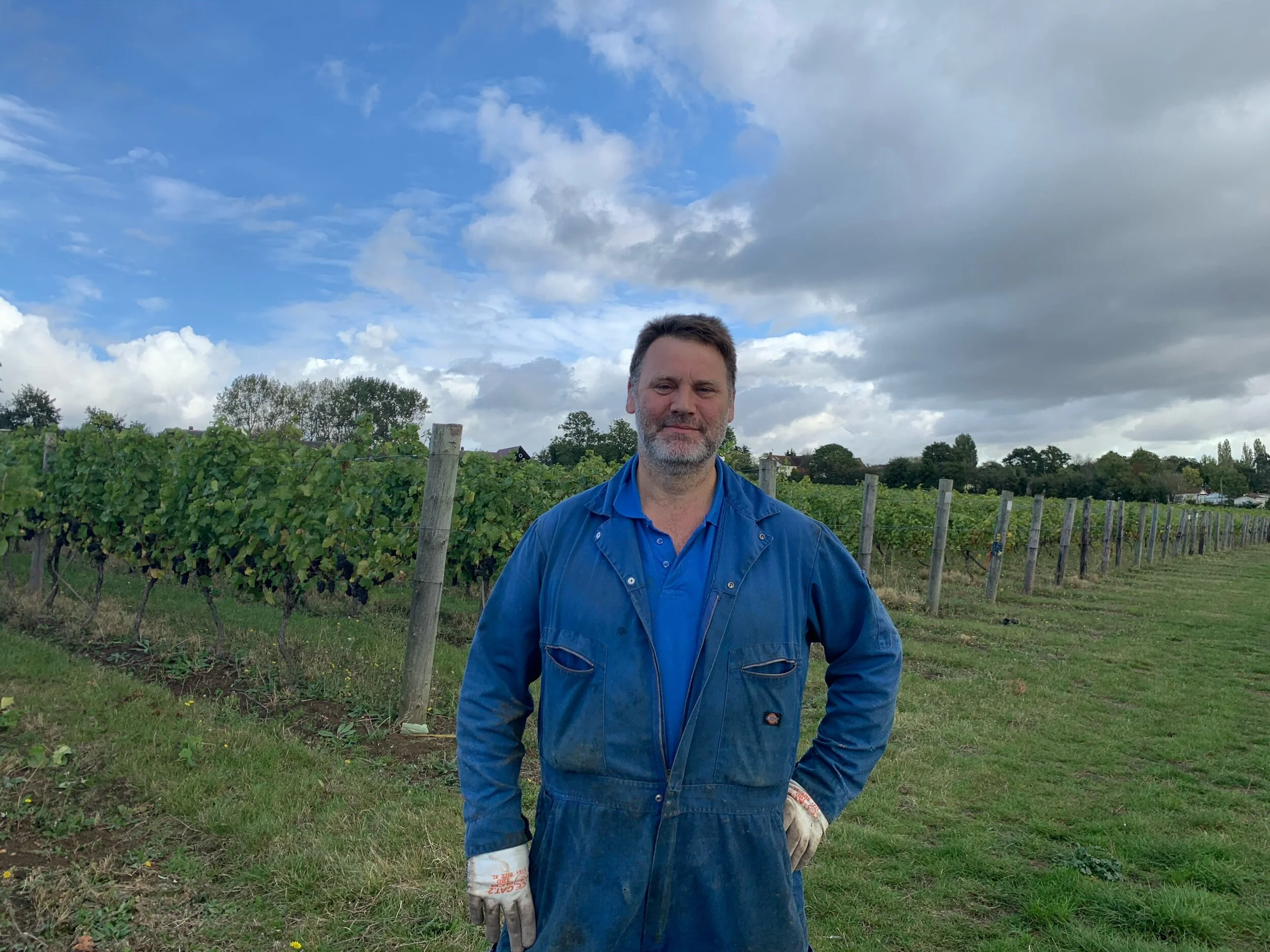
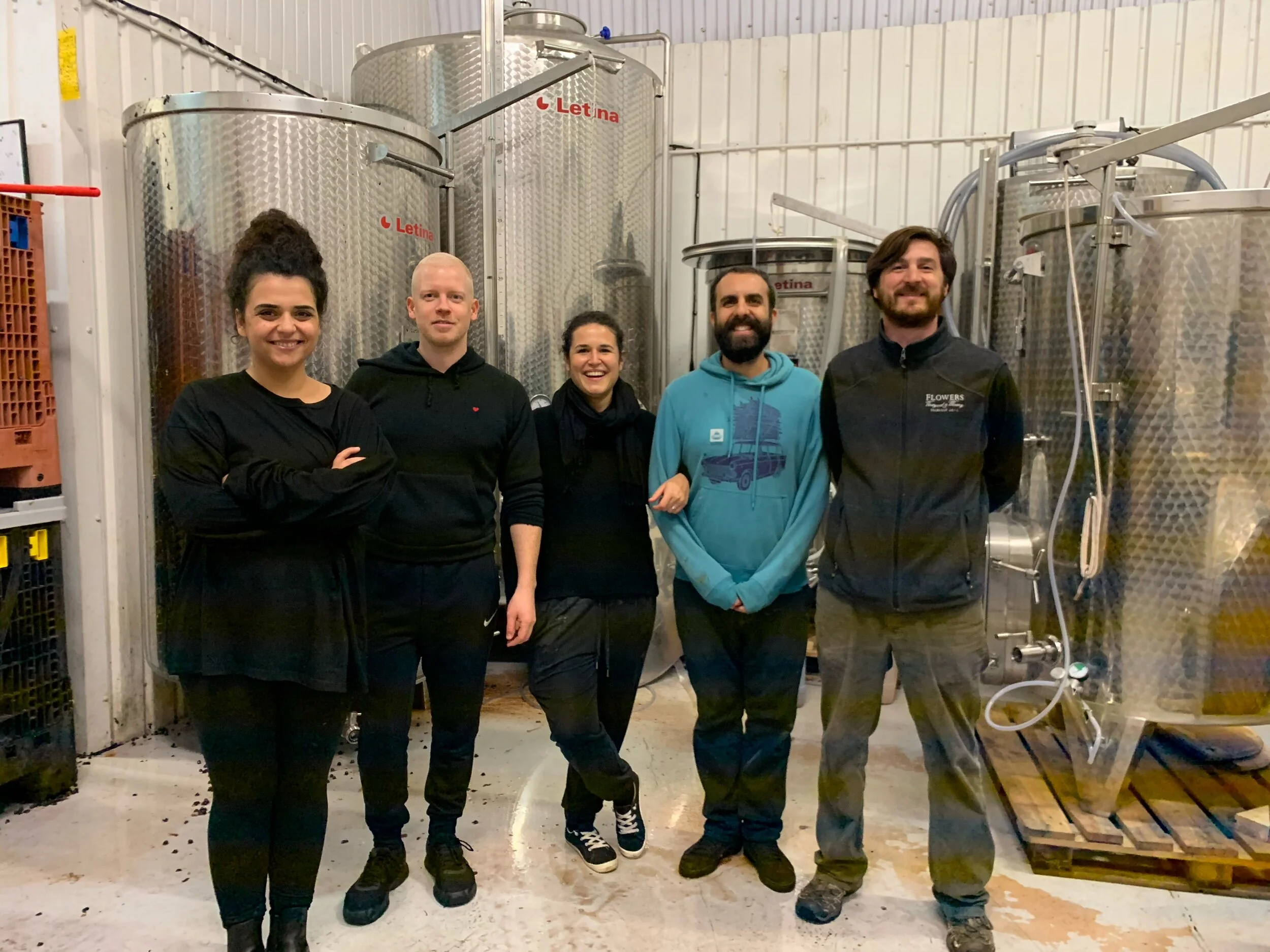
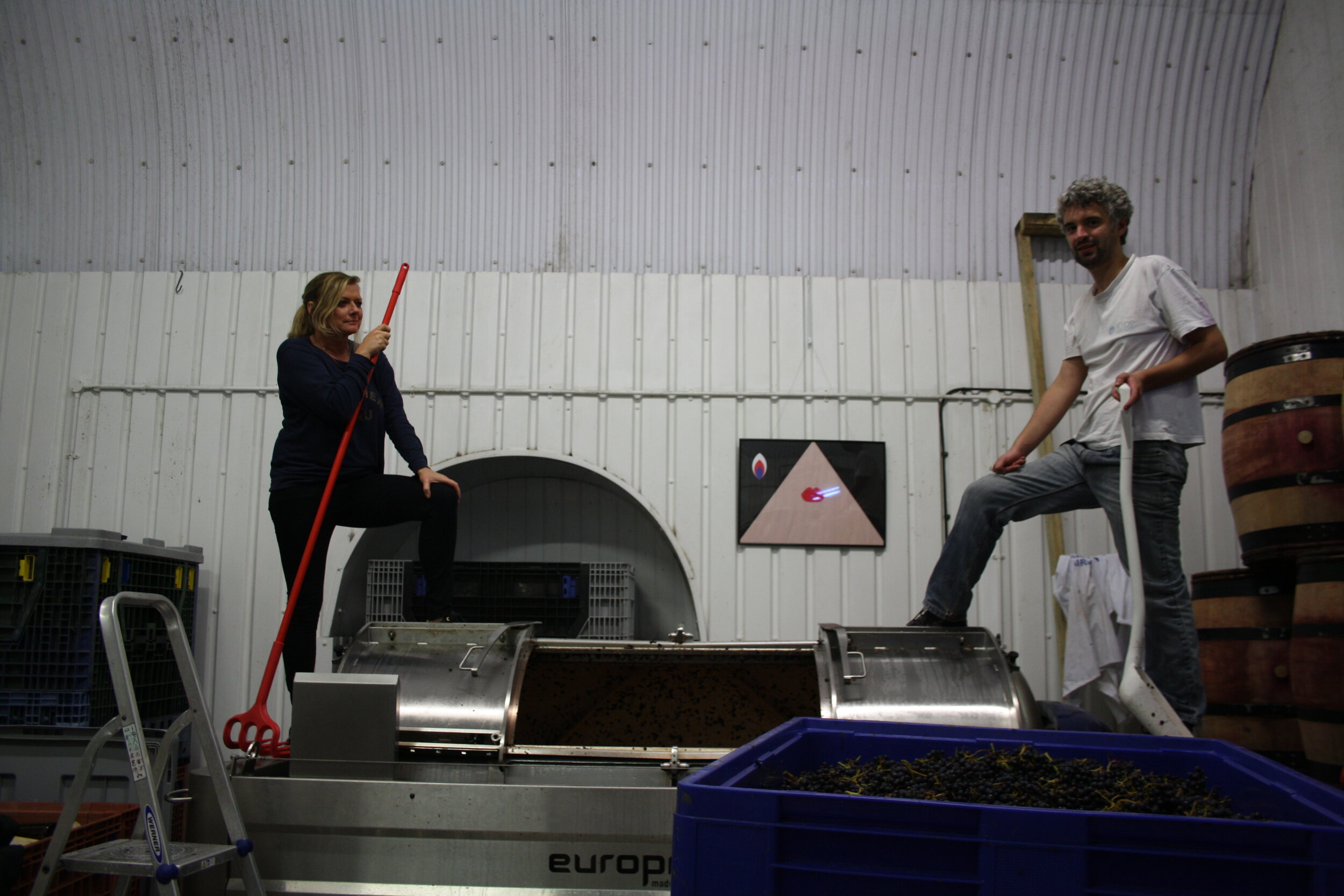
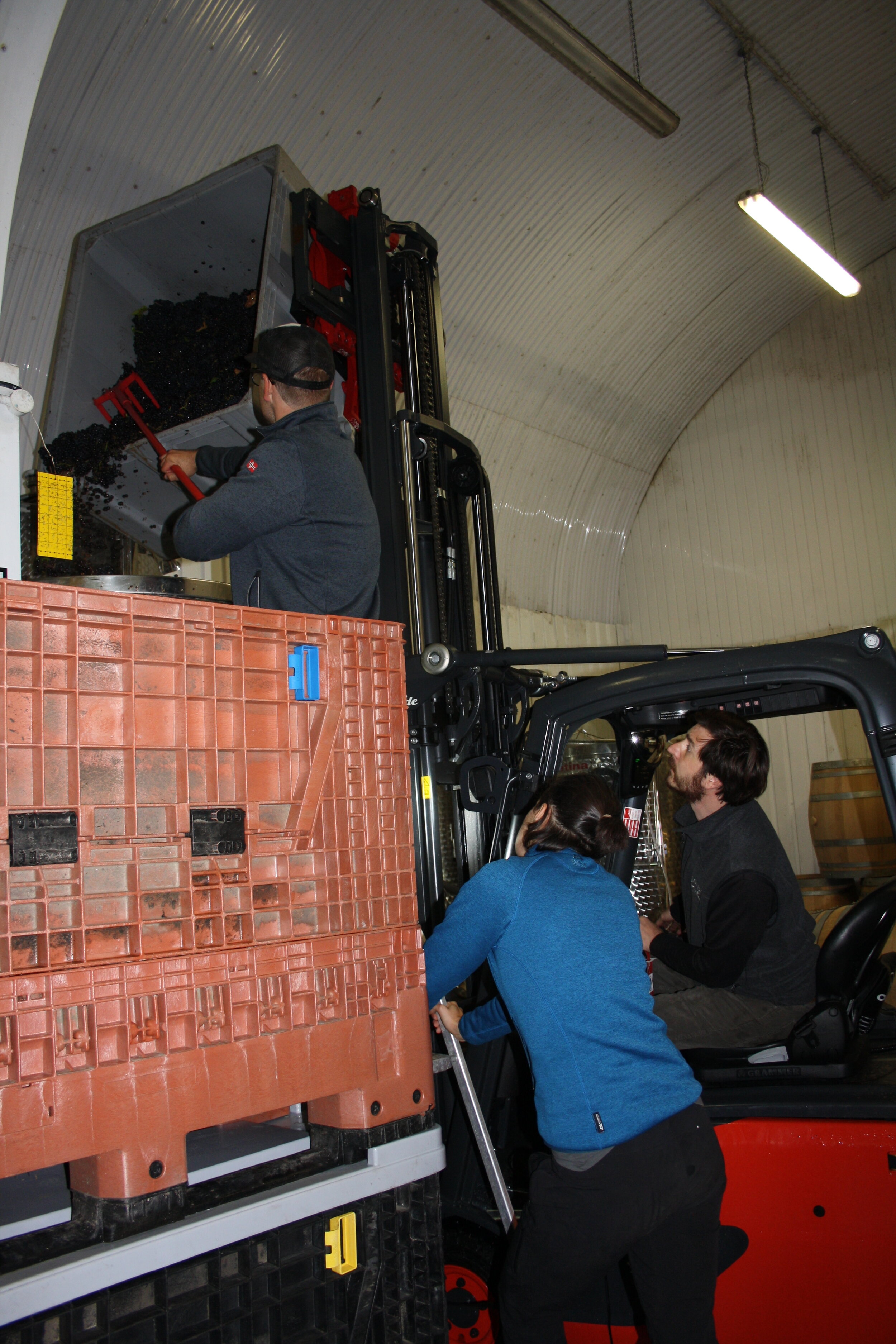
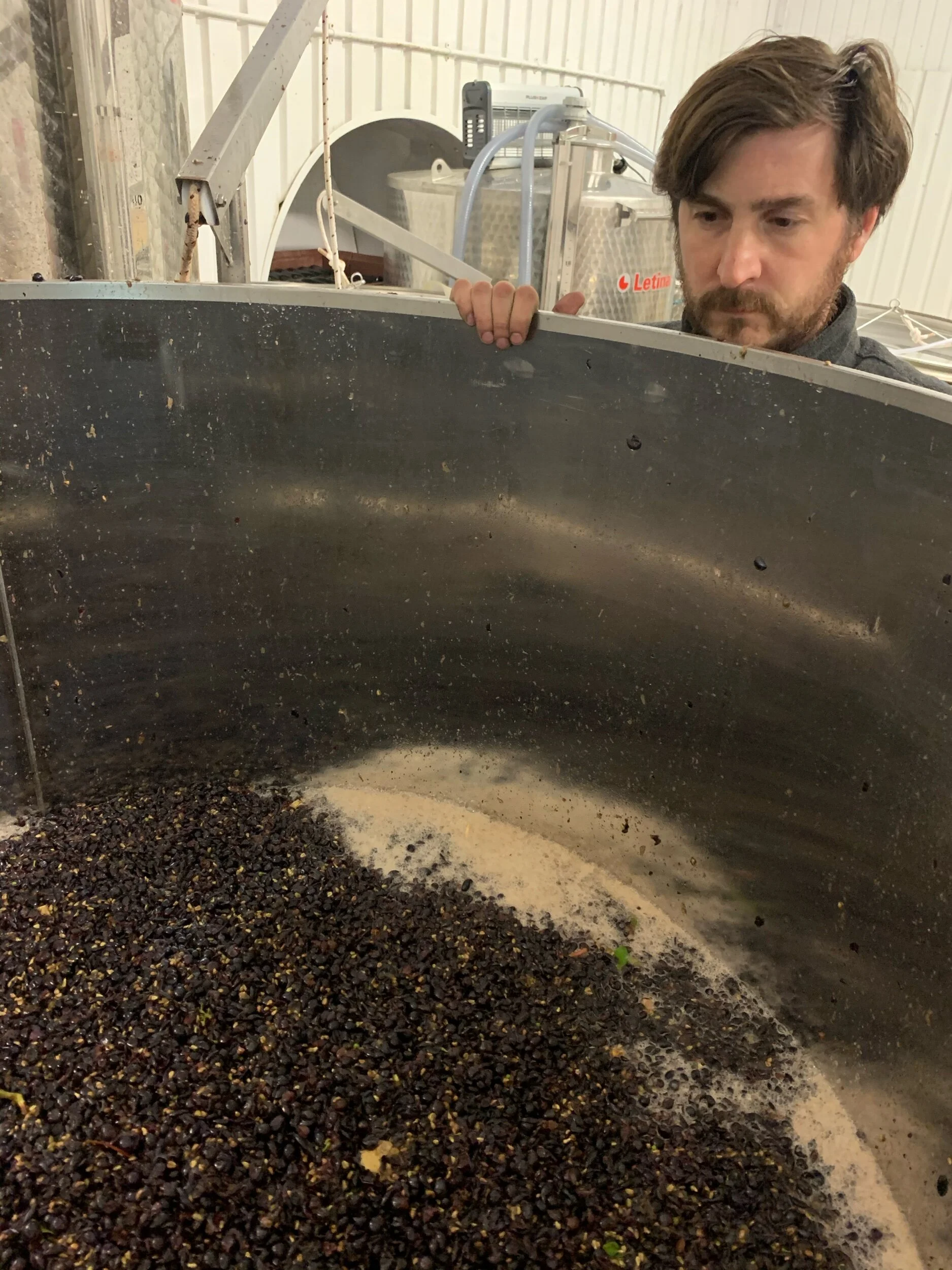
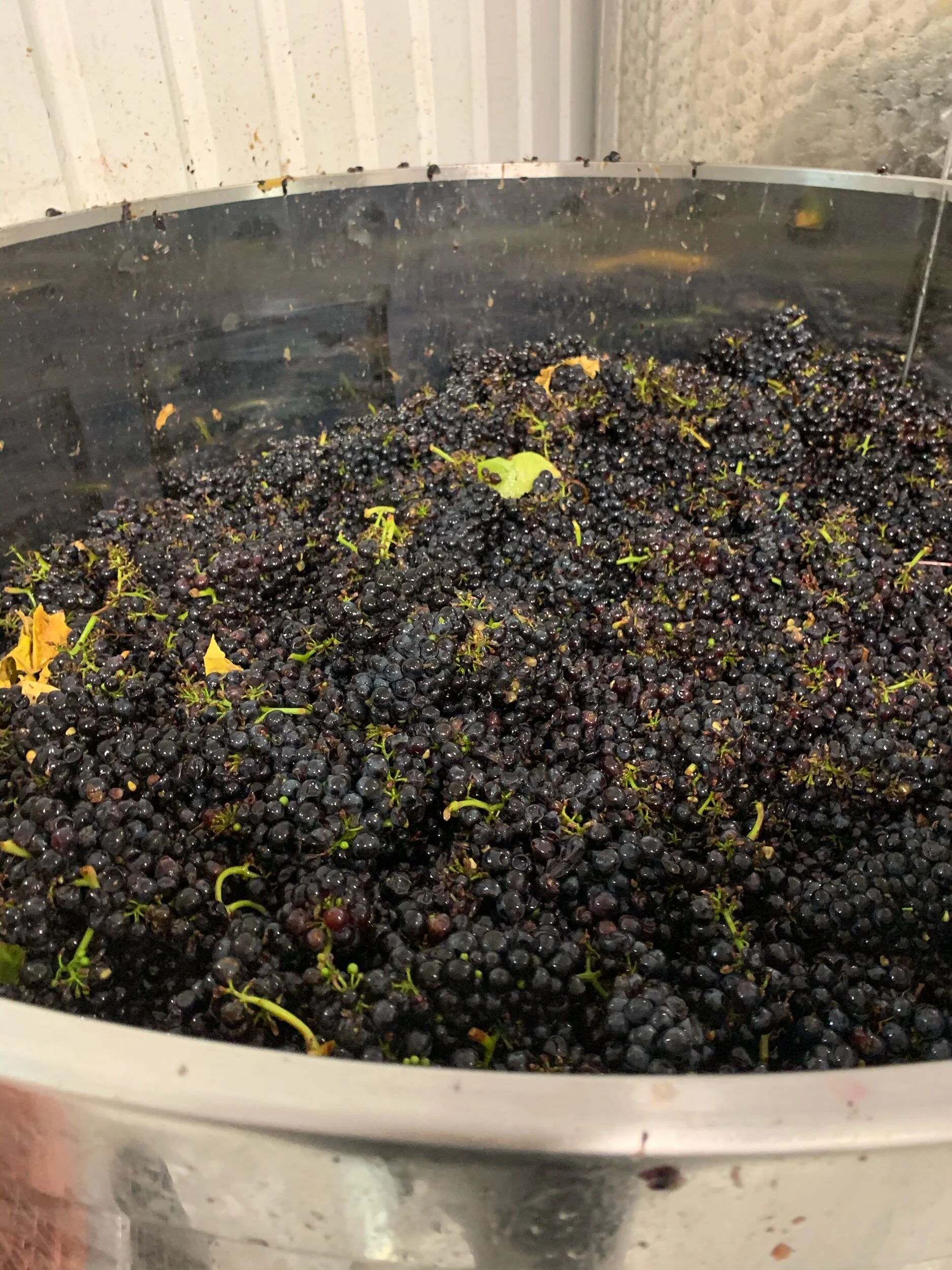
As we prepare for our new releases, we have shared some thoughts and memories from the 2020 “COVID” harvest. What a year, what a memory, it was a race to get wine in bottle before the numbers skyrocketed to the level that the whole country shut down. Hopefully we never have to do harvest under these conditions again - due to the rising positive case numbers in London in October, we approached harvest with caution, sad to lose the normal contingent of volunteers who come from all over to get their hands dirty and stuck into grape shovelling and squishing. Thankfully we did have a superb core team in the winery, in 2020 we had our first non-Verrillo full-time harvest team member, the lovely Alice Verburg who left her family vineyard, Luddite Wines in South Africa to be with us through the Blackbook harvest. Special mention also to Jac Smith and Sara Wright who became the extended part of our core team and joined Sergio and Alice for many late nights in the winery.
As far as the vintage is concerned, 2020 kicked off with a bang! We welcomed a new and exciting Essex grower to our repertoire, who provided us with some of the best pinot noir seen all harvest. That mainly went into our 2020 “I’d rather be a rebel” rose, however, there was a single pinot noir clone that tasted incredibly good that it was syphoned off into a new limited edition red wine, “Trouble Every Day”. This set the tone for the rest of the harvest. Working with some of our existing growers, we have worked with two new grape varieties for Blackbook - sauvignon blanc which we fermented on skins and are releasing as “Slow Disco”, and pinot blanc which is “Sea of Love”.
The season started with an earlier than normal bud burst in the spring but was met with the mid-May frost that the UK is often plagued with. Fortunately enough, all of our growers were spared giving way to flowering and fruit set which took place in good conditions and a warmer than average August bringing on ripening on quickly, setting the scene for a great harvest.
The harvest was one of the earliest of modern times with reduced yields, but exceptionally high natural sugar levels, and flavour development. As a still wine producer, we are always one of the last to pick with our harvest starting the second week of October running for 3 weeks. It was met with sporadic rain and sunshine, a very different environment to 2019 and the wines reflect this. In summary, 2020 has produced some great wines but not many of them.
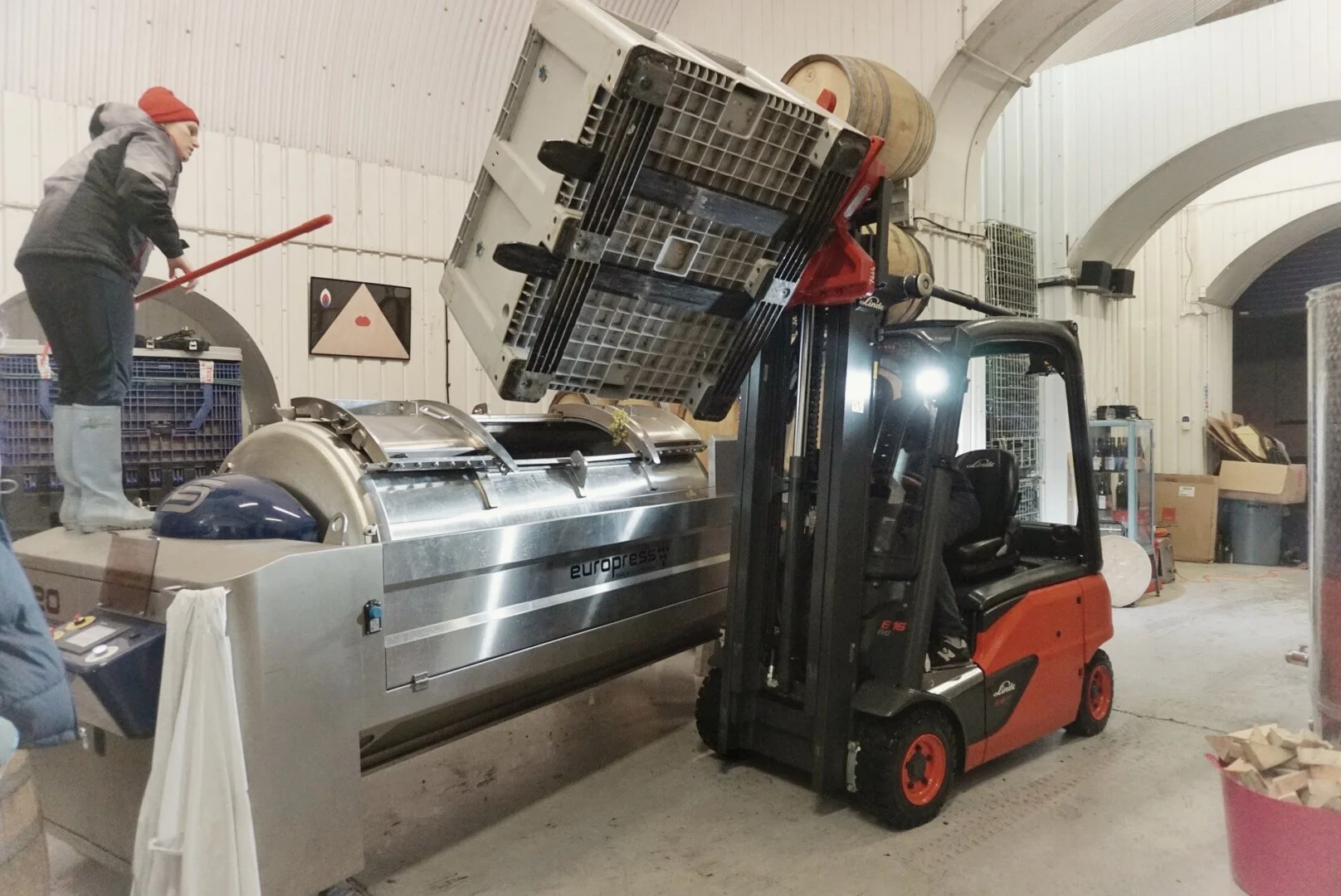
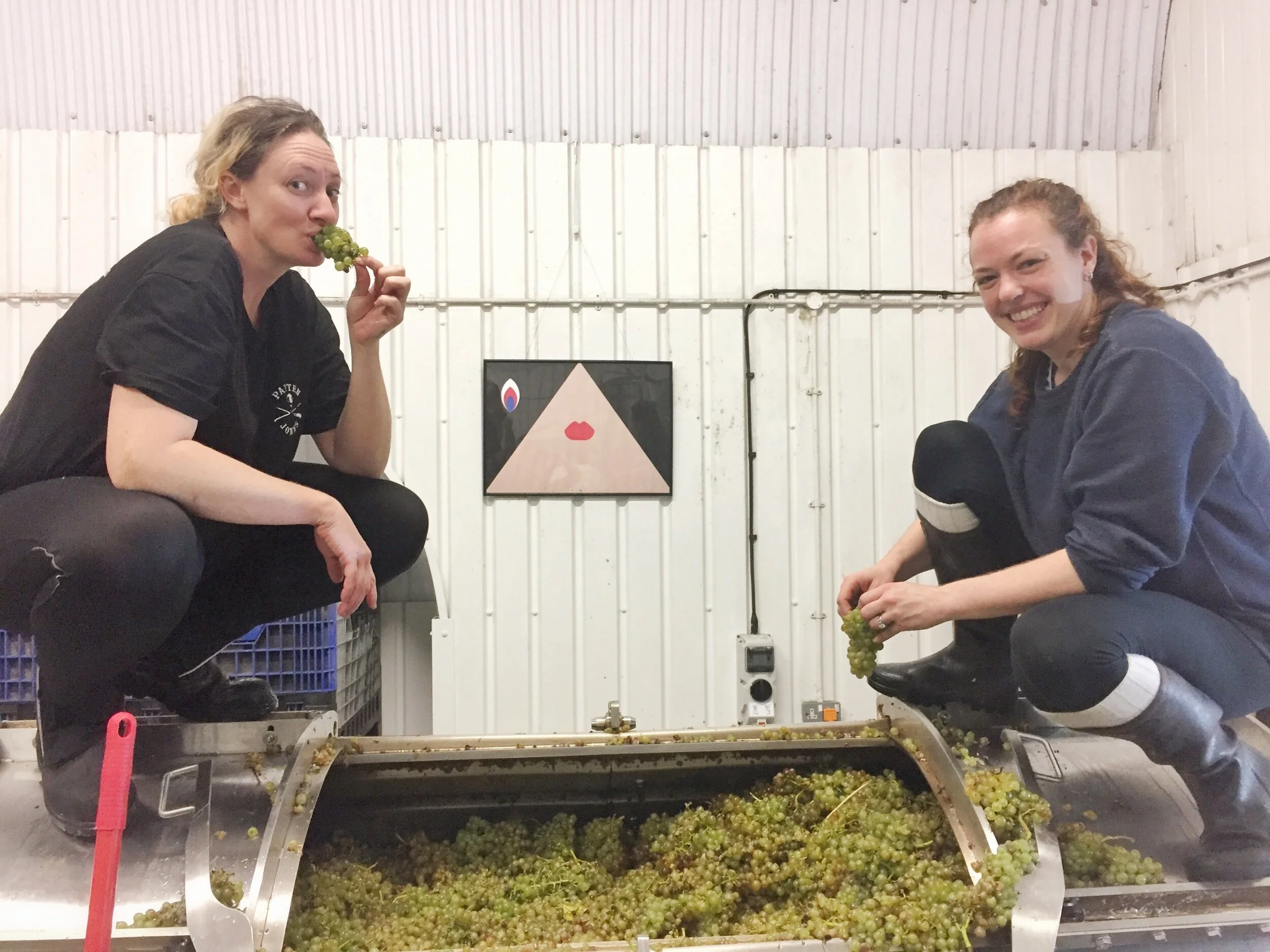

Harvest report 2019
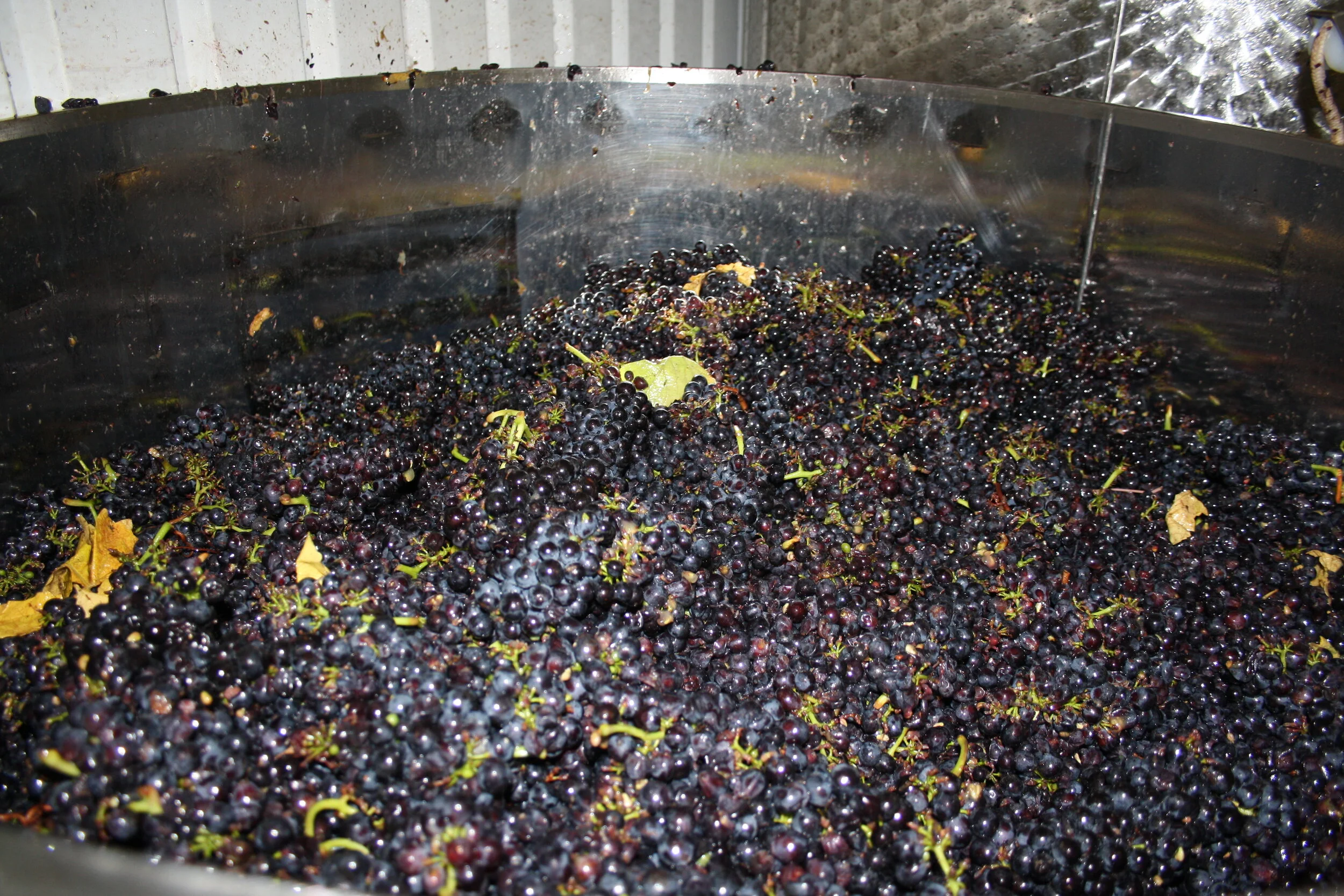
Harvest 2019 in numbers
19 tonnes of grapes
12.5K litres
5 varieties
5 growers
24 volunteers
8 days of picking
85 beers consumed (probably!)
After the bumper 2018 harvest in England with stories of tanks at capacity resulting in grapes being left out for the birds, the expectations for 2019 were generally low. The chances of two super vintages for England were slim. 2019 indeed faced a number of challenges - September average rainfall in South England of 142% vs a typical year - and double last year (91mm vs 45mm, Met Office), and cooler temperatures created conditions which impacted the crucial grape ripening periods. October offered no respite with rainfall in the South of England 175% vs average and sunshine at 83%. This resulted in grapes hanging longer, lower yields due to some loss associated with this and more challenging sugar/acid levels. England is still such a young industry, we’re learning how to prepare for our unpredictable weather and each year quality will continue to improve. We saw our experienced growers really mitigating the tough conditions and producing great fruit at a yield they were happy with. The end result for us in 2019 was a later harvest than usual, with processing starting proper on 16th October, and wrapping up on 25th October. Short and sweet. The timing was also later as we did not work with early ripening varieties, such as bacchus, in 2019.
This year, we worked with 5 vineyards: revisiting four from our 2017/18 vintages - Clayhill Vineyard in Essex, Crouch Valley Vineyard also in Essex, Yew Tree Vineyard in Oxfordshire, and Shotley in Suffolk who we started working with last year but at small scale. We continue to explore East Anglian growers due to their more favourable weather conditions, and we were happy to see the overall progress across our 4 East Anglian growers in 2019. We also added a new grower for 2019 - Combe Bottom, in Sussex.
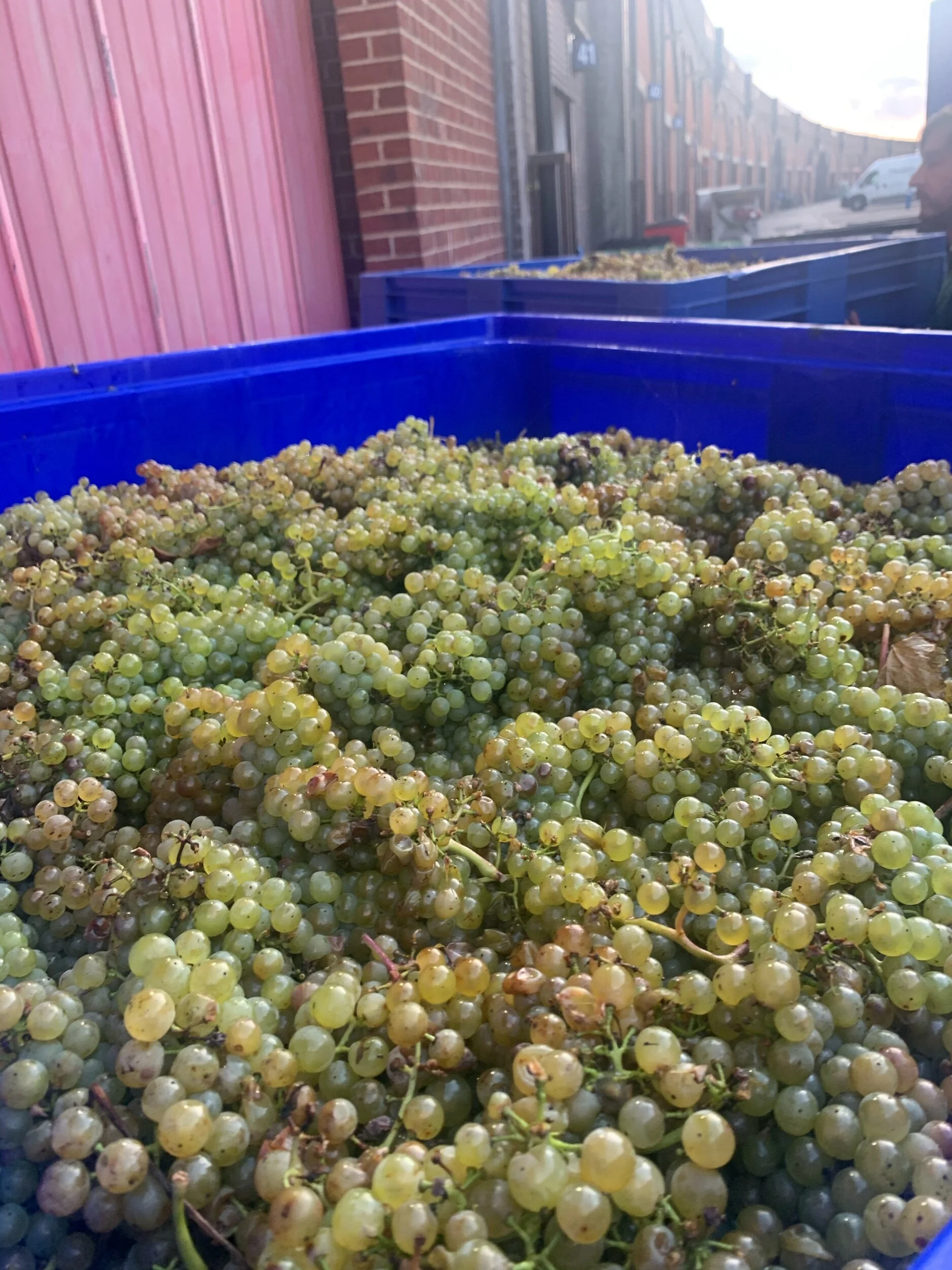
We received 19 tonnes of grapes this year, a little down on our 2018 which wasn’t too surprising considering the yield variances. We scaled back the varieties we are working with, to concentrate on our core pinot noir (3 sites) and chardonnay (3 sites), plus seyval blanc for our 2019 GMF and this year we are introducing pinot meunier and pinot gris. We haven’t quite finalised what happens for our 2019 wines, however we are expecting both our core range (Painter of Light, Nightjar and I’d rather be a rebel) plus GMF, and on top of this expect to see a still blanc de noir and a new white blend.
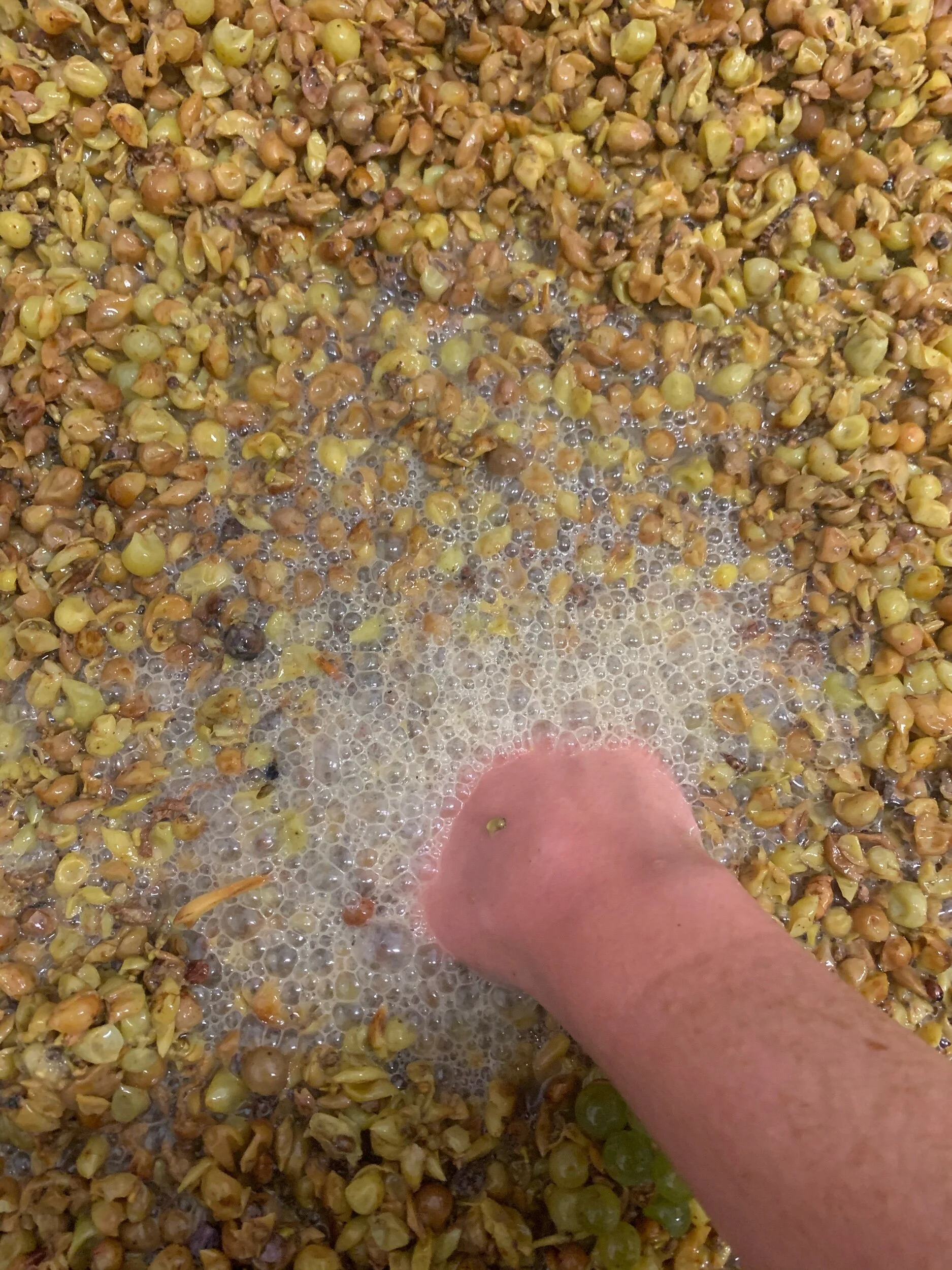
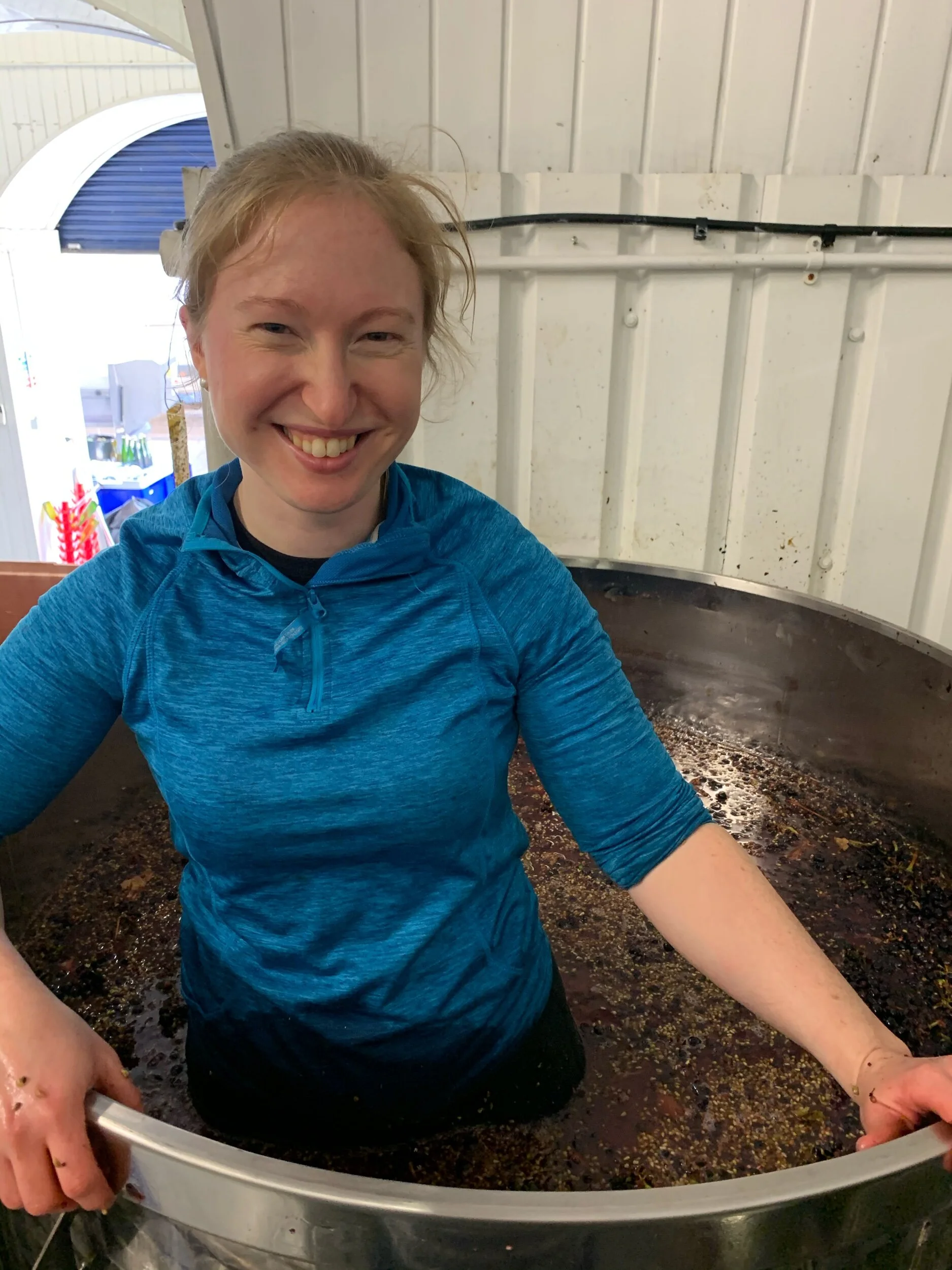
We are following a similar approach to winemaking in 2019 - whole cluster fermentation, daily pigeage, barrel fermentation and gentle oak integration. We will continue with plenty of lees stirring and malolactic fermentation to coax out texture in our wines. The higher acids may result in us ageing in barrel a little longer for certain wines, and we may do an additional sparkling wine. The fun part lies ahead as we see how these wines develop and evolve. The winery currently smells amazing with fermentation going at great guns and in spite of the challenges we’re excited about the prospects of the 2019 vintage.
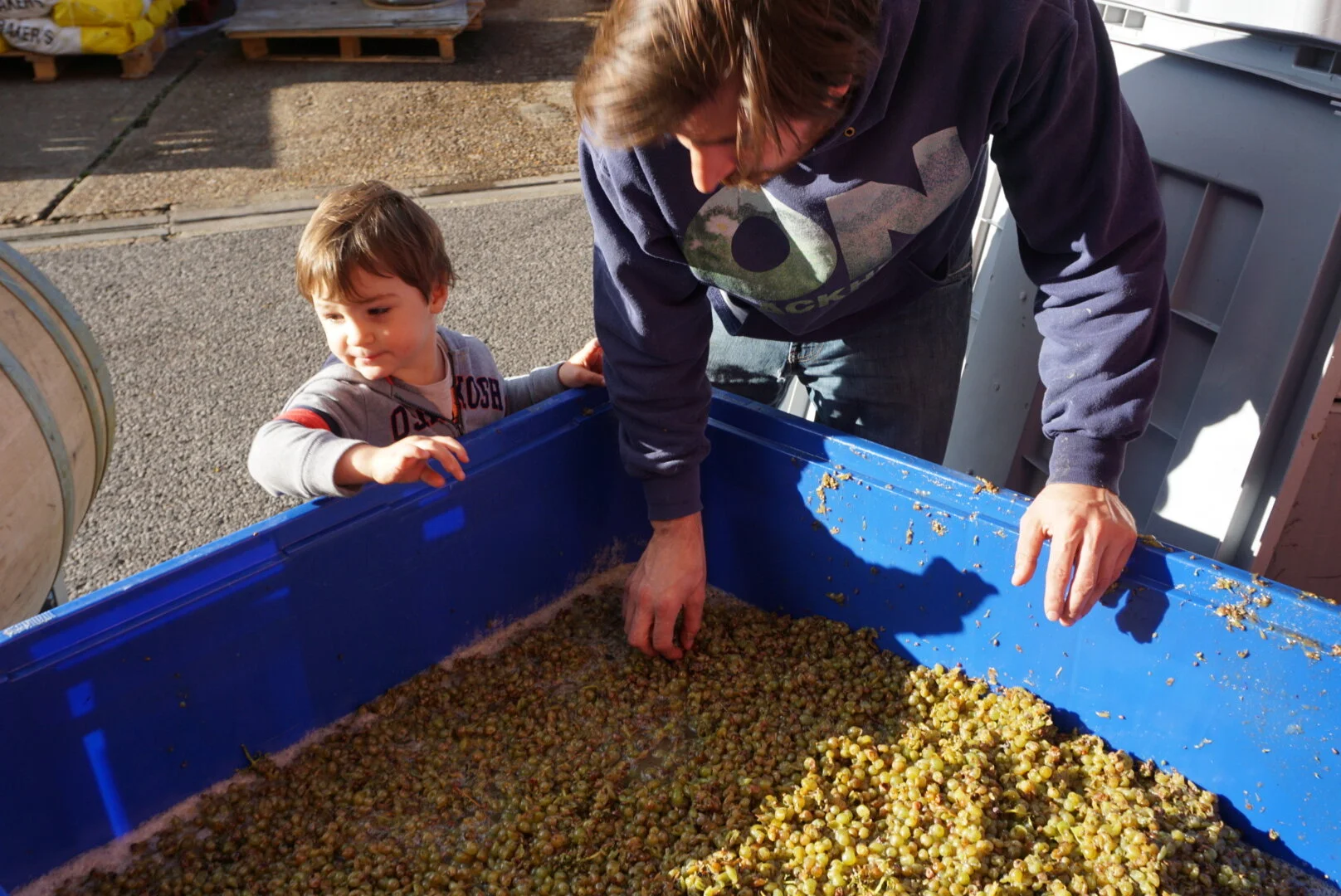
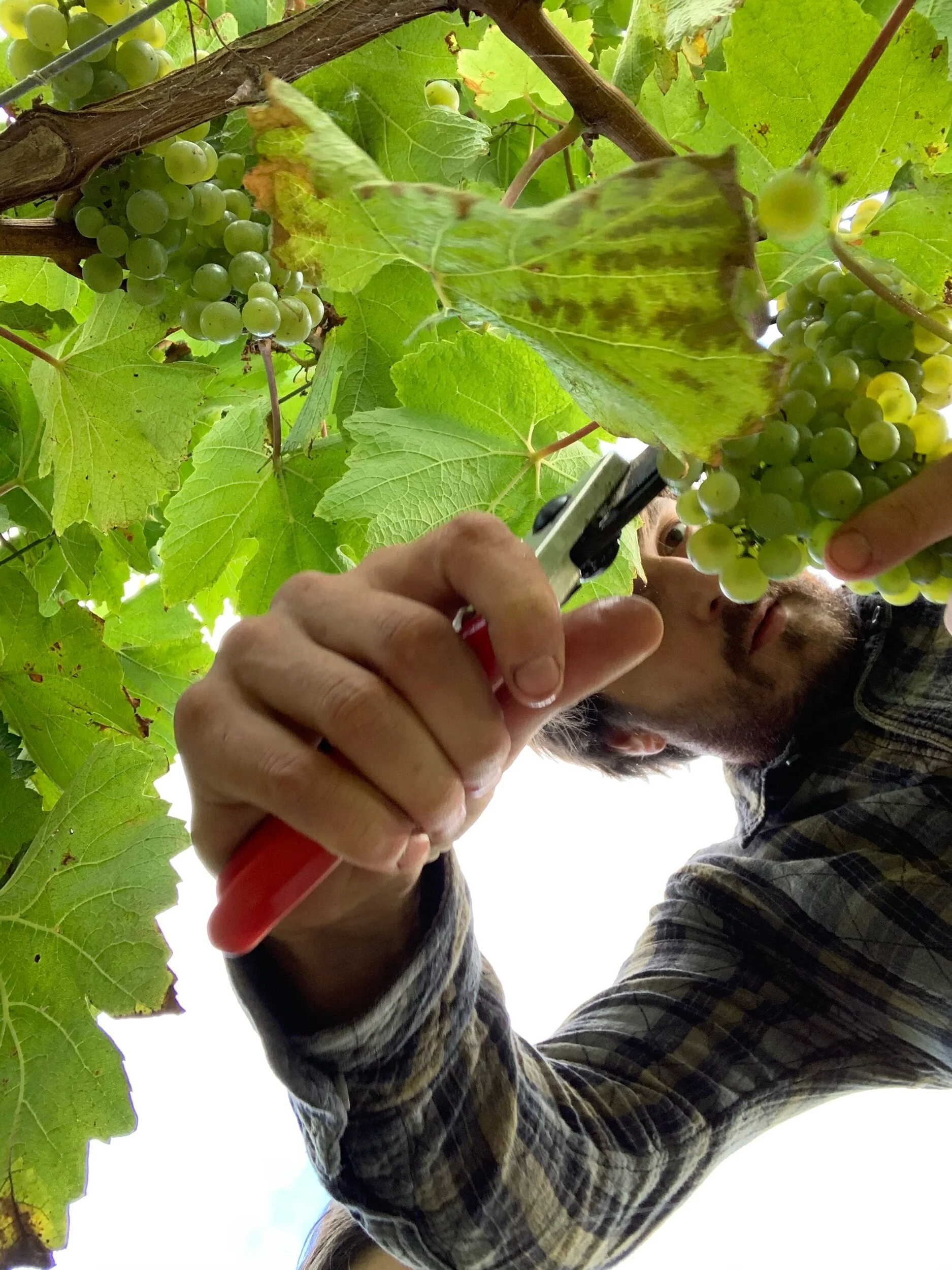
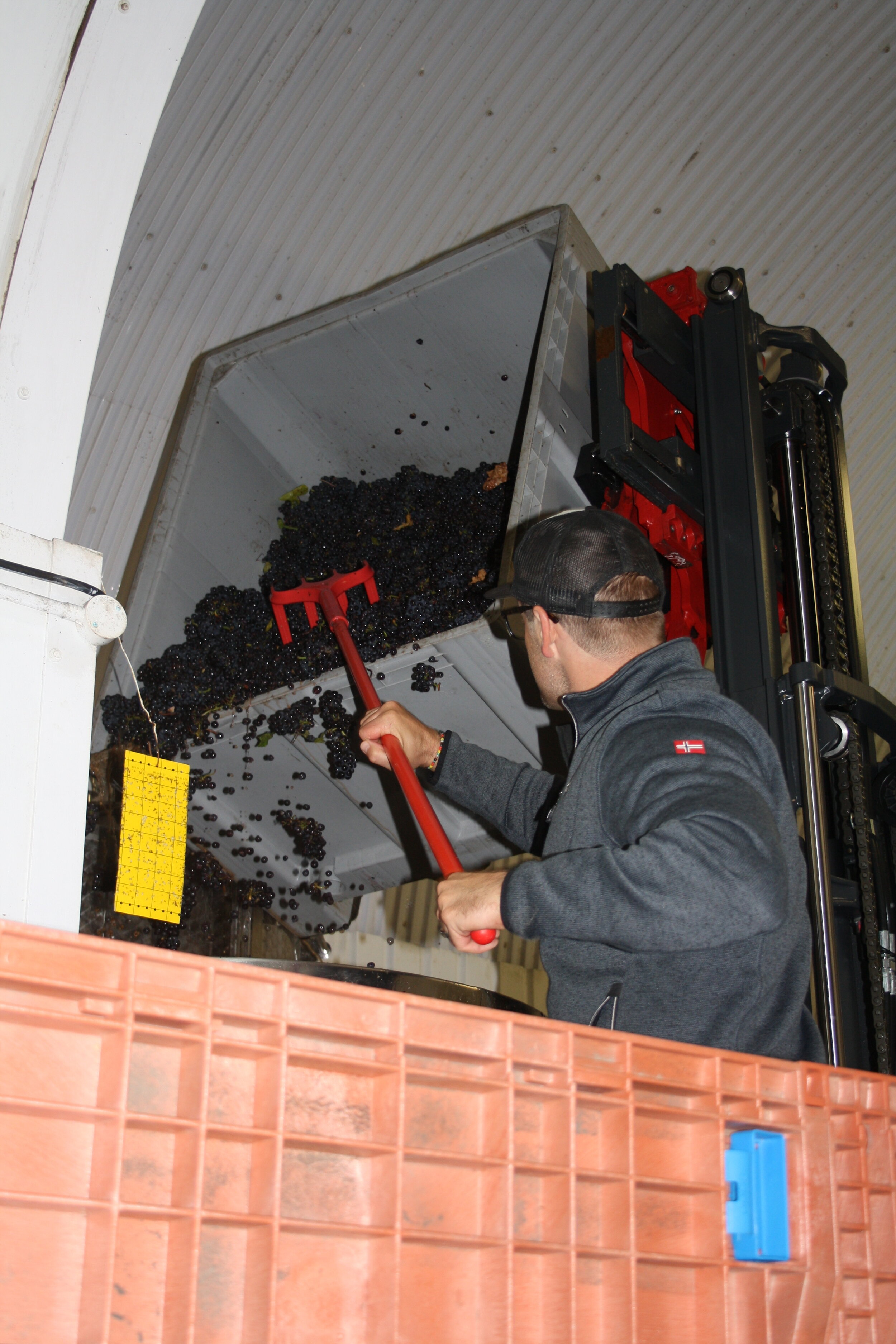
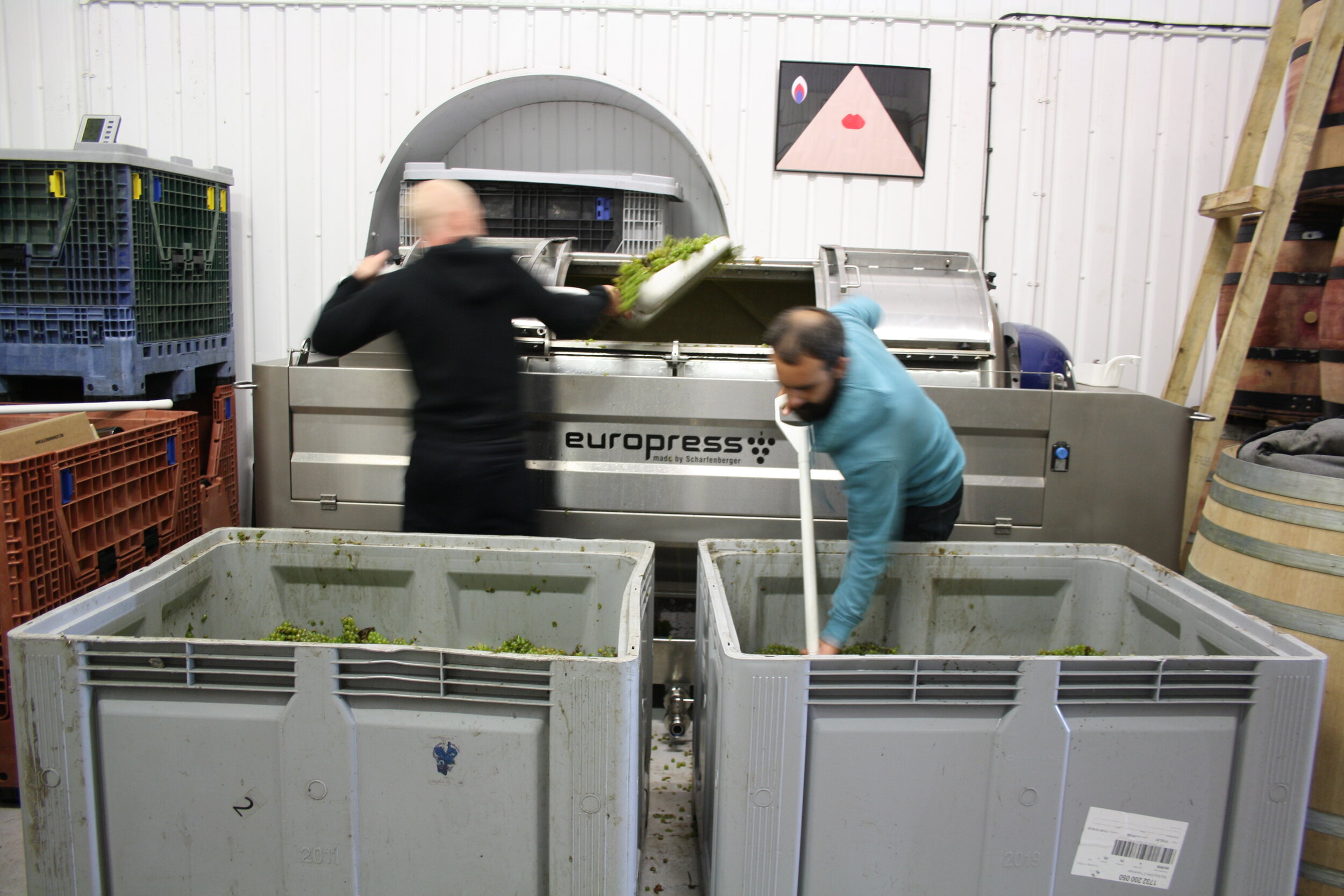
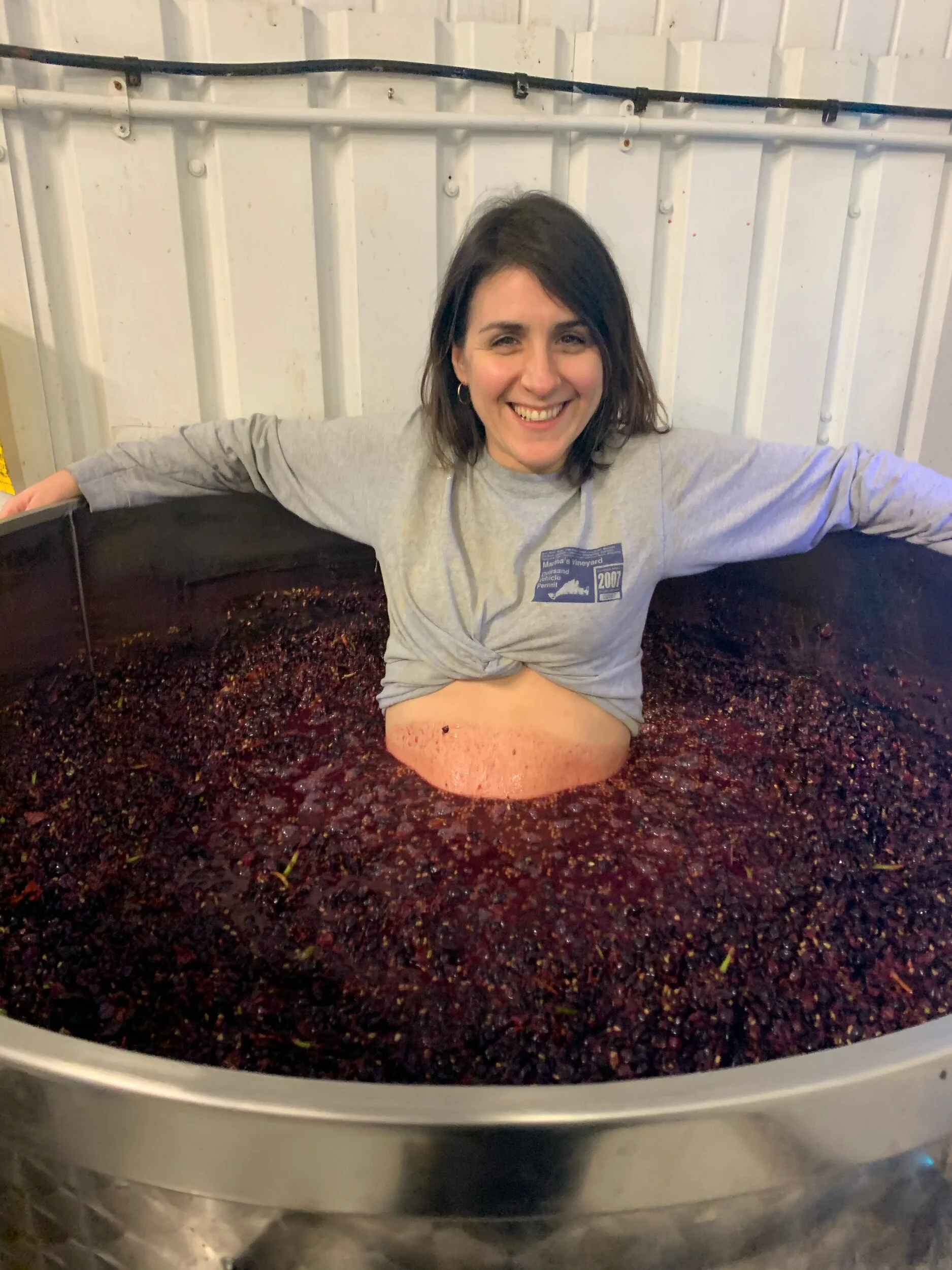
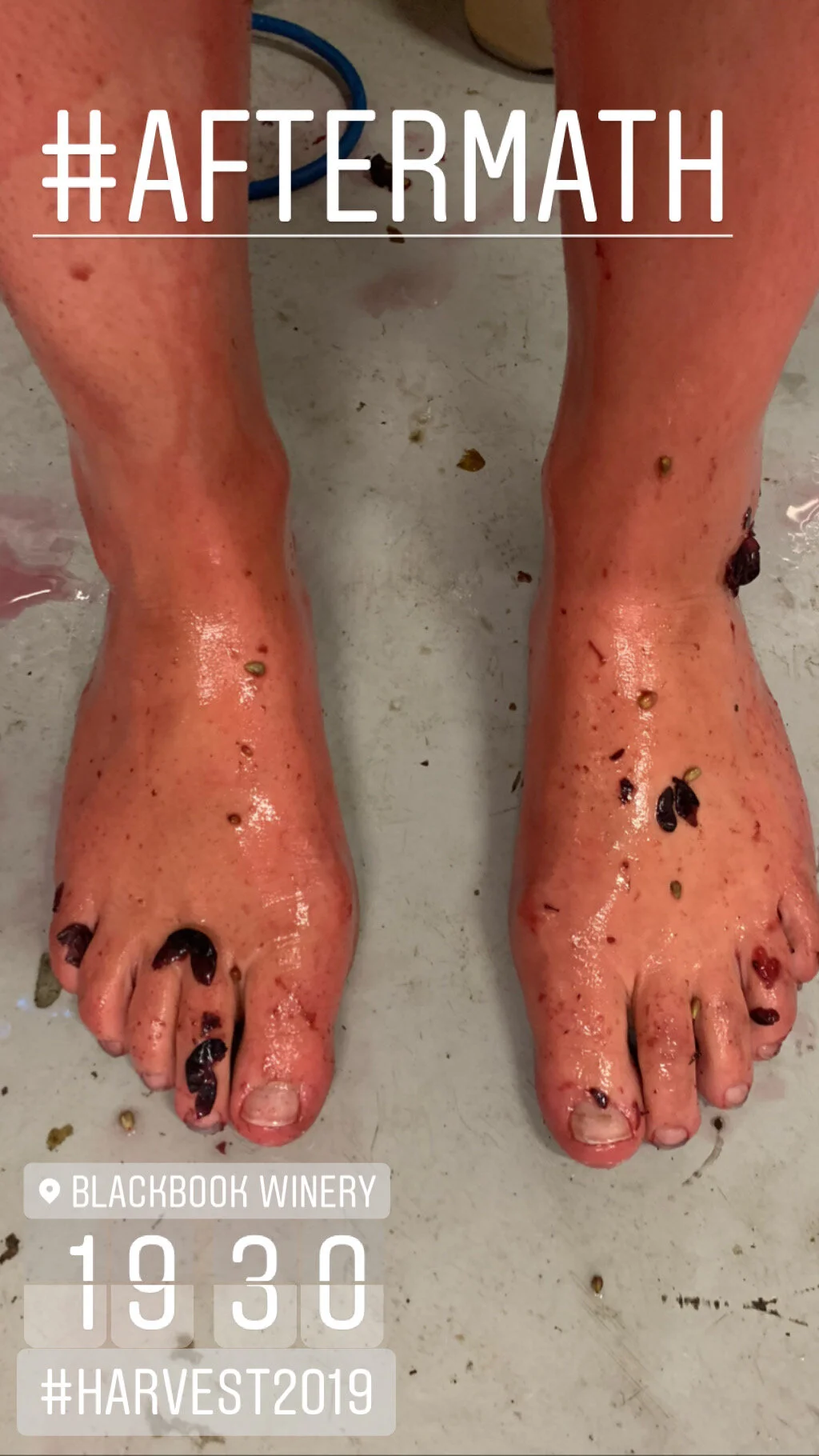
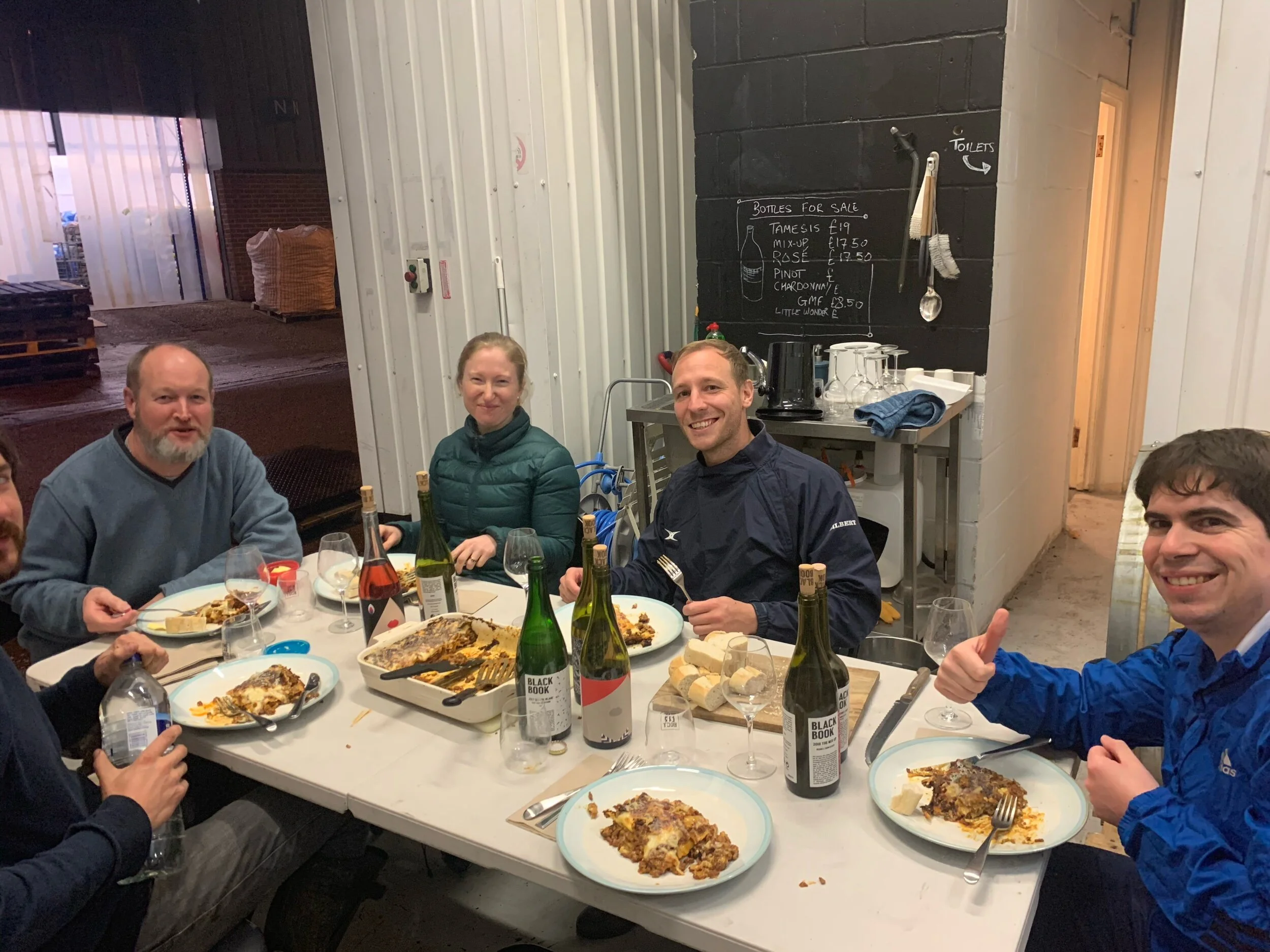
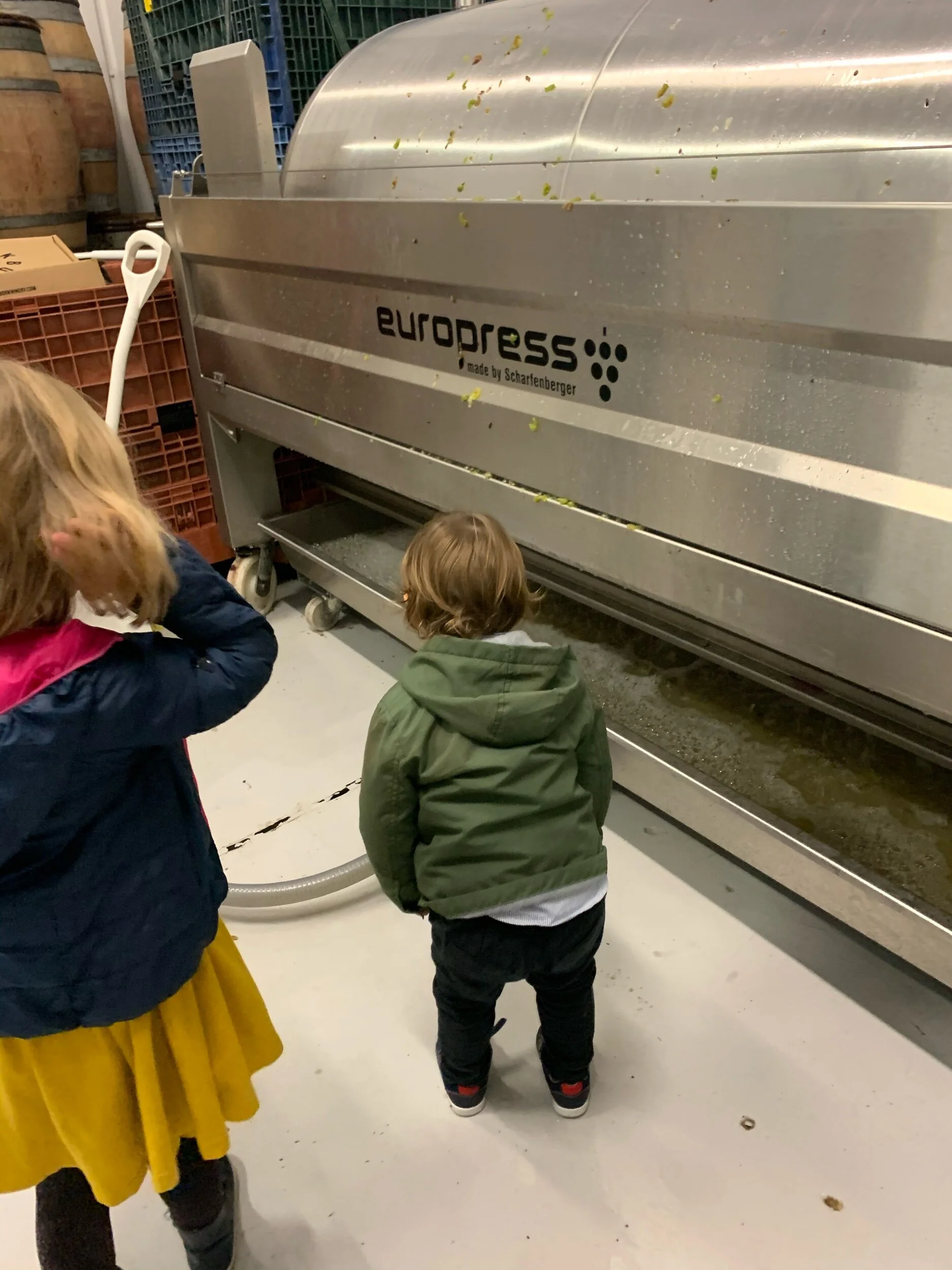
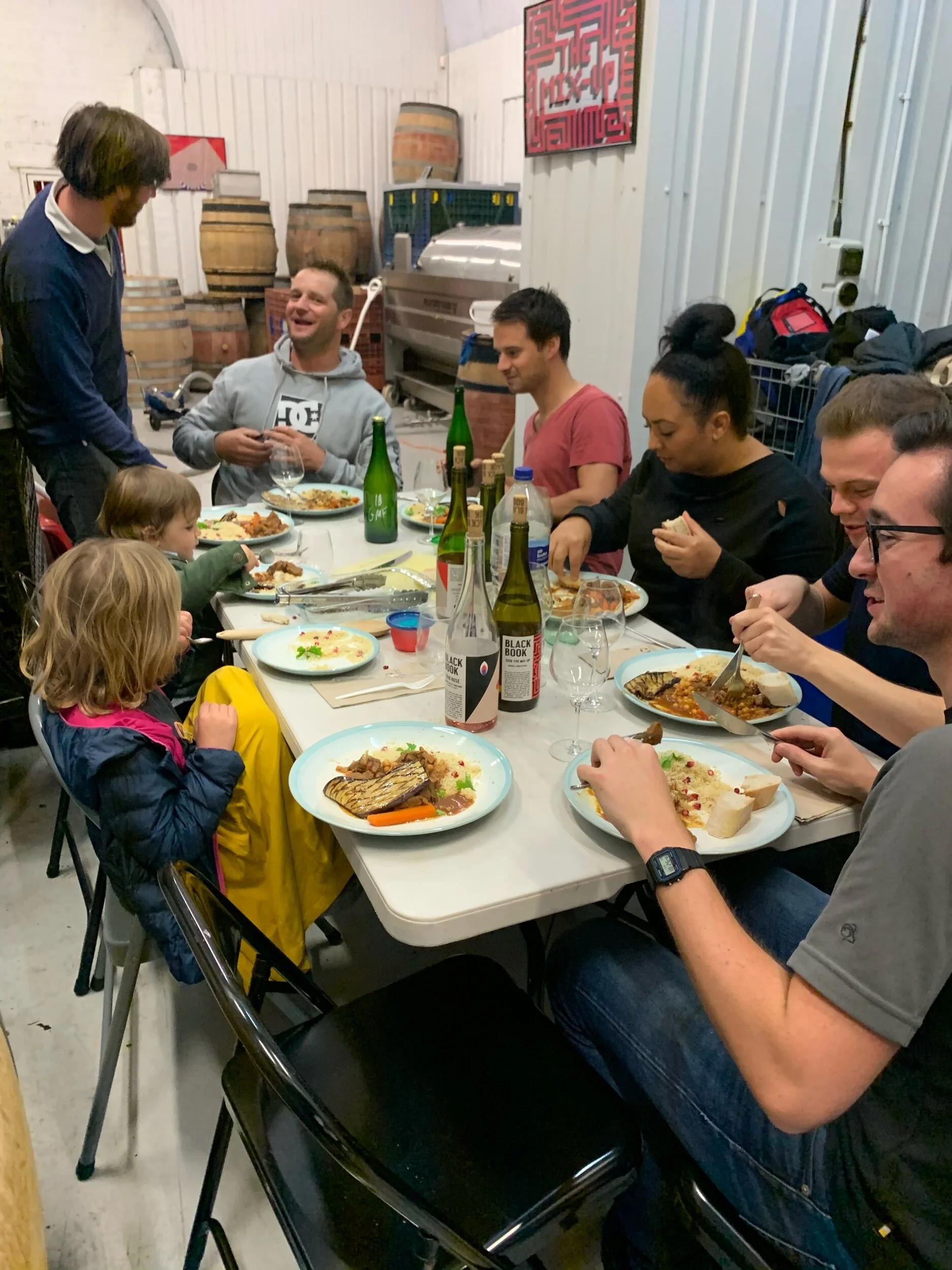
We were really pleased to be able to welcome more volunteers than ever before to the winery for this harvest - we received offers of help from many people and managed to get 24 volunteers into the winery over a number of sessions, who came to help shovel, scrub, squish and clean. We couldn’t do it without this amazing group of people who come from and amazing array of backgrounds - we get a lot of WSET students but also enthusiasts who have nothing to do with wine day to day, including geologists, architects and tech entrepreneurs.
Finally, next week we host our first annual wine club members event, where we are welcoming members of the Black Book to the winery where we’ll talk them through harvest and offer barrel and tank samples next to our 2018s and possible some 2017s out of the archive. We look forward to starting to share 2019s at the early stages as well as finished next year.
Now we’re off to catch up on some sleep! (we wish!)
~Sergio & Lynsey
Vegan or not Vegan, That is the question!
What makes wine vegan, and why do we make vegan wines.

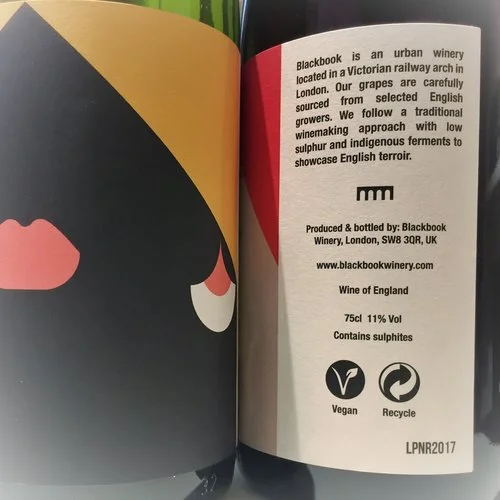
All Blackbook Winery wines are vegan, and labelled as such
Why do we choose to make vegan wines? Good question! As “Veganuary” draws to a close, we thought we’d use this as a chance to share some detail around our approach to winemaking, explaining why our wines are vegan and the choices winemakers make that affect whether a wine is vegan or not.
Most wines are not vegan friendly due to the use of varied additives manufactured from animal products, including things such as egg whites, fish bones, and gelatine that are all commonly used. These additives are used in wineries to allow accelerated processes to ready a finished wine, thus providing time and cost savings. However, a high quality, finished and consistent wine can be achieved through fastidious attention to detail, more labour intensive processes and vegan raw materials.
From the very beginning, we have endeavoured to follow a sustainable and minimalistic philosophy aimed at creating the best varietal expression of the source fruit in our wine. To achieve this, we take a minimal intervention approach in the winery, respecting the fruit and the terroir. That approach allows us to generally avoid a number of interventions that can turn fermented grape juice into a non-vegan product.
Now, let’s talk shop! Here is a walk through of the key process where the non-vegan additives are commonly used:
Clarification and filtration
Winemakers may opt to clarify in order to get a crystal clear finish on wines. There is a two step process in order to create this. The key one is filtration, where wine is passed through a series of filters or diatomaceous earth (ground rock sediment) to capture the very small particles and residue that can cloud a wine.
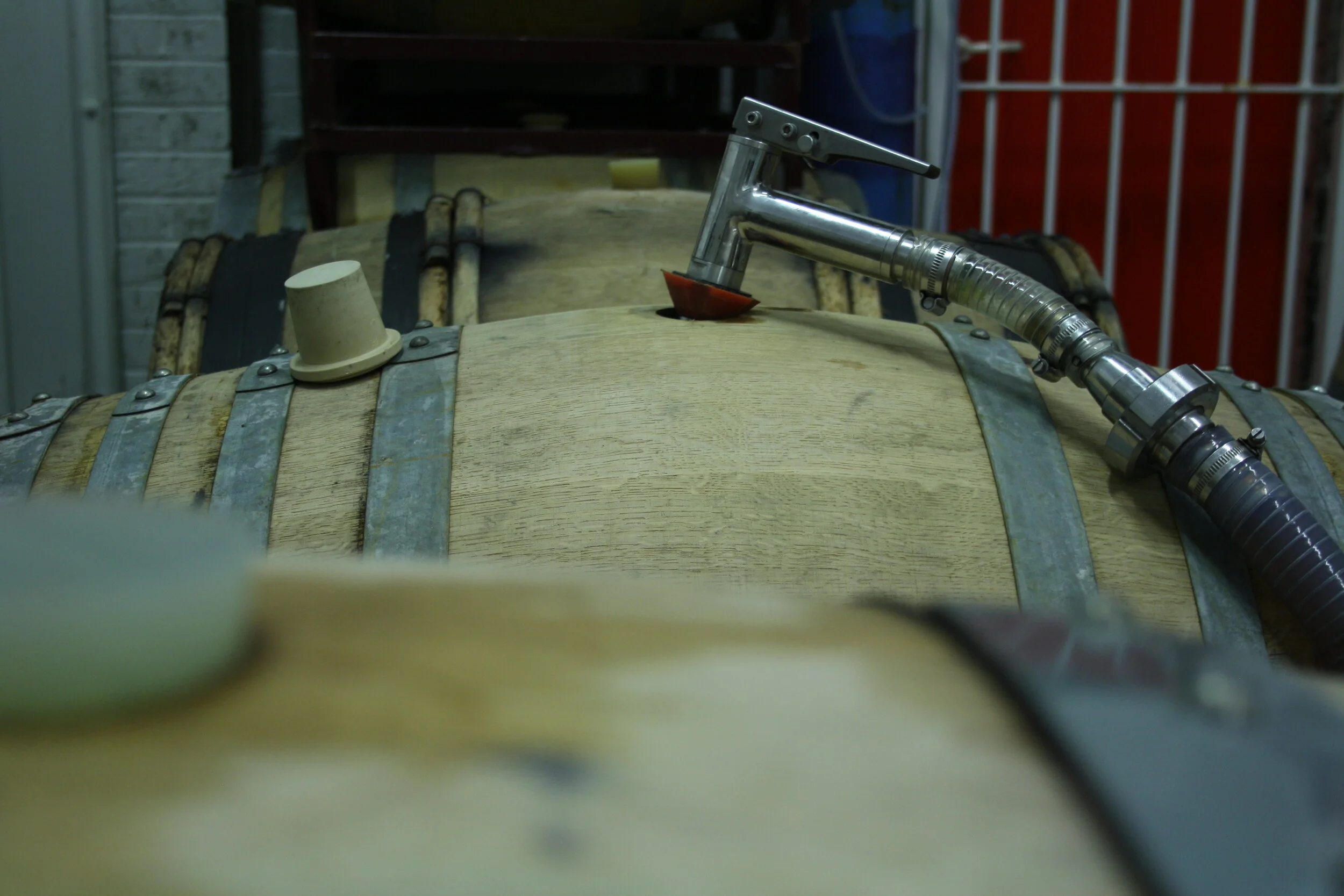
In order to aid filtration, a further process is one that may be employed, called fining. Fining is the addition of a range of agents prior to filtering, as means to bind together the various elements through a positive/negative attraction, kind of like a magnetic attraction, that cause haze - proteins, tartrates, tannins and phenolics. By binding, they clump and can be readily removed through filtration. Many fining agents are non-vegan, for example gelatine (animal fat), casein (milk based) isinglass (fish bladders) and egg white / egg albumin. There are also things such as bentonite (clay) used to fine as an alternative to the other products. In 2017, we chose to only filter one wine, our rosé, and we did that without fining the wine. We filtered to ensure a crystal clear finish of the wine. For our subsequent releases we favoured a carefully monitored racking or soutirage (the process of siphoning wine from one container to another to remove sediment) using gravity where possible, to achieve a clear finish without an unnecessary intervention. This has resulted in uncompromised flavours which we think you would agree is helping us produce the best product that we can.
So, there we are! A little bit wiser and little more entertained (hopefully!)

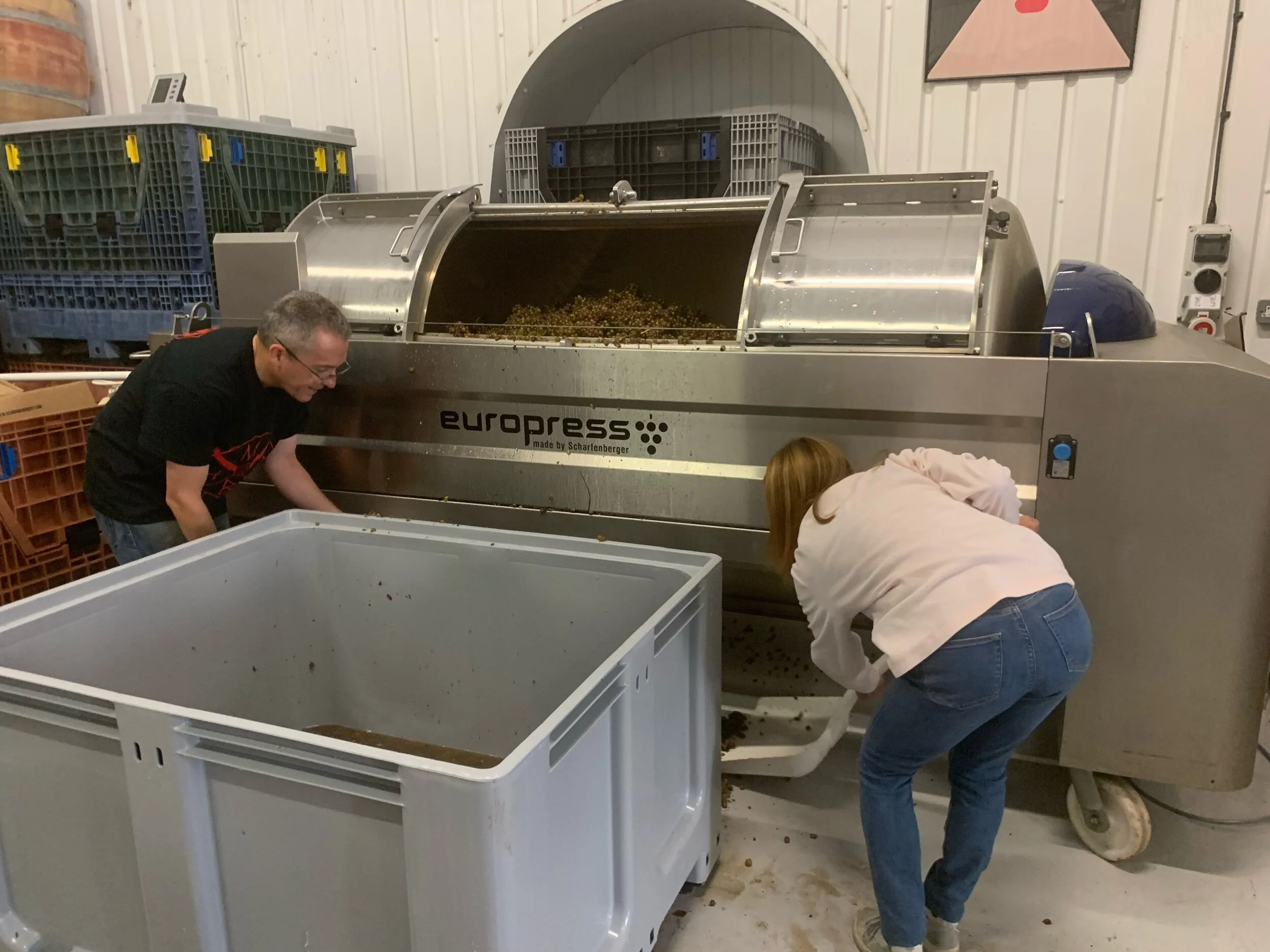
The filtration process in action for our 2017 rosé